Today, we tend to speak about the animal kingdom with a certain reverence. How times have changed! A century ago, some people didnât think twice about taking cheap shots at our fellow creatures. Neither did their forebears 100 years before that. Even Charles Darwin relished in demeaning the marine iguana , which he said were âmost disgusting, clumsy Lizards.â If that burn makes you feel bad for the iguanas, just wait until you read Ernest Hemingwayâs anti-hyena rant.Â
Who Said It: Gonzalo Fernandez de Oviedo y Valdes (1478-1557) The Target: Sloths A Spanish historian and adventurer, Oviedo was among the first Europeans to ever encounter these sluggish mammals. Apparently, they didnât leave a good impression on him. In his 1526 book, The Natural History of the West Indies , Oviedo called sloths âthe stupidest animal that can be found in the world."
Ironically, Oviedo kept a pet sloth during his travels in South America. Feeding it wasnât easy. âNo one can find out what this animal eats,â he complained. âI had one in my home, and from my observations I have come to believe that this animal lives on air.â Of course, we now know that sloths mainly subsist on plant buds, shoots, and leavesâalong with the occasional insect or small vertebrate.
Oviedo wasnât the last one to throw shade on sloths. Georges Cuvier (1769-1832), one of the greatest zoologists in history, wrote that in sloths, ânature seems to have amused herself by producing something imperfect and grotesque.â
Who Said It:  Theodore Roosevelt (1858-1919) The Target: Rhinos Roosevelt was one of those animal lovers who also liked shooting them. In his autobiography , he offers plenty of advice for bringing down everything from grizzlies to elephants.Â
While Roosevelt âpersonally had no difficulties with lions,â he recounted several close calls with angry rhinos. âGenerally, their attitude is one of mere stupidity and bluff,â he wrote. âBut on occasions, they do charge wickedly, both when wounded and when entirely unprovoked.â He would know. After leaving the White House in 1909, Roosevelt and his son Kermit went on an African hunting expedition on which they killed a whopping 512 animals âincluding 11 black rhinos and nine white ones.Â
Roosevelt's safari was sponsored by the Smithsonianâwhich he rewarded with more 23,000 valuable specimens, 11,000 of which were animals.
Who Said It:  Ernest Scott (1867-1939) The Target: Platypuses You don't need to be a biologist to appreciate how the platypus's discovery confounded animal experts. In January 1939, Ernest Scott, head the Australian and New Zealand Society for the Advancement of Science, gave a lecture on the platypus, âthat strange little animal of zoological perversities.â In his words, âthe platypus is an historical character. It set the anatomists all agog when specimens were first examined in Europe.âÂ
Scott wasnât exaggerating. In 1793, South Wales governor John Hunter had written a paper on the strange beast. Among other things, he theorized that the platypus must have been created by â a promiscuous intercourse â between several different animals.Â
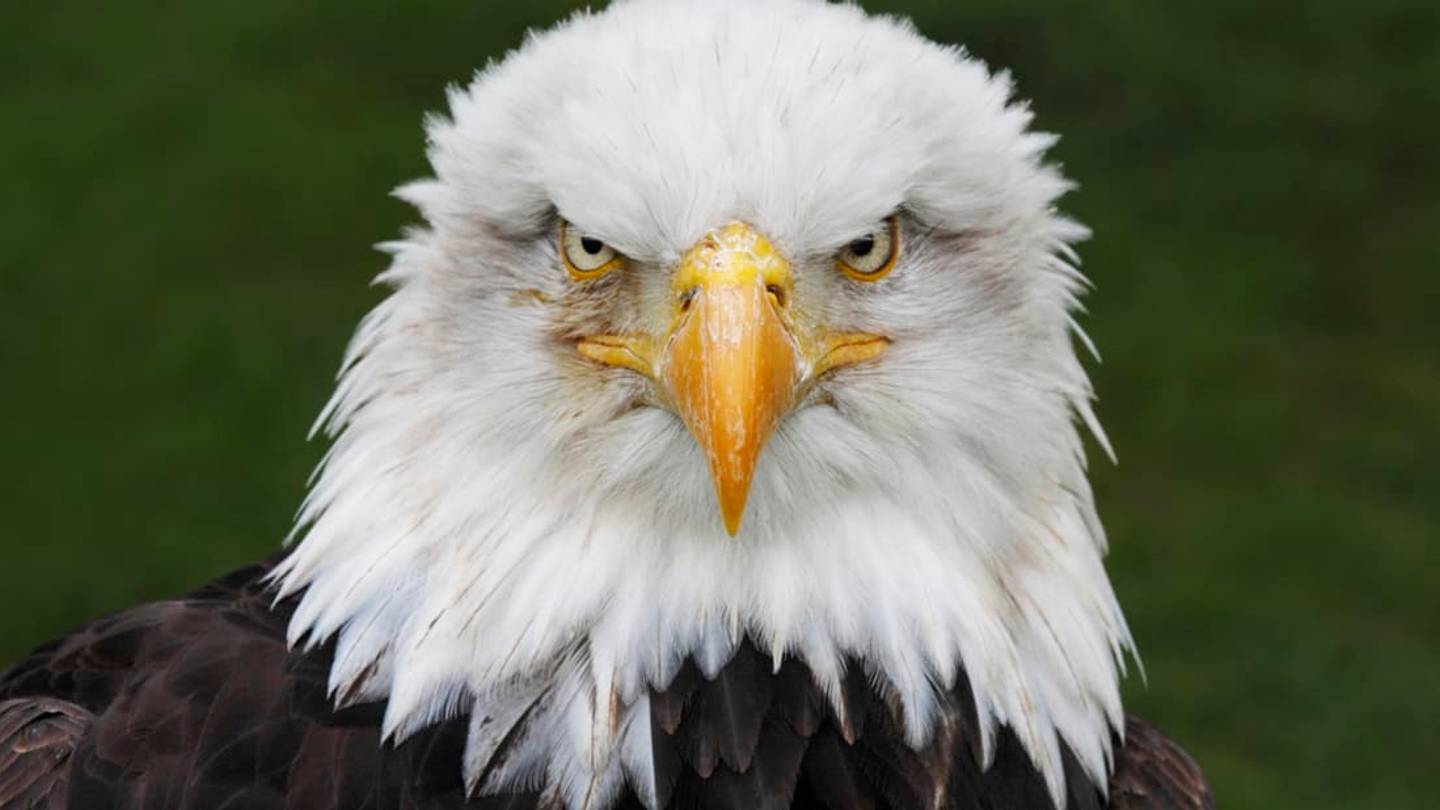
Who Said It:  Benjamin Franklin (1706-1790) The Target: Bald Eagles Did Franklin really want the turkey to be Americaâs national emblem? No . (In fact, the symbol he proposed was of Moses at the Red Sea.) Franklin didnât think much of bald eagles, either. Â
Congress adopted the Great Seal of the United States in 1782. At its center is a bald eagle soaring with patriotic pride. Two years later, Franklin wrote a letter to his daughter, Sarah Bache, with a scathing critique of the raptorâs personality.
âFor my own part I wish the Bald Eagle had not been chosen,â he wrote. âHe is a bird of bad moral character. He does not get his living honestly.â He accused bald eagles of stealing prey from ospreys ( which is true ) and being easily scared off by smaller birds (also trueâ crows sometimes gang up on the eagles to chase them away). Â
Who Said It: Â Louisa Anne Meredith (1812-1895) The Target: Tasmanian Devils This marsupial has been vilified for ages. During the 19th century, rumor had it that the creatures could even skeletonize unwary travelers. Soon, popular Aussie writers bought into the hypeâincluding Meredith. In 1880, she penned the above sentence to defend the killing of 150 devils by a local shepherd. âWe donât show the brutes any mercy; they do too much mischief,â Meredith wrote.
In reality, Tasmanian devils donât prey on humans and usually wonât attack unless threatened. Furthermore, despite Meredithâs concerns about their taste for full-grown sheep, the devils mainly kill sick or young ones. Â Â
Who Said It: Â Georges-Louis Leclerc , comte de Buffon (1707-1788) The Target: Vampire Bats Other mammals with terrible reputations include the three known vampire bat species . Natives of Central and South America, these blood-sippers predominantly feed on cows, chickens, and other livestock. And, yes, one of these batsâthe common vampire bat ( Desmodus rotundus )âdoes occasionally bite humans. For that to happen, the victim is usually asleep and the bite tends to occur on the big toe .
Buffon described the bat in volume seven of his encyclopedic Natural History  series. The animalâs nose âis deformed, its nostrils resembling a funnel, with a membrane at the top which ⦠greatly heightens the deformity of its face,â he wrote. Â
Who Said It:  Georges-Louis Leclerc, comte de Buffon (1707-1788) The Target: Snipes Yes, snipes are real . The long-beaked wading birds poke around for worms and other invertebrates on warm or temperate beaches all over Eurasia, Africa, Australia, and the Americas. Ornithologists currently recognize around 20 species âthe largest of which can be 19 inches long from beak tip to tail tip.Â
Buffon mocked their appearance in another installment in his multi-volume Natural History . âA character peculiar to these birds,â he wrote , âis a compressed head and large eyes placed considerably behind, which give them a singularly stupid air not at all belied by their manners.âÂ
Who Said It: Â William Temple Hornaday (1854-1937) The Target: Â Gray Wolves The American bison had a powerful friend in Hornaday, a hunter-turned-naturalist who set up a captive bison breeding program, founded the National Bison Society, and helped establish protected ranges for them in Kansas and Montana.
Yet his attitude towards wolves was far less accommodating. In 1904, Hornaday opined that every single one was not only âdeadly dangerous to man,â but âa black-hearted murderer and criminal.â Moreover, there was supposedly âno depth of meanness, treachery, or cruelty to which they do not cheerfully descend.âÂ
Since colonial times, American farmers had been at odds with wolves, which frequently killed livestock. In the late 19th century, the government established bounty programs âsome of which lasted until 1965âthat would pay private hunters anywhere from $20 to $50 per dead wolf.
By 1960, only about 300 wolves remained in the lower 48 states. Then, in 1973, Congress granted them formal protection under the Endangered Species Act. Since then, gray wolves have been steadily recoveringâwith roughly 5500 now roaming the contiguous United States.
Who Said It:  George Perry (1771-?) The Target: Koalas A stonemason by trade, Perryâs real passion was natural history. From 1810 to 1811, he published The Arcana,  a monthly illustrated magazine dedicated to the study of life.Â
In one 1811 issue, his readers were greeted with the first painting of a koala in a European publication. Perryâs caption called it âthe Koalo, or New Holland Sloth.â And, just as Oviedo didnât know what to make of real sloths, Perry was befuddled by this arboreal weirdo. Arcana subscribers were told that the âtorpid, senseless creaturesâ were âsupposed to live chiefly on berries and fruits.â
Perry added, âWhether we consider the uncouth and remarkable form of its body, which is particularly awkward and unwieldy, or its strange ⦠manner of living, we are at a loss to imagine for what particular scale of usefulness or happiness such an animal could by the great Author of Nature possibly be destined.â
Who Said It:  Ernest Hemingway (1899-1961) The Target: Hyenas These mammals were getting bad press long before The Lion King opened. Teddy Roosevelt said they were âtoo cowardly ever to be a source of danger to the hunter.â He did give them some credit: âThe hyena is a beast of unusual strength, and of enormous power in his jaws and teeth ... the creature is fraught with a terror all its own.âÂ
Ernest Hemingway had an even less flattering outlook. In The Green Hills of Africa  (1935), which chronicles a safari he took two years earlier, Hemingway called the hyena a âhermaphroditic, self-eating devourer of the dead, trailer of calving cows, ham-stringer, potential biter-off of your face at night while you slept, sad yowler, camp-follower, stinking, foul, with jaws that crack the bones the lion leaves, belly dragging, loping away on the brown plain.â (Incidentally, it was Rooseveltâs 1909 expedition that inspired Hemingway to take this trip.)
Hemingway was semi-correct: Female hyenas do have pseudo-penises (more or less a weirdly-shaped clitoris ), but they're not hermaphrodites. And while theyâre not above scavenging , hyenas actively kill 95 percent of their meals. Lions are far more likely to munch on a hyenaâs leftovers than vice versa. Sorry, Hemingway.
Loading recommendations... Please wait while we load personalized content recommendations