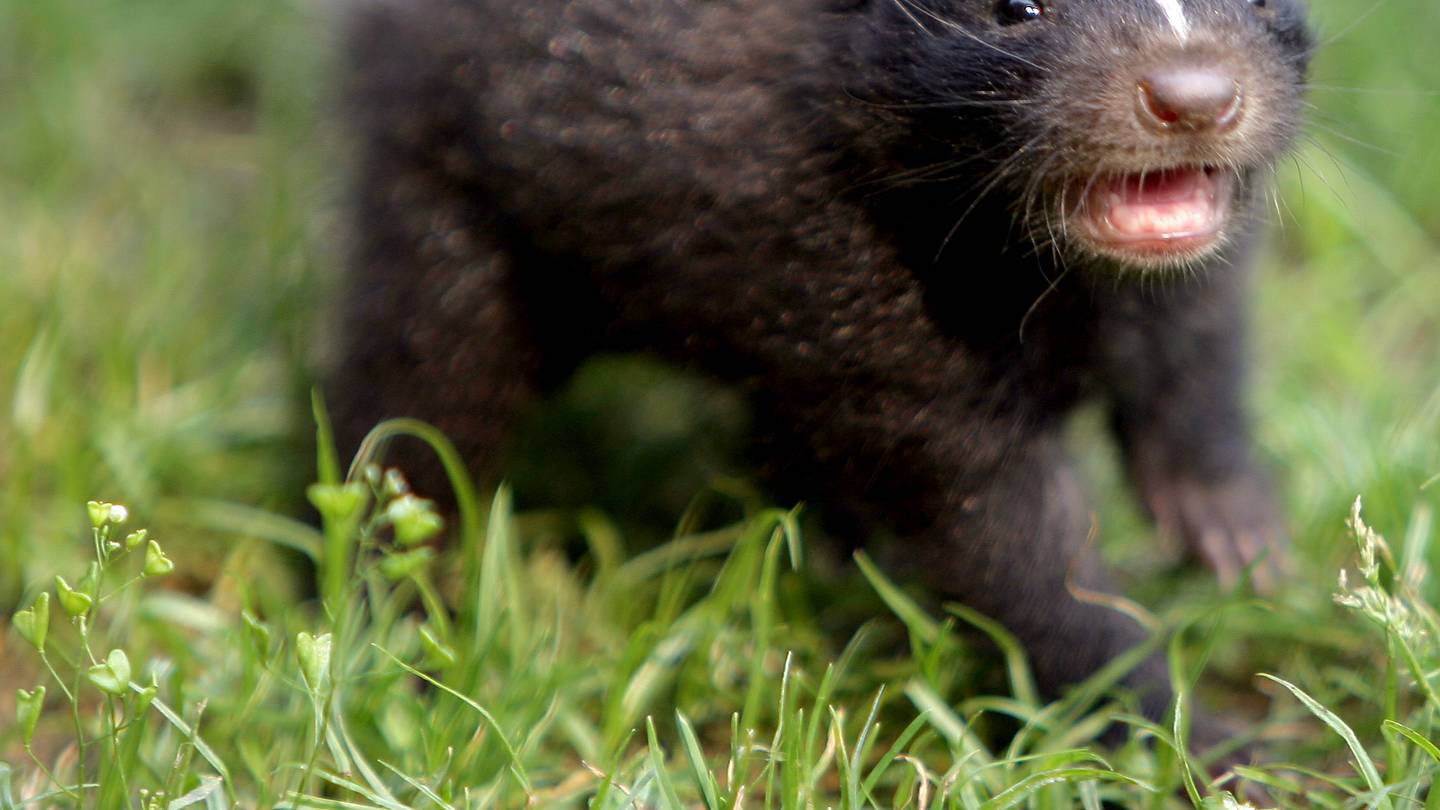
Weâve already gathered up some barely-heard-of names for newborn animals, but there are even more lesser-known monikers. "Look at that little squeaker" may not be the most perfect thing to coo at a baby pigeon, but itâs accurate. Here are 10 more of the offbeat and uncommon references for baby animals.
Kits bear physical signs of what their fur patterns will look like when theyâre full-grown adults. They have markings on their naked skin that will later be replaced by fur. Itâs like a peek into the future. And yes, baby skunks have the ability to spray from birth, but their chemical defense mechanism isnât as strong.
After hatching, baby turkeys take shelter under their momâs wings. If they get separated, they let out a panic call. Multiple poults actually travel in a single-file line.
Chulengos come from another barely-known animal: the guanaco , a South American-native animal from the camelid family. Even though theyâre related to camels, they donât have humps on their backs.
Technically, a âpinkieâ is a baby rat that is going to be used as food, but itâs a cute name. The name is frequently used by snake owners.
The U.S. has mostly blue (or Indian) peafowls ; this type of bird has been raised in captivity for more than 2000 years. Peafowl is the all-encompasing term for what is generally known as a peacock. Peacock refers to a male peafowl and peahen refers to a female. A peafowl is only a peachick when it is younger than one year old.
Way before itâs possible to grow a pearl, a spat must grow into an oyster. Usually in the spring or the fall, adult pearl oysters will spawn into rich, nutrient loaded waters, and the oysterâs sperm will fertilize the eggs. It takes about one or two months for a spat to grow to a size visible to the naked eye.
A baby mosquitoâs name isnât related to Tumblr, the popular blogging website of the 2010s. Little tumblers (sometimes called âwrigglersâ or ânymphsâ) have occupied Earth for more than 210 million years, but their life expectancies are extremely low. Male mosquitoes live for less than a week and females can live up to a few months under ideal conditions.
There are three names for baby frogs , depending on which segment of the life cycle theyâre in. After 21 days of being an embryo, a baby frog is called a âtadpoleâ (but really is called a âpolliwogâ) and at this point, has a long tail and lives in the water. It actually becomes a tadpole when it sprouts legs. As a froglet, the tadpole has almost matured into a full-grown adult that breathes with lungs, but still has a bit of a tail.
The value of elvers has skyrocketed in recent years as the demand for them has spiked in Asia. In fact, in February 2013, out of 5000 applicants in Maineâs elver lottery , only four fishermen were given licenses to use hand-dip nets in the stateâs elver fishery.Â
Parent pigeons typically hide their young for a month after hatching, ensuring that they will be able to survive. As a result, itâs very rare to see a squab (or squeaker) because theyâre almost fully grown by the time parents let them spread their wings.
Read More About Animals:
A version of this story originally ran in 2013; it has been updated for 2025.