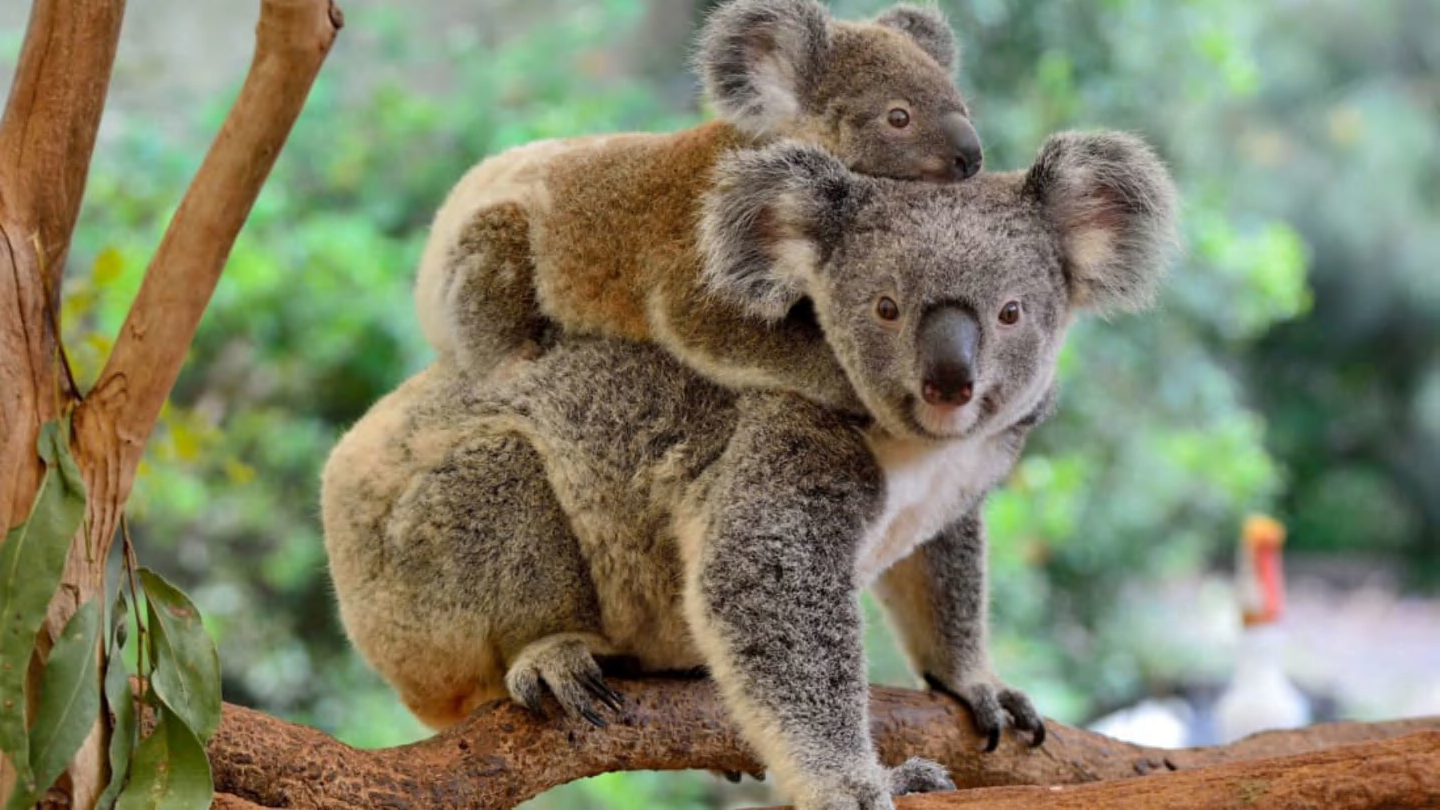
Sure, they're cute, and they certainly look cuddly. But here are a few surprising things you might not have known about koalas.
Scientists used thermal cameras to watch koalas hanging out in trees. They saw that when the weather was warm, the animals moved to lower parts of the trees and pressed themselves close to the trunks, wedging their butts right into the coolest spots.
In captivity, sexual encounters among koalas have been known to involve up to five females. They last twice as long as female-male encounters.
Predators arenât that important to koala population control, but chlamydia might be . In the late '90s, chlamydia-free koalas were introduced into Mount Eccles National Park in Victoria, which had a huge Manna Gum tree population. Without chlamydia to control the population, koala numbers doubled every few years, and thousands of hectares of forest were at threat until hormonal contraception was introduced. In other areas where chlamydia-free koalas were introduced, the koalas killed the trees and then died of starvation [ PDF ]. When koalas are stressed, chlamydiaâwhich is normally harmlessâlimits the population growth. Now, rather than overpopulation, a combination of habitat loss and a retrovirus is making chlamydia a problem even as the population dwindles.
Koala fingerprints can be mistaken for one another in criminal investigations. The animals' hands are covered in warts.
Koalas eat around half a kilogram of eucalyptus leaves a day. Theyâre very picky, tending to choose around 30 of the 600 varieties of eucalyptus trees out there. Koalas prefer large trees, but avoid those with low protein content and nauseating toxins. The problem is that two trees of the same species right next to each other can have wildly different toxin levels, forcing the koala to rely on their smell. Eucalyptus leaves are very low in calcium, forcing the koalas to go to the ground and eat dirt . They are reported to smell like cough drops because of all that eucalyptus.
Because of their diet, koalas have an unusually large cecumâthe beginning of the large intestineâto help them digest their diet of eucalyptus leaves. On the other hand, they have tiny brains because brains use a lot of energy and their diets donât give them much to work with. They can only stay awake for four hours a day.
Pap is a kind of soup that forms in a mother koala's cecum and is excretedâso yes, baby koalas eat their motherâs droppings. The stuff is full of microorganisms to get their tiny digestive tracts ready for a lifetime of toxic leaves for lunch.
Koalas are not bears, however: Theyâre marsupials. Their closest living relative is the wombat .
Koala derives from the Dharug language, which was spoken by the Darug people living in present-day New South Wales, and has also been written as koola , kulla , and kula .
Though extremely rare, koalas with fur in a color other than gray have been documented. Mick, an incredibly rare white koala with white fur and dark eyes and nose, was treated at the Port Macquarie Koala Hospital in 2007 and released. Albino koalas are white with pink eyes and noses; one was born at the San Diego Zoo in 1985.
Loading recommendations... Please wait while we load personalized content recommendations