Motherâs Day might sound human-centric, but there are plenty of moms out in the wild who exhibit excellent parenting skills. Weâve rounded up an adorable selection of them below.
Both Emperor moms and dads put in a lot of work when it comes to raising their young: After laying their eggs, Emperor moms immediately leave their mates to watch the eggs for up to nine weeks so they can hunt; it can take so long that sometimes they donât return until after the chick has hatched. At that time, they take over the brooding , while their mates go out for food. Eventually, both parents will go out to hunt while the chick stays behind in a group of chicks called a crèche. Once the chicks are five months old, theyâre on their own.
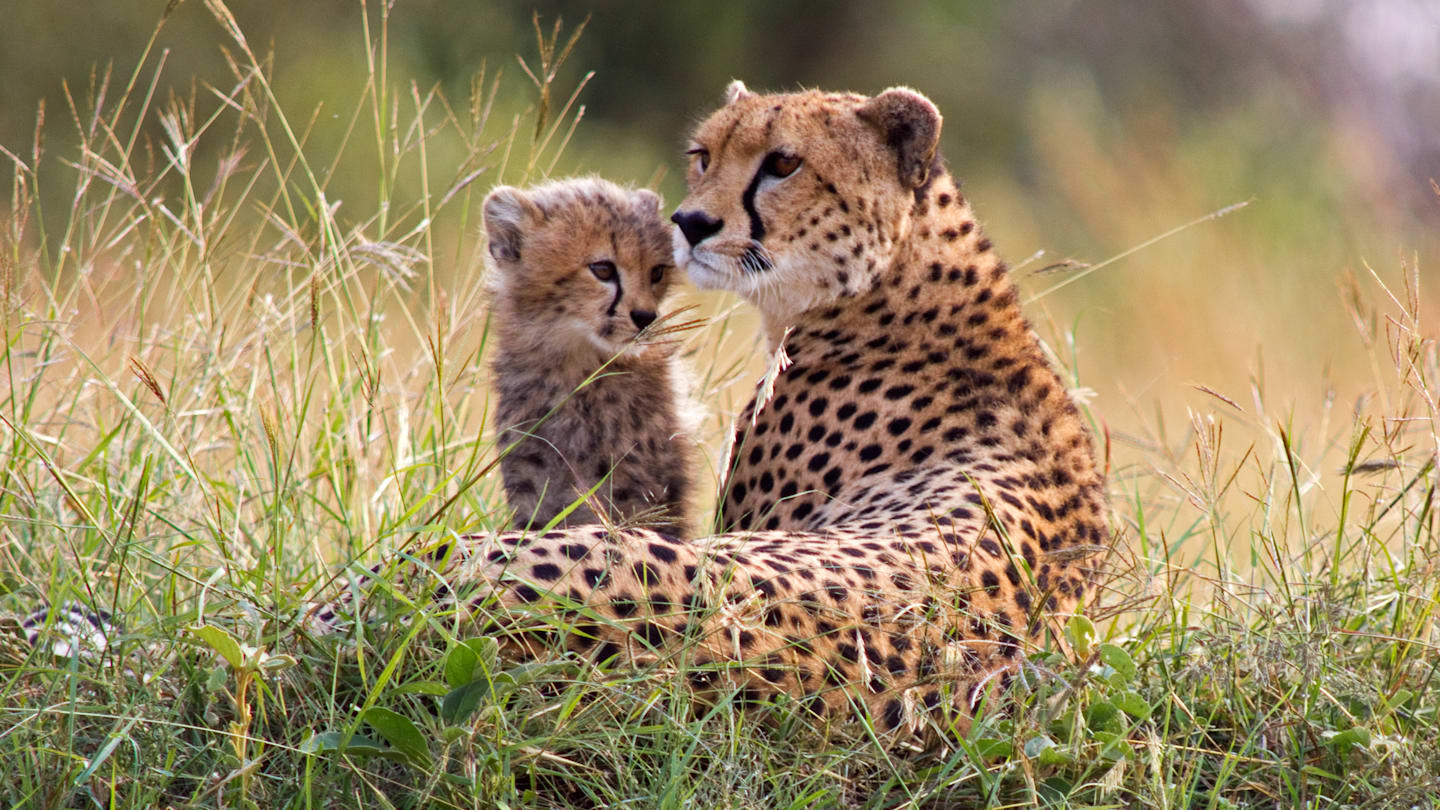
Cheetahs typically have around three cubs in the wild (and sometimes as many as eight in captivity), and after theyâre born, mom moves them frequently in an attempt to keep them safe. (Sadly, because she does have to leave to hunt, cub mortality is high.) Once the cubs reach eight weeks old, theyâre capable of following mom themselves , and they move to a new spot every day. Mom will teach them how to hunt, and theyâll hone those skills playing with their siblings. The mother cheetah doesnât leave her cubs until theyâre around 18 months old.
Elephant moms are pregnant for a significant amount of timeâ22 monthsâand give birth to gigantic babies (elephant calves clock in around 200 pounds !). And thatâs just the beginning of elephant parenting.
Baby elephants canât see well at first, so theyâre heavily reliant on their mothers and stick close to them for the first few months of their lives. Elephants form a matriarchal society where just about every female takes part in raising the little ones. Elephant babies rely on their mothers for support and nutrition for up to two years, during which they are also taught to forage, collect water, and protect themselvesâbut they continue to be reliant on their mothers for years.
When itâs time for harp seals to give birth, they do so on the ice, in large groups. They find their own young by scent . The first 12 days of a harp seal pupâs life is spent feeding on their momâs high-fat milk, during which time theyâll gain around 60 pounds. After that, the pups are on their own; theyâll stick around on the ice for another six weeks until they get so hungry they head to the water to hunt.
Orangutan moms stand out in the mothering world thanks to two major elements of their parenting that are not duplicated by other species. First, they either build a new nest or head to an older one every single night. Not impressed yet? Consider the second incredible trait of orangutan moms: Their babies hang off of them for years. Orangutan kids have the longest dependence period of any land-dwelling animal, and they will stay with their moms for up to seven years as mom teaches them how to find food and build nests. Females will come back to visit for much longer than that to learn mothering skills themselves.
While other spiders may leave their eggs on their webs while they go about their normal spider lives, wolf spiders take their egg sacs with them everywhereâand then take their young everywhere after theyâve hatched. Wolf spider moms attach their sacs to their bodies, later letting the baby spiders ride on their backs until theyâre of age to hop off [ PDF ].
After mating, polar bear moms need to pack on the pounds: If they donât at least double their body weight (usually adding another 400 pounds), their bodies will reabsorb the fertilized egg. After all that eating, the hefty mamas then need to dig a den, lightly hibernate, and give birth. And while that part of the parenting process might sound easy, polar bear moms are then tasked with taking care of their little ones for about two years before it all starts again.
Thereâs little chance youâll ever stumble into an octopus egg den, but take our adviceâitâs not something you want to do. Octopuses only reproduce once in their lifetimes and some will lay up to 200,000 eggs. Moms will then protect the eggs for as long as necessaryâscientists even observed one deep-sea octopus protecting her eggs for a record-breaking 53 months . During this time, the mother octopus doesnât eat and ensures the eggs get a constant supply of oxygenated water. When the eggs hatch, she dies.
Koalas chow down on poisonous eucalyptus leaves partly because their digestive tracts are filled with special microbes that can process the leavesâbut theyâre not born with it. Koalas work to build up their joeysâ tolerance by feeding them their poopâand not just any poop, but a âspecial unformed maternal faeces called âpap.ââ The first scientist to observe the behavior recorded a koala baby eating a âyellowish-green slimeâ by âforcing its nose into the motherâs cloaca [and] energetically eating the substance from [her] rectum.â The parent âappeared uncomfortableâ but âremained quietâ and didnât attempt to stop the baby. (That said, not all scientists are convinced itâs to transfer bacteria; some suggest that itâs a type of supplemental protein for a weaning joey.)
As if that wasnât already some all-time mom material, koalas are also marsupials, meaning joeys have to finish development in their momsâ pouches (before itâs time to get down to the poop-eating).
Alligators may not look very cuddly, but they make excellent mothers. A gator mom kicks things into high gear by building a nest made out of rotting vegetation that self-heats, allowing her to hunt, hang out, and guard said nest with maximum attention.
Internal temperature often determines the sex of the gator babies, so the nests have to be made with climate control. Nests that heat up to between 90 and 93 degrees Fahrenheit usually spawn boy gators, while much outside that range tends towards girls (though higher temperatures tend to be lethal). After the kids hatch, gator moms will gently carry their young in their giant mouths, taking them to the water to learn all the necessary gator stuff they have to know, with lessons often stretching out for a whole year .
Koalas arenât the only animal moms that rely on poop for parentingâgreat hornbills also use it, but for a different reason. Hornbills lay their eggs in hollowed-out trees , with mama hornbills staying behind to protect the eggs while papa hornbills go out for food. Where does the poop come into play? The hornbills use it to seal up holes in their hollowed-out homes, the very same places where the mother hornbills spend their days.
Read More Mother â s Day Stories:
This piece originally ran in 2014; it has been updated for 2025.