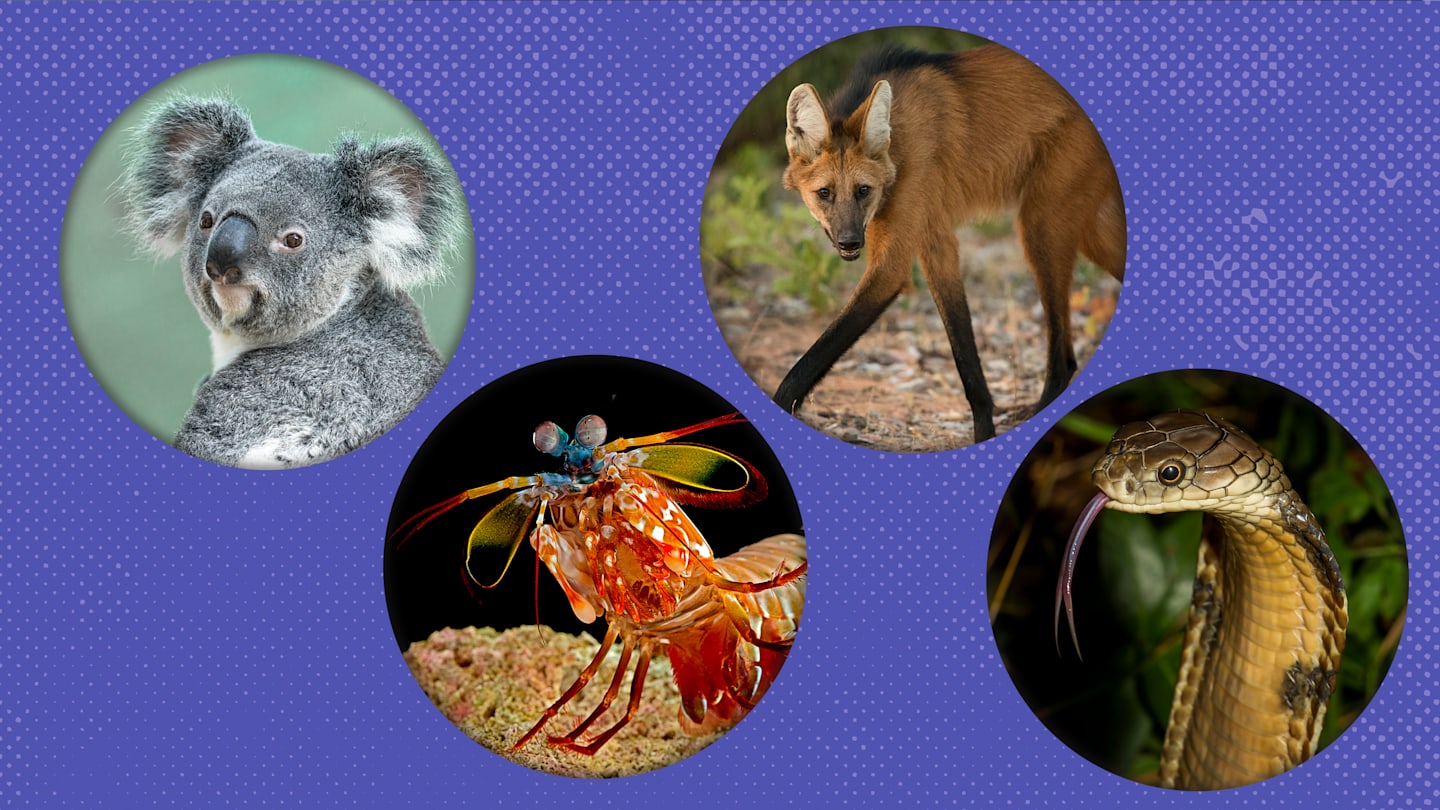
The animal kingdom is filled with a vast collection of wonderful creaturesâmaybe too many for any hopeful zoologist to commit to memory. But doing so would be much easier if so many species didn't have such misleading names. With dolphins masquerading as whales, lizards as toads, and marsupials as bears, it can be tough to keep track of which animals are which. Hereâs a rundown of some of the worst offenders in the taxonomical misnomer game.
Officially known as the binturong , this scruffy treetop resident has no relation to the bear and only the most distant connection to cats; its closest living relatives are fellow branch-dwelling mammals like the civet and the genet. Its genus name, Arctictis , translates to âbear weasel,â which is also inaccurate.
Though this animal isnât an eel at all , it has gained a monopoly on our connotations with the word. In fact, the electric eel is a type of knifefish (the common term for the order Gymnotiformes ), and only earned its name due to the snakelike appearance it shares with eels . Unlike true eels, the electric eel breathes air, lays its eggs in fresh (not ocean) water, and has no teeth or dorsal fin.
Thereâs a reason that the bronze-furred, bushy-tailed, catlike red panda looks almost nothing like its much larger black-and-white namesake: Theyâre not even related. The Himalayan omnivore occupies its own family ( Ailuridae ), and its closest relatives are weasels, raccoons, and skunks.
Surprisingly, these auburn fluff balls didnât swipe the panda name from the grayscale bears of China. The red panda got the monikerâwhich is believed to derive from the second part of the Nepali term Nigálya-pónya âfirst, following its original classification in the 1800s. It wasnât until early in the 20th century that the giant panda, newly (and incorrectly) assumed to be a relative of the former, borrowed the handle, and has kept a tight hold on it ever since.
Although it may boast etymological authority over the cobra species, the so-called king cobra is actually a different type of snake : Itâs the only snake in the genus Ophiophagus (true cobras belong to the genus Naja ) and probably got its name because its main food source is other snakes . A king cobra is marked by a much narrower hood than true cobras; other differences include body size, color, scale makeup (especially around the face), diet, reproductive patterns, habitat, and venom content and toxicity.
This North American native is close enough in relation to the common goat to forgive this particular infraction. But all true goats, wild and domesticated, belong to the genus Capra , whereas the so-called mountain goat is the sole species belonging to the genus Oreamnos .
Known both as the killer whale and the blackfish, Orcinus orca is actually a dolphin (and the worldâs largest dolphin at that). They reportedly came by the former moniker because sailors of yesteryear saw them hunting and killing large whales.
This feisty animalâwhich is native to parts of Africa and Asia and is properly known as a ratel âmight look superficially like a badger, but it belongs to a different subfamily, Mellivorinae, of which itâs the only living species. Its genus name and common name come from its love of honey .
These sea dwellers arenât shrimp or mantises. They occupy a unique order of marine crustacean, Stomatopoda. Â Characteristics that distinguish the mantis shrimp from other crustaceans include a 50-mph punch and an incredibly complex optical structure, allowing for a more sophisticated comprehension of color than any other known animal.
Thereâs no such thing as an American buffalo, as the furry beast that roamed the frontier of our very own Old West was actually a bison . Buffalo in the genera Syncerus and Bos hail naturally from Central and Southern Africa and the Indian subcontinent, and are marked by much larger horns and leaner bodies than the American bison.
Letâs get the real disappointment out of the way first. Flying lemurs canât fly; much like the flying squirrel, they glide and swoop . And though theyâre closely related to primates, the animalâwhich is also known as a colugo âisnât a lemur, either: Itâs a completely separate creature occupying its own order ( Dermoptera ) and family ( Cynocephalidae ) with two extant species living in southeast Asia.
Genetic sequencing has shown that this South American canine isnât a wolf, and though it looks like a tall fox, it isnât one of those, either. In fact, it has its own genus, Chrysocyon , which translates to âgolden dog.â It's a separate category from the genera Canis (including wolves, coyotes, and dogs) and Vulpes (true foxes),
These desert denizens arenât toads, or even frogsâtheyâre actually 14 species of lizards covered in sharp horns, spines, and scales. The reptiles do have the flat face and stout body youâd more likely find on a toad than a lizard, and its genus name translates to âtoad body,â which could explain its confused nomenclature.
Many people are well aware that Australiaâs sleepy, eucalyptus-chomping marsupial is not a bear âin fact, just about the only thing the two creatures have in common is that theyâre both mammals. The koala is the only extant animal in the family Phascolarctidae (the name translates to âpouched bearâ), and its fellow Aussie the wombat is its closest living relative .
One of the only creatures whose name is even more zoologically inaccurate than the koala bearâs is the jellyfish , which isnât even in the same phylum (and thatâs as far back as you can go without leaving the animal kingdom) as the fish. Despite being one of an impressive 10,000 sea creatures living under the Cnidaria phylum, the pesky beach stinger is still branded with the all-purpose, ever-oppressive fish label. And itâs not the only one.
Other creatures wrongly called fish are starfish and cuttlefish, each one a member of a phylum ( Echinodermata and Mullosca , respectively) distinct from fish.
Taxonomically speaking, fish are actually more closely related to humans than they are to either jellyfish or starfishâfish and humans both belong to the phylum Chordata , along with all other mammals, birds, reptiles, and amphibians ⦠but not jellyfish, starfish, or cuttlefish.
The mother of misnomers is this frog that goes by the name chicken . The endangered amphibianâwhich is officially known as the giant ditch frog ( Leptodactylus fallax )âwas once abundant across several Caribbean islands but now can only be found on Dominica. There are a few theories as to how the frog came by its common name: According to one, it was often eaten by locals and was said to taste like chicken ; others relate to its size (it can weigh up to 2 pounds) or its vocalizations, which kind of sound like a chicken squawking.
A version of this story ran in 2014; it has been updated for 2023.
Loading recommendations... Please wait while we load personalized content recommendations