As the summer temperatures continue to climb, you may find yourself spending more and more time indoors enjoying the comforts of central air conditioning. But without the benefit of modern technology, animals that make their home in the heat have had to come up with their own ways of staying cool and hydrated. We caught up with San Diego Zoo Ambassador and Zookeeper Rick Schwartz between television appearances in New York City to talk about the incredible ways that some creatures have adapted to survive in the desert.
In the Australian Outback, pooled water can be extremely hard to come by. To deal with this issue, the thorny devil has developed skin that can absorb water like blotter paper (called âcapillary actionâ). According to Schwartz, âthe way the scales on the body are structured, it collects dew and channels it down to the corners of the mouth," where the lizard drinks it. You can actually watch the lizardâs skin darken as it soaks up whatever liquid remains from even the muckiest of puddles.
Schwartz says it was previously believed that these animals died off during every dry season, but what was actually happening was far more interesting. When the rainy season ends on the African savannah, the second largest frog in the world burrows 6 to 8 inches underground and seals itself in a mucus membrane that âessentially hardens into a cocoon.â The frog can âhibernateâ in this sac for up to seven years waiting for rain, which, when it comes, causes the mucus sac to soften, signaling to the frog that itâs time to wake up. The South African lungfish benefits from a similar method of hibernation.
This unusual method of locomotion is used by two species of venomous snakeâthe Mojave Desert sidewinder in the southwestern United States and the Namib Desert viper in Africa. Not only does it help the serpents keep traction on shifting sands, but it ensures that only two points of the animalsâ bodies are touching the hot ground at any given time.
When facing a predator, this large lizard will scurry under a rock crevice and inflate the loose folds of skin along its body, making it difficult to pull from its hiding placeâa perfect escape plan in the rocky deserts of the U.S. and northern Mexico that the chuckwalla calls home.
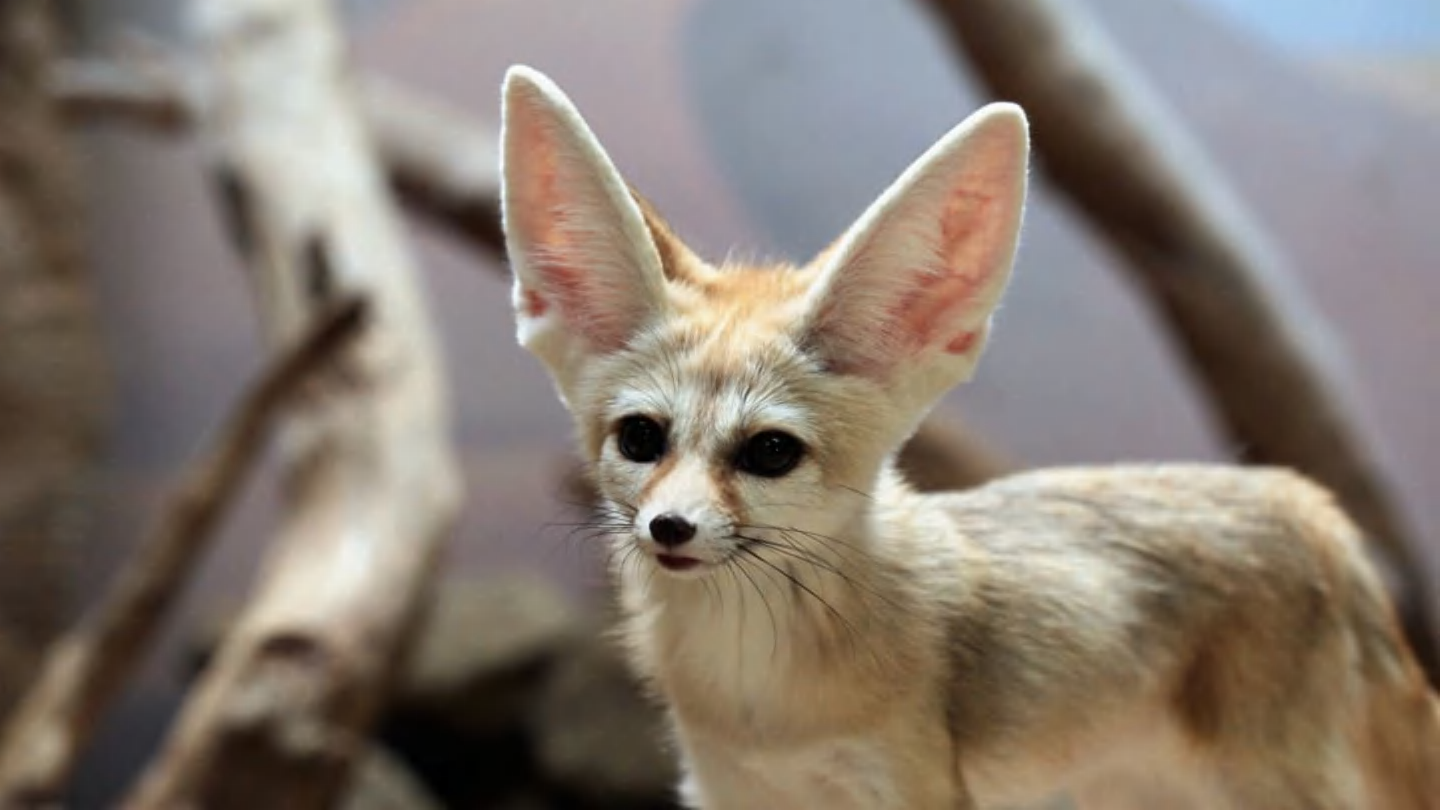
The fennec fox of North Africa has large ears which Schwartz points out âserve a dual purposeâ: they are great for listening for bugs to eat that may be moving around underground, but they are also loaded with blood vessels, allowing the animals to dissipate excess body heat. Schwartz points out that while big ears are wonderful radiators during hot days, the foxâs thick fur coat also acts as insulation during cold desert nights.
Native to the driest areas of southern Africa, this borrowing rodent can actually use its bushy tail as a sort of parasolâa function I think we all envy from time to time.
No discussion of desert survival is complete without a mention of the camel. You know that the hump stores fat, which can be used as both a food and water source for the animal when the going gets tough. But Schwartz points out that camels also have thick hairs in their ears for keeping out sand, and the same can be said of their eyelashesââthereâs not a model out there that wouldnât want eyelashes like that,â Schwartz says. Camels also sport closable nostrils, a nictitating eye membrane, and wide feet that act like snowshoes in the sand.
The Gila Monsterâone of only two venomous lizards in the worldâspends most of its life underground and can go months between meals by living off of fat stored in its tail. This is a handy little survival trick during the dry season in their Sonoran Desert habitat.
The peccary, or javelina, has a tough mouth and specialized digestive system which enables it to chomp down on prickly pear cactus pads (one of their favorite foods) without feeling the effects of the plantâs thousands of tiny spines. âI canât imagine biting into the paddle of a cactus, but these animals definitely have found ways to do that,â Schwartz says. As an added bonus, using cactus as a food source is a great way to supplement water intake as the spiny succulents are absolutely loaded with the stuff.
This bird, found mainly in the deserts of Asia and North Africa, has specialized feathers on its belly that are able to soak up small quantities of water. Males of the species will use these feathers like a sponge to carry water back to their nests, which they then share with their female counterparts and offspring.
Though they will drink water when it is available, this small species of North African antelope can get all of the water it needs from the food in its diet. When water is unavailable, the Dorcas gazelle can concentrate its urine into uric acid, which Schwartz describes as âa white pelletâ instead of the hydraulically expensive liquid waste. âThatâs water conservation,â he says, âand they need to hold on to whatever they get.â
The Namib Desert in Africa has very little fresh water to speak of, but due to its proximity to the sea, it receives a daily dose of fog in the cool hours of the early morning. Fogstand beetles have learned to stand still in order to let the fog condense on their bodies in the form of water droplets, which they then drink.
As Schwartz points out, the metabolic processes of the body all have outputs which often occur in the form of mineral build up. âAnimals that live in an environment where water is readily available will just [get rid of those minerals] through their urine,â he says. âWhen you have animals that live in these extreme environments where they donât want to excrete any fluids, the body will find other ways to get rid of those minerals.â The greater roadrunner of North America, which like the Dorcas gazelle can survive its whole life without drinking water, has developed a unique way of dealing with this problem: it secretes excess salt from a gland near its eye.
Not only are these animals able to close any wounds through a special process of contraction, but the exceptionally weak skin of these mice means it is also much easier to regenerate, allowing wounded spiny mice to heal from superficial wounds much faster than other speciesâa process which minimizes blood loss.
With subspecies in Africa, Asia, and Australia, this freaky legless lizard has developed an ingenious method of dealing with high desert surface temperaturesâsimply staying out of them. Blind skinks have lost their legs and eyes through evolution and, like the sandworms from Beetlejuice , prefer to stay hidden underground where they can tunnel in search of creepy crawlies to munch on.
Scorpions are able to go up to a year without eating thanks to their specialized metabolisms. Unlike other animals that experience a seasonal hibernation, though, a scorpion is still able to react to the presence of prey with lightning quickness even while in this state of nearly suspended animation.
To survive the harsh Australian summers, kangaroos will cool off by licking their forelegs. A special network of blood vessels in the legs allows the animals to reduce their body temperatures quickly through the evaporation of saliva since kangaroos lack regular sweat glands.
The black circles around the eyes of these social African mammals is often compared to a natural pair of sunglasses, though Schwartz says that the pattern actually functions by âabsorbing the sun and preventing it from reflecting back into the eyes.â This means that the pattern works more like the eye black used by professional athletes than actual lenses. Still, says Schwartz, it allows them âto see more clearlyâ while awake during the day, compared to nocturnal predators such as lions, whose eyes have no special markings whatsoever.
Another creature native to the Sahara Desert, the Addax antelope rarely if ever needs to drink water to survive. To cope with the unforgiving desert sun, the Addax sports a white coat in the summer which reflects sunlight, but in the winter the coat turns brownish-gray so as to better absorb heat.
What better way is there to silence your competition than by eating them? The common kingsnake is so specialized to that end that not only do they hunt by clamping down on a snakeâs jaws before constricting it to death, they have also developed an immunity to rattlesnake venom, making the vipers one of their favorite food sources.
Loading recommendations... Please wait while we load personalized content recommendations