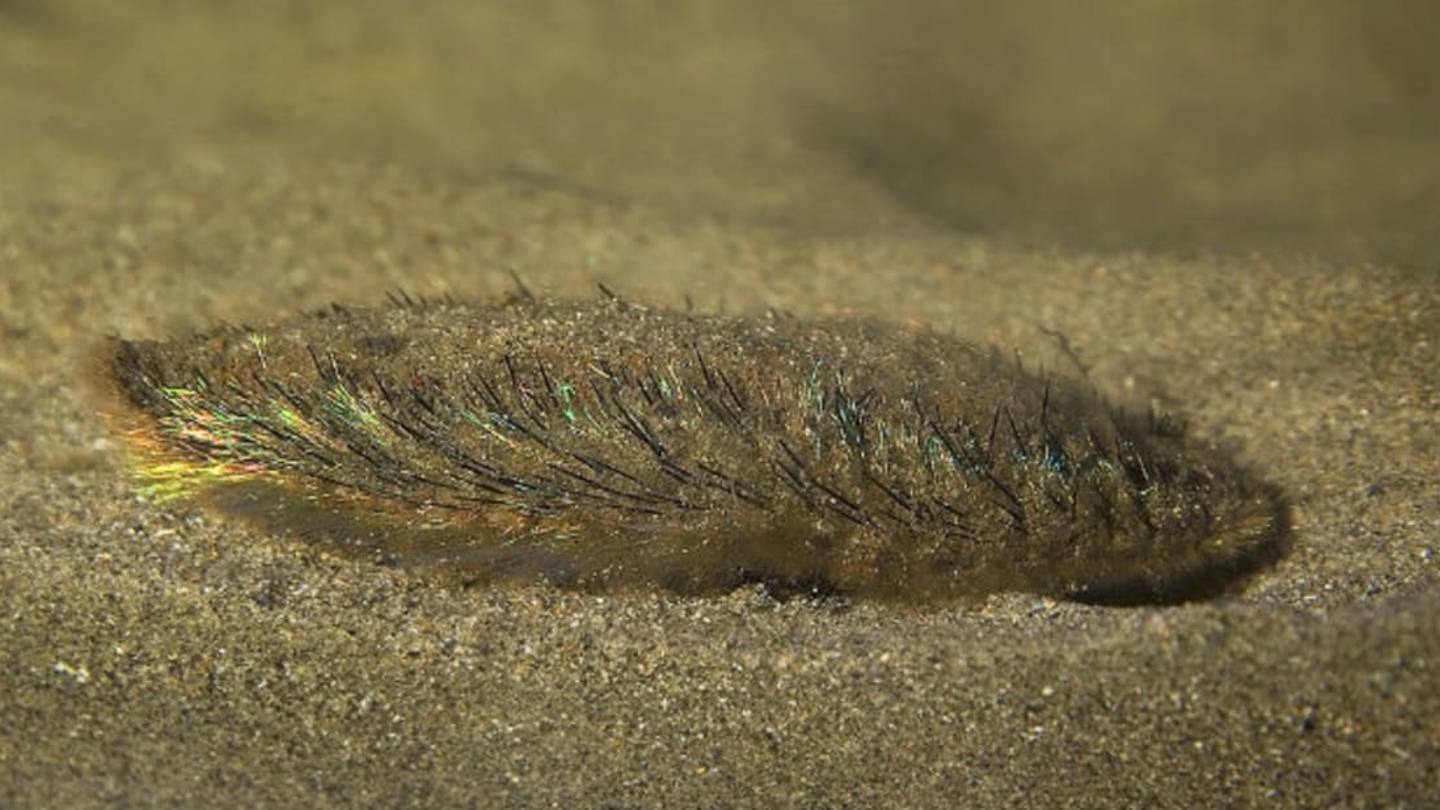
Identifying a new genus or species is a pretty big deal. Like proud parents, scientists often give their discoveries the biggest, most impressive names they can think of.
This furry sea worm was named for the Greek goddess of beauty and love by none other than Carl Linnaeus himself. Was the name a joke? Sort ofâbut not the one youâd think. By invoking Aphrodite, Linnaeus was actually commenting on the fact that a sea mouse at rest bears some resemblance to a ladyâs genitals. Historians have noted that during Linnaeusâs time, âmouseâ was also slang for âvagina.âÂ
The mighty serpent Ouroboros is a classical symbol of infinity: holding its tail in its mouth, it forms a perfect circle with no beginning and no end. The armadillo lizard is somewhat less dignified. The little South African reptiles are covered in plates of spiny armor, and when threatened they bite their own tails and curl up, leaving potential predators with a ball of spikes. Itâs an effective strategy. Itâs also really, really cute.
In early 2015, researchers reported that they had named a newly discovered species of millipede after the Egyptian god Anubis. The millipede, they said, was shaped like the jackal godâs head . Well, part of the millipede, anyway: From certain angles, you can just make out a jackalâs head in the shape of the male millipedeâs gonopod telopodite, or sex organ.
Itâs less than a foot long, but the Thorâs hero shrew is tough. Its power comes from its super-strong, interlocking spine, which lets the animal plunge into crevices of rock in search of worms. The gray-brown rodent is indeed a hero in its native Democratic Republic of the Congo, where the Mangbetu people evoke its invincibility  by wearing portions of the animal as a talisman against weapons. The name âThorâ is actually a two-fer ; the shrew was named for both the mighty Norse god and Thorvald âThorâ Holmes, Jr., a collections manager at the Humboldt State University Vertebrate Museum.
The devil frog is no longer with us, and that may be a good thing. This enormous prehistoric frogâpossibly the largest frog that has ever livedâhad a taste for meat, a predilection for ambushing its prey, and a big, big mouth . The scientists who discovered fossil evidence of the frog named it Beezelbufo ampinga , or âarmored frog from hell.â
There is a deity for everything. Cloacina was the Roman goddess of the sewers, particularly the Cloaca Maxima, or "Great Drain." She is rarely invoked these days, but her memory survives deep inside a kangaroo. There is an entire genus of nematodes that lives exclusively in the stomachs of kangaroos and wallabies, and each one bears the goddessâs name.
Itâs extremely rare to find an intact dinosaur skeletonâmost fossils that we have today were discovered in bits and pieces. Such is the case of the sacisaurus , a plant-eating dinosaur found in southern Brazil. The fossil was missing one leg, and so the research team named it for Saci, a one-legged prankster from Brazilian folklore. By all accounts, Saci is quite a nuisance; he steals childrenâs toys, sours milk, annoys dogs, and keeps popcorn from popping. Thereâs been no word yet as to whether the dinosaur did the same thing.
Loading recommendations... Please wait while we load personalized content recommendations