Mother Nature loves a joke. Marine invertebrates that literally puke their guts out at the slightest provocation and hippos that sweat sunscreen are just a few of her favorites. There are vultures that wear leggings made from their own poop . There are alarmingly large bugs that smell like cherry cola, and mammal butts that smell like French vanilla and buttered popcorn. (Go home, nature. Youâre drunk .)
So is this the zoo or a candy factory? Your nose canât tell the difference. These seven animals are olfactory dead ringers for Jelly Belly flavors.
The back end of the binturong, or bearcat, is legendary . Not for its size, shape, or productivity, but because it smells remarkably like a movie theater lobby. The heavenly scent that wafts across a bearcat habitat originates right in its inhabitantsâ anal glands. Like housecats, binturongs are highly territorial and use smell to stake out their turf, but thatâs where the similarity ends. While cats will snuggle and rub affectionately to leave their calling cards, a binturong scent-marks by dragging its butt across every object and surface it can find.
The yellow ant is kind of a two-for-one deal. Not only do these ants emit an unmistakably lemony aroma, but they also look like little tiny lemons. Or their gasters (behinds) do, anyway.
When a colony of yellow ants is disturbed, its members emit a defensive chemical that smells so much like lemons that some people call these insects citronella ants. If your backyard smells suspiciously like a lemonade stand and there are no enterprising children in sight, take a lookâyou may have ants.
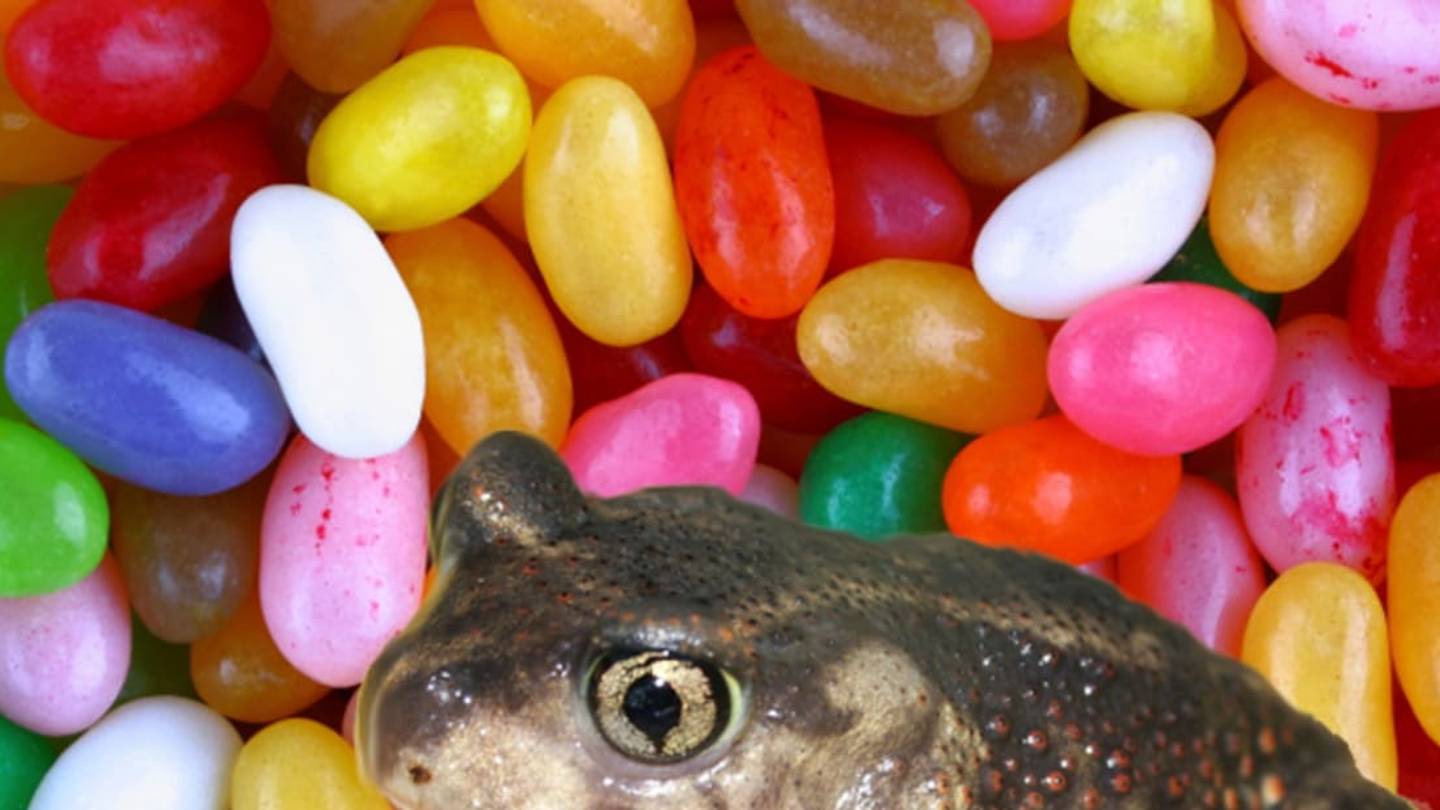
Oh, spadefoot toad, you incredible weirdo . Behind your bulging eyes and claw-tipped hind legs is a gentle soul, a soul that craves solitude. A soul that enjoys a good wallow in the mud. A soulâand a parotoid glandâthat will secrete a peanut butter-scented substance that causes sneezing and burning eyes in anyone who touches you. You just want to be left alone, spadefoot toad. We understand.
NOTE: We realize that Peanut Butter is no longer part of Jelly Bellyâs 50 Official Flavors collection, but it remains lodged in our memories, our taste buds, and our hearts.
Their sting is bananas. B-A-N-A-N-A-S.
Letâs rewind a moment: Bee communication is super complex, and ranges from adorable folk dances to hysteria-inducing chemical signals like the alarm pheromone. When a forager bee feels threatened, it sends the scent of fear out into the hive. Other bees pick up the chemical trail and pass along the message, spreading panic. Africanized bees are both more sensitive to the pheromone than their European cousins and produce more of it, which means more panic, which means more stinging. And what does this alarm pheromone smell like to humans? You guessed it: bananas .
So far weâve seen nutty amphibians, citrusy insects, and buttery mammal butts, but what about fruit-fragranced birds? Yeah, weâve got those, too.
Crested auklets are so fragrant, wildlife biologist Julie Hagelin told Nature , that âitâs like somebody is peeling a tangerine next to you.â The auklets are the first birds known to signal through scent. The seabirds use their oily bills to apply fragrance to their feathers like humans applying perfume, hoping to attract a mate. Smell is such a turn-on for these birds that their greetings consist of sniffing each otherâs neck feathers. Toucan Sam could not be reached for comment.
Giant millipedes are kind of scary. They are, as their name suggests, pretty bigâsome species can be more than 15 inches longâand they brew all manner of poisons when theyâre upset. The American giant millipede ( Narceus americanus ) secretes a liquid that can cause dermatological burns. But maybe these bugs have a bad name. Sure, Apheloria virginiensis may release cyanide when itâs stressed, but it also âhas a nice odor, like cherry cola.â
Again: weâve strayed from the Jelly Belly top 50 , but hear us out. Cherry cola jelly beans, while retired from the American J.B. roster, are still a thing in the UK.
In the science world, the vanilla-scented, molasses-like goo that comes out of a beaverâs butt is known as castoreum. In the world of food science, itâs known as ânatural flavoring.â When the news hit a few years back that beaver bum-milk was a legal food additive, consumers hit the fan. Fortunately, milking a beaver bottom is a thankless job and the yield is low, which means that most food-grade vanilla flavoring comes from less extreme sources.
The old trail wisdom goes that if you smell watermelons and youâre nowhere near a melon patch, rattlesnakes canât be far away. This is not true . The misconception may have arisen from the Southern melon varietal known as the rattlesnake watermelon. When asked what the snakes do smell like, one experienced woodsman answered, âRattlesnakes.â
And then thereâs elephant pee, which allegedly smells like black licorice. There is no proof that this is true. Thereâs also no proof that it isnât. The next time you encounter an elephant urine scholar (or a beaker of elephant urine), find out for yourself and send us an update.
All images courtesy of Thinkstock
Loading recommendations... Please wait while we load personalized content recommendations