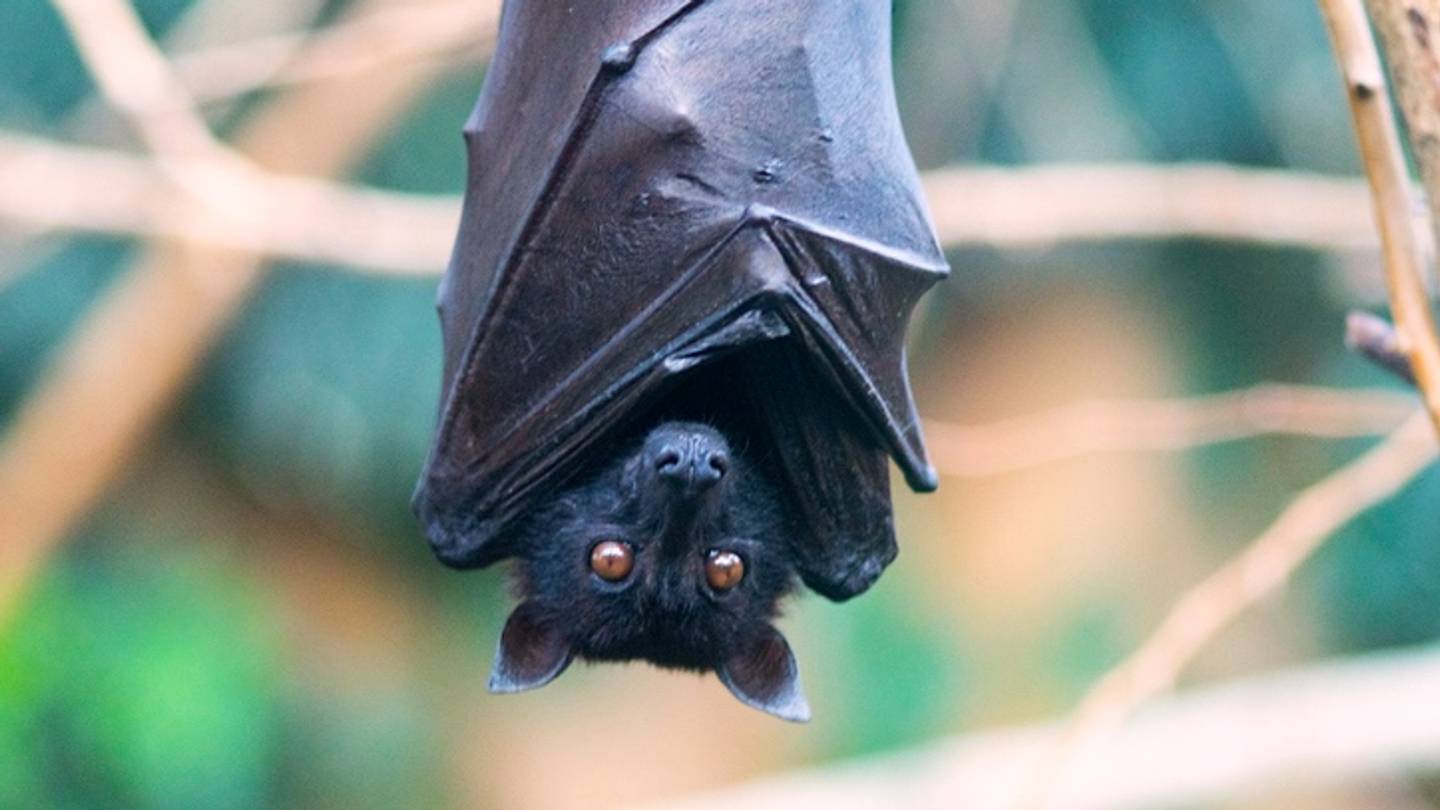
In China, bats are said to bring good luck. Ancient Egyptians believed they could cure an array of diseases. But Westernersâ feelings about bats are often negative. Perhaps these rumors started because bats are so mysteriousâwith their nocturnal flying and dank, dark habitats, theyâre hard to study. But the only flying mammals in the animal kingdom arenât nearly as scary as our fears make them out to be. Keep reading for seven misconceptions and explanations of what really goes on in the batcave.
That old idiom is definitely inaccurate. Bigger bats can see up to three times better than humans, Rob Mies, former executive director of the Organization for Bat Conservation, told National Geographic . Bat vision varies across species, but none is actually blind. In addition to working peepers, bats also use echolocation (emitting sound to navigate)âwhich means they probably have a better idea of where theyâre going than many of us.
Bats belong to the order Chiropteraânot Rodentia. Theyâre actually more closely related to primates than they are to rodents. They also donât share behavior with rodents. For example, bats don't chew on wood, metal, or plastic, and usually aren't considered ânuisanceâ animals.
Add Mental Floss as a  preferred news source !
Quite the opposite: Bats actually eat pests. Some species can eat up to a thousand insects in an evening. Their bug-eating prowess is so notable it carries economic importance. A 2011 study calculated that bats provide nontoxic pest-control services for agriculture worth $3.7 billion to $53 billion per year. Bats also pollinate plants and distribute seeds, and their droppings, called guano, are used as fertilizer.
Only three of the roughly 1200 existing bat species are vampire bats , and none of them lives in the United States or Canada. Vampire bats don't even really drink bloodâMies said the feeding process is more like that of a mosquito. While mosquitos will take blood from humans, though, vampire bats primarily feed on cattle. Fun fact: a protein in vampire bat saliva, which keeps blood from clotting as the bat feeds, is called draculin .
An old myth claims that bats fly into hair, get stuck, and build nests. While itâs possible this rumor started to deter young women from going out at night, bats do sometimes swoop around peopleâs heads. The reason isnât because theyâre shopping for a new home, however: Our bodies attract insects, and bats are after their next snack. So don't worryâyour spectacular updo is safe. In fact, bats donât build nests at all. They find shelter inside existing structures. Caves , trees, walls, and ceilings are favorites, as are rafters of buildings
Contrary to the popular image, bats donât always dangle downwards. Bats are frequently horizontal, not vertical, when they roost in small crevices.
Nope. Shari Blissett Clark, president of the Florida Bat Conservancy, told the Daytona Beach News-Journal that bats contract rabies much less frequently than other mammals. And if they do get rabies, it manifests differently than in raccoons or foxes. Rabies-infected bats become paralyzed and can't fly or roost. This means that as long as you stay away from bats on the ground that are behaving strangely, you're pretty much in the clear.
A version of this story was published in 2019; it has been updated for 2025.
Loading recommendations... Please wait while we load personalized content recommendations