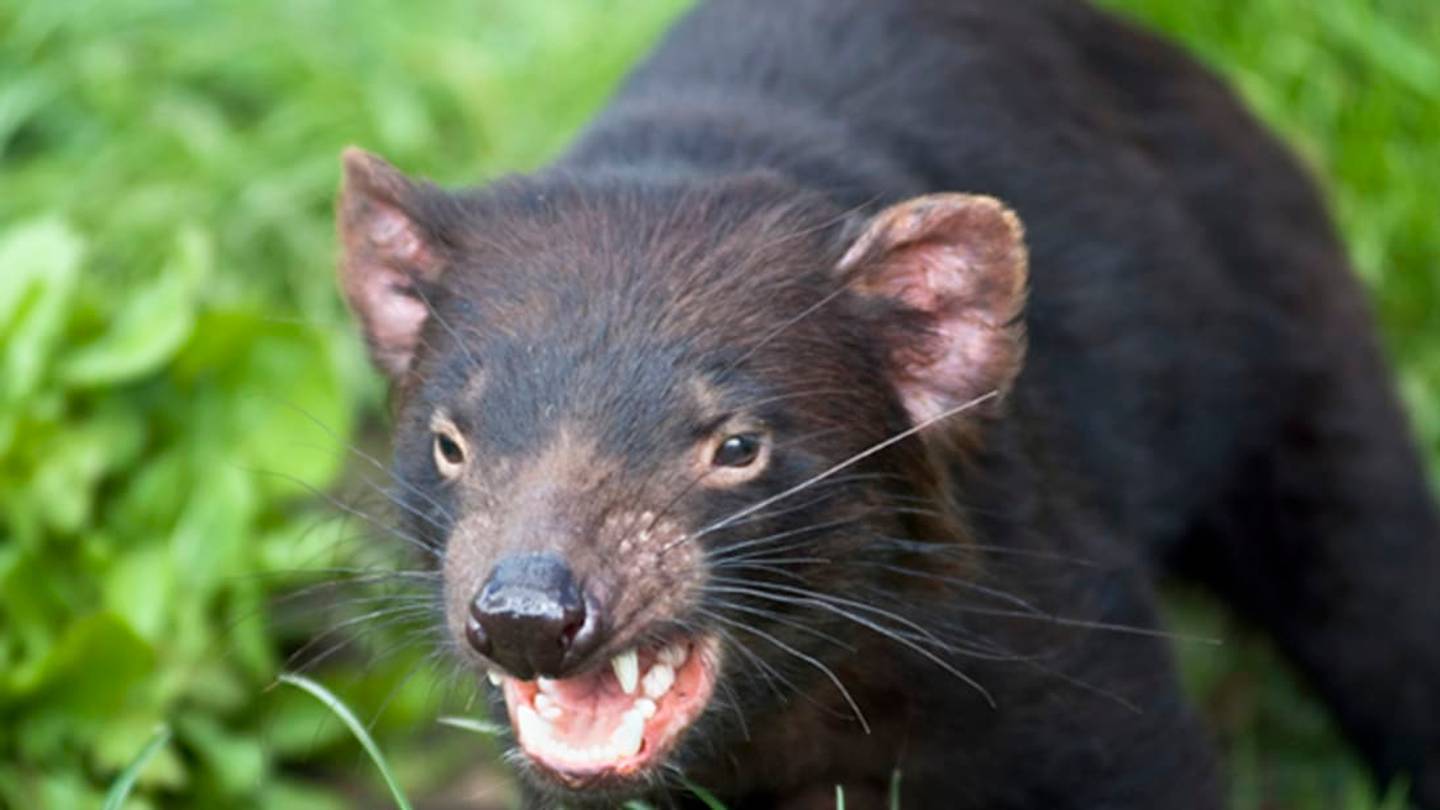
In the Looney Toons , the Tasmanian Devil is a hulking, hungry monster that spins like a tornado, destroying everything in his path. In real life, Tasmanian devils arenât so dramatic. Here are eight devilish facts about the cartoonâs real-life inspiration.Â
Between 1997 and 2007, the worldwide Tasmanian devil population declined by more than 60 percent . They are dying en masse from an infectious cancer called devil facial tumor disease . The aggressive cancer passes between the marsupials when they bite each other (as they do during both mating and fighting). The facial tumors that grow as a result of the cancer prevent the Tasmanian devils from eating, and have killed up to 50 percent of the population in some areas.
As their name indicates, theyâre native to Tasmania, an island just off the southern Australian coast. But centuries ago, the animals also roamed the Australian mainland. The species disappeared from everywhere except Tasmania an estimated 400 years ago , possibly due to competition from dingoes and people. Now, some Australian states are considering reintroducing the predator as a way to save native species from foxes and feral cats.
Like kangaroos, Tasmanian devils are marsupials, and females have pouches in which they carry their young. The pouch contains four teats to nurse up to four joeys. Unlike in kangaroos, the pouch faces backward (toward the tail). Watch a handler check to see if a captive devil is carrying young in her pouch:
Though the Tasmanian Devil of the Looney Toons world seems huge, real Tasmanian devils are actually relatively petite. Theyâre around the size of a small dog, about a foot tall. However, that does make them the largest carnivorous marsupial in the world (smaller relatives include the quoll and the numbat ).
The head and neck of an adult male Tasmanian devil can be up to a quarter of its overall weight. Similar to other marsupials, they store fat in their tail as a buffer against lean times.Â
Image Credit: iStock
Tasmanian devils have most powerful bite relative to their body mass of any carnivore on earth, according to a 2005 study . They are both scavengers and hunters , and feed on wallabies, possums, foxes, birds, and, in farm-heavy areas, the carcasses of sheep and cows. They even eat fur and bones.Â
The Latin name for Tasmanian devils is Sarcophilus harrisii , which, according to the Tasmanian governmentâs fact page on the species, means âHarrisâs meat lover,â after the scientist who first described the animal.Â
Their otherworldly growls and screams give some insight into why European settlers might have thought they were Satanic.
Loading recommendations... Please wait while we load personalized content recommendations