The greatest migrations in the animal kingdom now inspire great migrations of people, who travel from all corners of the globe to watch natureâs most spectacular journeys unfold. Here are nine epic treks that every wildlife enthusiast should witness in person.
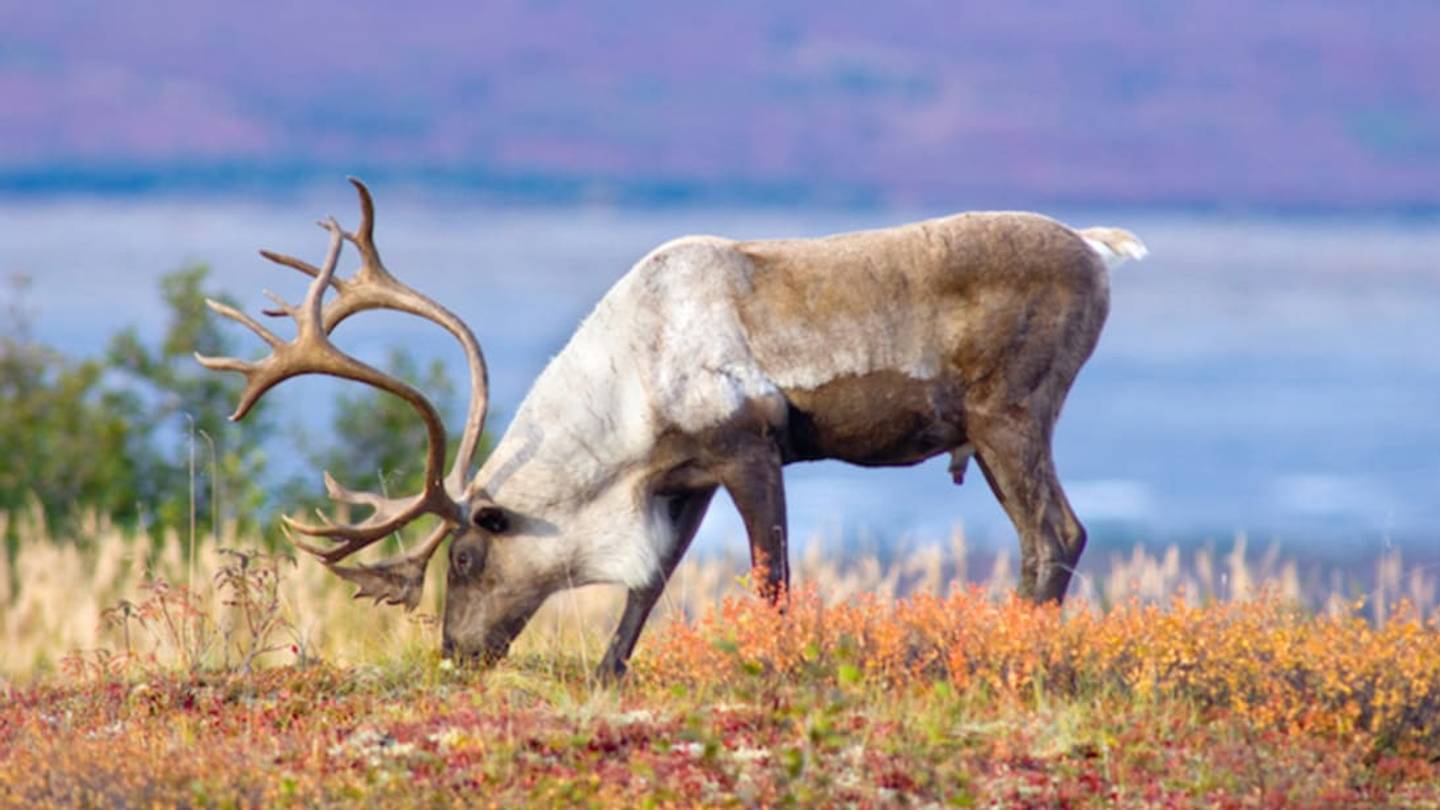
These antlered mammals really get around. In fact, the longest annual migrations of any land mammal on earth are made by certain caribou herds near the Arctic circle. Every March, 169,000 members of the Porcupine herd, for example, collectively leave their winter homes in the southern parts of the Brooks mountain range and Yukon territory. Over several weeks, they slowly trod up to the Coastal Plain in northeastern Alaska, where females calve from late May to early June. Once autumn arrives, the caribou make an equally amazing return journey southwards. When all is said and done, the herbivores can cover more than 3000 miles per year .
If youâd like to witness this miracle of nature for yourself, just know that the experience wonât be cheap. Up there, the terrain is both rough and remoteâplus, the caribou donât always follow the exact same pathways every year. Rather than try and plan out a route all by yourself, it makes sense to find an organized tour group . A handful of companies offer caribou package deals: for a $3000 to $6000 fee, theyâll set you up with some food, camping equipment, basic supplies, and a seasoned guide who will help you navigate the terrain. Most of these tours will last for about a week, although longer ones do exist. By the way, space is usually limited, so youâll want to reserve your spot ASAP.
Christmas Island is a tiny landmass in the Indian Ocean that boasts a human population of around 2500. The Australian territory is also home to some 14 different terrestrial crab species, including fist-sized Christmas Island red crabs. Here, the forest floors are absolutely teeming with the crimson crustaceans, as more than 120 million inhabit the island in total. Unlike many of their seagoing relatives, adult Christmas Island red crabs live exclusively on dry land, where they dine on leaves, fruits, flowers, seedlings, and the occasional dead animal.
Though they live on land, instinct drives the little animals towards the beaches once a year, where they spawn en masse according to the phases of the moon . The trek coincides with the onset of the wet season in October, November, and December. Visit Christmas Island during those months, and youâre pretty much guaranteed to see millions of red crabs blanketing just about every backyard, train track, and roadway in sight.
Baby Pacific salmon hatch in freshwater streams and then swim out into the ocean. Two to seven years later, the ones that still survive ( usually ) return to their birthplaces as mature adults, swimming against currents as they go. Those who donât get eaten by some predator along the way will arrive at the final destination and spawn. Once theyâve procreated, the fish die, leaving their decomposing bodies behind to help nourish the next generation.
Fishermen call this return journey a âsalmon run.â These mainly occur between the months of September and November. From central Alaska to the San Francisco Bay area , the Pacific Northwest is loaded with streams where visitors can catch a real-life salmon run in all its fishy glory. A few locales, like Piperâs Creek in Seattle, are even patrolled by trained volunteers who field questions from tourists about the tenacious salmon that pass through. Should you find yourself in this region of North America during the crisp autumn months, ask around and see if thereâs a spawning stream near you.
On a continent that includes ancient pyramids and a 19,341-foot dormant volcano, this still manages to be one of the most impressive sights youâll ever behold. Each year, 1.5 million wildebeest âalong with 200,000 zebras and scores of antelopesâembark upon a journey that spans some 150,000 square miles. The trek begins in Tanzaniaâs Serengeti National Park, where female wildebeest give birth during the wet period that spans from January to March. Around May, the local plains begin to dry up, which prompts huge herds of wildebeest to amble north to their favorite pastures in the Masai Mara National Reserve in Kenya. Here the wildebeest remain until the rains drive them southward, usually at some point in October or November.Â
By no means is the excursion a pleasant one. Roughly 250,000 wildebeest die from illness or sheer fatigue along the way. Lions, leopards, cheetahs, and hyenas relentlessly harass the herds on every leg of their trek. And then thereâs the fact thatâin order to get from point A to point Bâthe wildebeest must brave the crocodile-infested Grumeti and Mara Rivers.
Tourists who need a place to stay while they observe the migration can take advantage of the numerous safari lodges available at the Masai Mara National Reserve and Serengeti National Park. Campsites, complete with tents on wooden platforms, are also available for more adventurous individuals.Â
Northern elephant seals are so named because the male of this species produces long-range noises with an inflatable, trunk-like sack on his snout. Yet its strange appearance isnât the creatureâs only claim to fame. Elephant seals are also known for their twice -yearly migrations that span vast distances.
Interestingly, the two sexes have different starting points. From March to June and from July to November, males hunt for squid and fish off the coasts of the Aleutian Islands. Meanwhile, the females do their hunting up to 800 miles further south. In one calendar year, both sexes will make two trips to the warm, sunny beaches of California and northern Mexico. The first of these takes place between December and March, during which time dominant males stake out their territories before impregnating as many as 50 individual partners. By January, the female seals will have given birth and started mating again. Once the pups are old enough to fend for themselves in April, the adults make their way back to the north Atlanticâfor a while anyway. Later in the spring or summer, these fully-grown pinnipeds haul themselves back onto the same warm weather beaches. This time, though, their objective isnât breeding, but molting [ PDF ]. When all is said and done, males and females will, respectively, spend around 250 and 300 days per year out in the open ocean .
To catch the tail end of an elephant seal migration, consider a visit to Point Reyes National Seashore in Marin County, California. From the safety of an overlook, visitors to this admission-free park can observe a newly-assembled breeding colony in December, January, February, and March. Please be sure to keep your distance, however: Walking within 100 feet of a wild elephant seal is strictly prohibited.
For two months out of every year, a 75-mile section of the Platte River in central Nebraska hosts over 500,000 sandhill cranes . To them, itâs a nice pit stop. Although there are a few nonmigratory populations of this species in Mississippi and Florida, most sandhill cranes travel great distances as the seasons change. An estimated 80 percent of those living in North America spend their winters in Mexico and the southern U.S. Then, beginning in mid-February, the cranes make their way up north. During their trip, half a million of these birds collectively touch down on the Platte Riverâs many sandbars. Famished, the cranes waste little time in plucking unharvested grains from nearby cornfields. By April, the birds have regained enough strength to complete the final leg of their journey. With newfound energy, these broad-winged travelers take off for the speciesâ traditional breeding grounds in Canada, Alaska, Minnesota, Oregon, Idaho, Wisconsin, and Michigan.
Naturally, the chance to gaze upon 500,000 cranes is irresistible to birdwatchers. Kearney, Nebraska âthe self-proclaimed âsandhill crane capital of the worldââoffers many free viewing areas for visiting nature enthusiasts. Those who would like to snag first-rate snapshots can pay a visit to the nearby Ian Nicholson Audubon Center at Rowe Sanctuary, where special â photographers crane tours â are offered.
To anyone who adores reptiles and amphibians, Shawnee National Forest can feel like heaven on earth. Located in southern Illinois, the forest contains gorgeous limestone bluffs which reach heights of up to 150 feet. Every winter, scores of snakes, turtles, frogs, toads, and salamanders find shelter in the rock faces. Once spring arrives with its warmer temperatures, the creatures begin to stir. Abandoning the bluffs, these animals migrate down to the lush swamps that lie elsewhere in the park. However, getting to them involves crossing a stretch of LaRue Road, a clearing thatâs normally frequented by cars.
For decades, this was a recipe for roadkill. Realizing that vehicular traffic posed a significant threat to Shawneeâs wildlife, the Forest Service took action in 1972 by starting the biannual practice of temporarily closing off a 2.5-mile stretch of LaRue Road [ PDF ]. Nicknamed "Snake Road," this section was declared off-limits to vehicles for three weeks every spring and another three weeks in the fall.
Since then, itâs gotten even more reptile-friendly. Nowadays, Snake Road is a car-free zone from March 15 to May 15 and again from September 1 to October 30.
Fortunately, the section is always open to foot traffic. Eco-tourists and herpetology buffs from across the country descend on Snake Road during every migration, hoping to encounter 35 of Illinoisâs 39 native snake species here, including cottonmouths, copperheads, and ringneck snakes.Â
Of the roughly 20,000 butterfly species in existence, only one is known to embark upon a two-way migration . Monarch butterflies that reside in Canada and the northern U.S. breed during the summer, then fly south to escape the harsh winters. During the autumn months, butterflies that live east of the Rocky Mountains make their way to central Mexico. Meanwhile, monarchs that breed in the west overwinter down in California. Upon springtimeâs return, the butterflies re-migrate northwards. Sadly, they donât make it all the way back: After arriving in the southern U.S., monarchs lay their eggs on milkweed and die. Itâs then up to the resultant offspring to journey north and, eventually, start the whole cycle over again. Each generation travels a bit farther north than the last; it can take three or four generations to reach the northern United States and Canada.Â
If you live west of the Rockies, the best way to see a kaleidoscope of traveling monarchs is to make a beeline for California. From the Coronado Butterfly Preserve in Santa Barbara County to South Beachâs El Dorado Nature Center, the Golden State is chock full of publicly-accessible monarch wintering locations. Meanwhile, the butterflies have become big business in Mexico, where more than a few monarch-themed tours now exist.
Although you might not peg them as the migrating type, polar bears do in fact make annual pilgrimages. Each summer, as sea ice melts in bays and near various shorelines, the ursids amble inland. Since they canât hunt seals or similar prey items very efficiently there, the bears are forced to draw upon their fat reserves until that oceanic ice starts coming back later in the year.
On Canadaâs Hudson Bay every fall, groups of polar bears gather around a little town called Churchill, where they eagerly await the bayâs returning sea ice. Enter the Tundra Buggy . A kind of white, bus-like vehicle with raised tires, these rigs are utilized by the local wildlife tourism company Frontiers North Adventures. Taking advantage of polar bear migration habits, the organization offers patrons the chance to get a close look at the famous predators in the late fallâfrom the safety of an essentially bear-proof car.
Loading recommendations... Please wait while we load personalized content recommendations