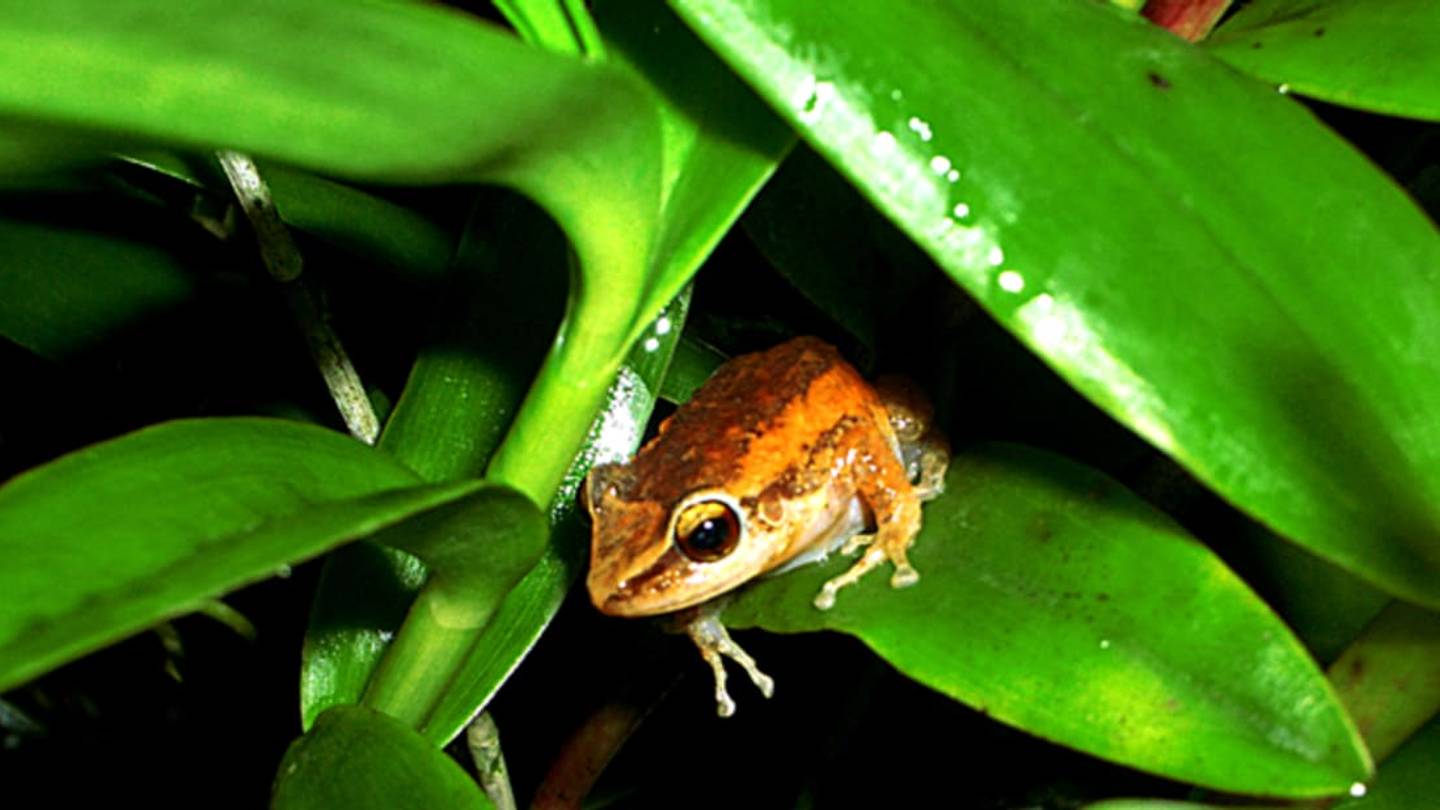
Hawaiiâs Big Island is overrun with a very tinyâand very loudâfrog. Native to Puerto Rico, the coquà frog is about the size of a quarter. It compensates for its diminutive size with its incessant cry: the shrill, high-pitched "Ko Keee ... Ko KEEEâ from which it derives its name.
While the frog is beloved in its homeland, Hawaiians feel a tad differently, according to The Washington Post . The coquà isnât native to the Big Islandâscientists think it arrived via some potted plants sometime in the 1980sâand their evening mating calls can reach up to 90 decibels . Not only are coquÃs as loud as a lawnmower, theyâre also incessant. Their din lasts from dusk to dawn, disturbing locals at night.
Complicating matters, the coquà has no natural predators in Hawaii, and it's thrived in its new environment, thanks to a plentiful bug population and a rocky habitat full of hiding places. It skips the tadpole stage, so it doesnât require ponds. As a result, the Big Islandâs coquà population is now three times greater than it is in Puerto Rico. (According to one study [ PDF ], there are 91,000 frogs per 2.5 acres; other reports vary, saying there could be more than 10,000 frogs per acre or between 20,000 and 50,000 per acre .)
Essentially, the coquà is comparable to a bunch of raucous party-goers who werenât invited over, but showed up anywayâand now they wonât go home. Even more troubling: officials worry that the coquà will harm the local ecosystem by consuming pollinating insects, or hurt export plant sales, the Los Angeles Times reports .
Naturally, Hawaiians are fed upâand they're taking matters into their own hands. Neighborhood watch groups hunt for coquà at night (theyâre silent during daytime), and kill them by trapping them in a Ziploc bag and freezing them, according to the Post . The LA Times reports that some individuals douse coquà habitats with citric acid spray, spray vegetation with hot water, or relegate flowers to freezers for a few days to get rid of the animals.
The Wall Street Journal writes that Hawaiiâs Big Island had declared a coquàâstate of emergencyâ by the mid-2000s. However, task forces have since reported that theyâre resigned to the fact that the coquà is here to stay. Itâs impossible to eradicateâso officials have switched gears, and are now focused on containment.
Meanwhile, some animal advocates have set up frog sanctuaries and nature preserves for the coquÃ. Others try to catch the pesky amphibians and ship them back to Puerto Rico. Many are simply becoming acclimated to the frogâs din. For the time being, it looks like the coquà isnât going anywhereâso Big Island residents might want to stock up on earplugs.
[h/t Washington Post , Los Angeles Times , Wall Street Journal ]
Loading recommendations... Please wait while we load personalized content recommendations