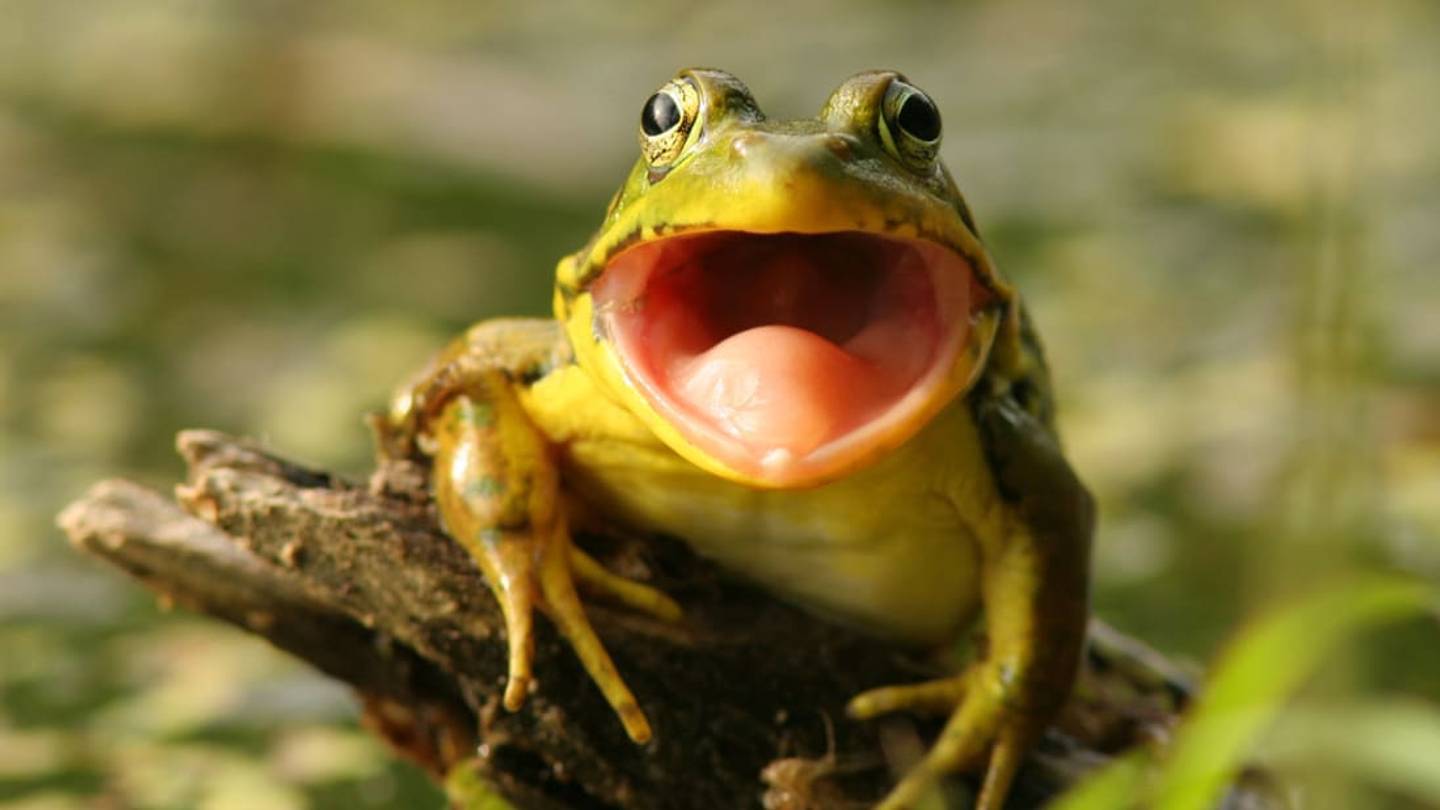
Fans of The Simpsons are likely familiar with Blinky , the three-eyed fish species that swims in Springfield's contaminated lakes and ponds. Blinky isnât real, of course, but during the mid-1990s, scientists feared that frogs in the United States and Canada were experiencing a similar mutation after hearing reports that the tiny amphibians were sprouting extra legs .
Researchers didnât discover a link between frog deformities and pesticides, nor did they find evidence that whatever was affecting the frogs could also harm humans. Instead, the culprit appeared to be a parasitic flatworm called Ribeiroia ondatrae , which lives inside the digestive systems of water birds but can also infect frogs.
In the Gross Science video below, host Anna Rothschild explains the fascinating (albeit gross) process of how the parasitic wormâs larvae migrate from birds to freshwater snailsâand then, to the hind limb buds of tadpoles. There, they grow a hard, protective coating called a cyst that interrupts proper limb formation.
This invasive process can cause the frog to develop as many as six additional legsâor in some cases, no legs at all. That said, experts don't think that infected frogs develop weird limbs simply as a side effect. At the end of the day, amphibians with extra or missing legs are easier for predators to catch, meaning that the parasite will eventually end up back inside its preferred home: a birdâs esophagus.
Loading recommendations... Please wait while we load personalized content recommendations