For children of the '70s and '80s, befriending a playful green dragon was the ultimate childhood fantasy. After all, if meek little Pete could have his own dragon, Elliot, why couldnât we? Well, Peteâs Dragon is back on the big screen and this time we know better: Dragons do exist. Here are six places you can find them today.
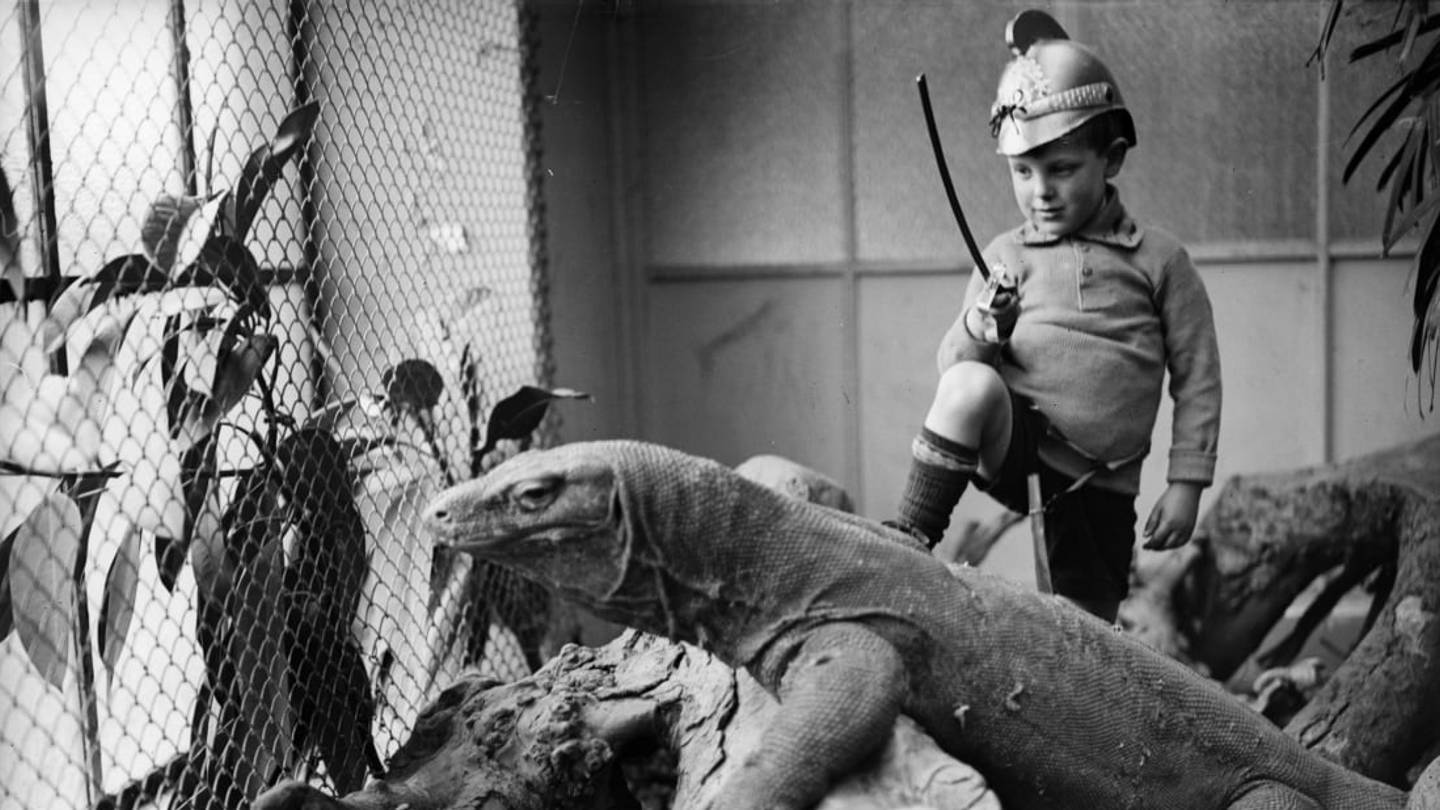
Known as the "worldâs largest dragon," Komodo dragons are the closest weâll come to Peteâs Dragon, Elliot. They can grow up to three meters long and weigh up to 150 pounds. With razor-sharp teeth and a venomous bite (recent studies have shown that the "bacteria bite" is probably a myth and they are just regularly venomous), Komodo dragons kill pigs, deer, and water buffalo, so remember: This dragon is not your friend.
Indigenous to Indonesia, Komodo dragons can be found on the Komodo, Rintja, Padar, and Flores islands. But the safer way to see a Komodo Dragon is from afar, be it on an Indonesian Komodo Dragon Safari Cruise or at many zoos across the U.S., like Seattle's Woodland Park Zoo or the Smithsonian's National Zoo in Washington D.C., where the first-ever Komodo eggs were hatched outside of Indonesia.
Last year, biologists from the Scripps Institution of Oceanography uncovered a new species of underwater dragon: the Ruby Seadragon. They found this ruby-red gem of a dragon accidentally while studying the similar Leafy and Weedy Seadragons.
Located in remote waters off the Western Australian coast, the Ruby Seadragons are still relatively new to the scene, and incredibly tough to spot. But, if youâre ready to accept the challenge, find inspiration in Scripps biologist Greg Rouseâs â Hunt for the Ruby Sea Dragon â Tumblr account.
The bearded dragon may not breathe fire, but its evolutionary traits are quite impressive. The central bearded dragonâs external colors sync with its circadian rhythm ; its body turns lighter as the day goes on and darker as dusk nears. Its spiky beard is also used as a defense mechanism, and becomes black during times of courtship and stress.
Central Australia is home to the bearded dragon, but theyâre also available for purchase in most U.S. pet stores. If youâre not ready to take home a new, scaly friend, you can also viewânot buyâbearded dragons at major U.S. zoos like the Louisville Zoo or Pittsburgh Zoo .
The dragon snake lives under the radar; scientists know little about it, other than that it burrows during the day and hunts frogs at night. Its peculiar, ridged scales also lend to its unusual, mythical appearance.
Given their nocturnal habits, itâs unlikely youâll run into a dragon snake in the wild. But donât let that tempt you to buy your ownâdragon snakes do not survive well in captivity, so itâs best to just let them be.
Bernard Dupont via Flickr // CC BY-SA 2.0
For some, dragons don't count unless they can fly. Enter the flying dragon of Southeast Asia. This 8-inch-long lizard speciesâknown as the Draco volans âhas flaps of skin along its ribs that turn into bright blue or yellow wings. While their wings donât have bird-like flying power, they help the lizard glide from branch to branch to escape predators or gather food.
For a personal flying dragon encounter, head to Southeast Asiaâs densest forests where you can catch these creatures hopping around. Or, if youâre feeling super adventurous (and perhaps have a backyard aviary), you can adopt one as a pet.
This deep-sea fish is the exact opposite of a friendly dragonâthe torpedo dragonfish is an absolutely terrifying species that is like something out of a sci-fi movie. With a mouth full of fangs, a light-producing "barbel" attached to its head, and built-in bioluminescence to help it attract prey and mates, the dragonfish is a six-inch reminder of the oceanâs freakish mysteries.
This dragonfish lives at depths of up to 5000 feet, right along the seabed. While scientists know little about the species, we do know thatâat least for the time beingâthis oneâs not ready to swap friendship bracelets with humans.
Loading recommendations... Please wait while we load personalized content recommendations