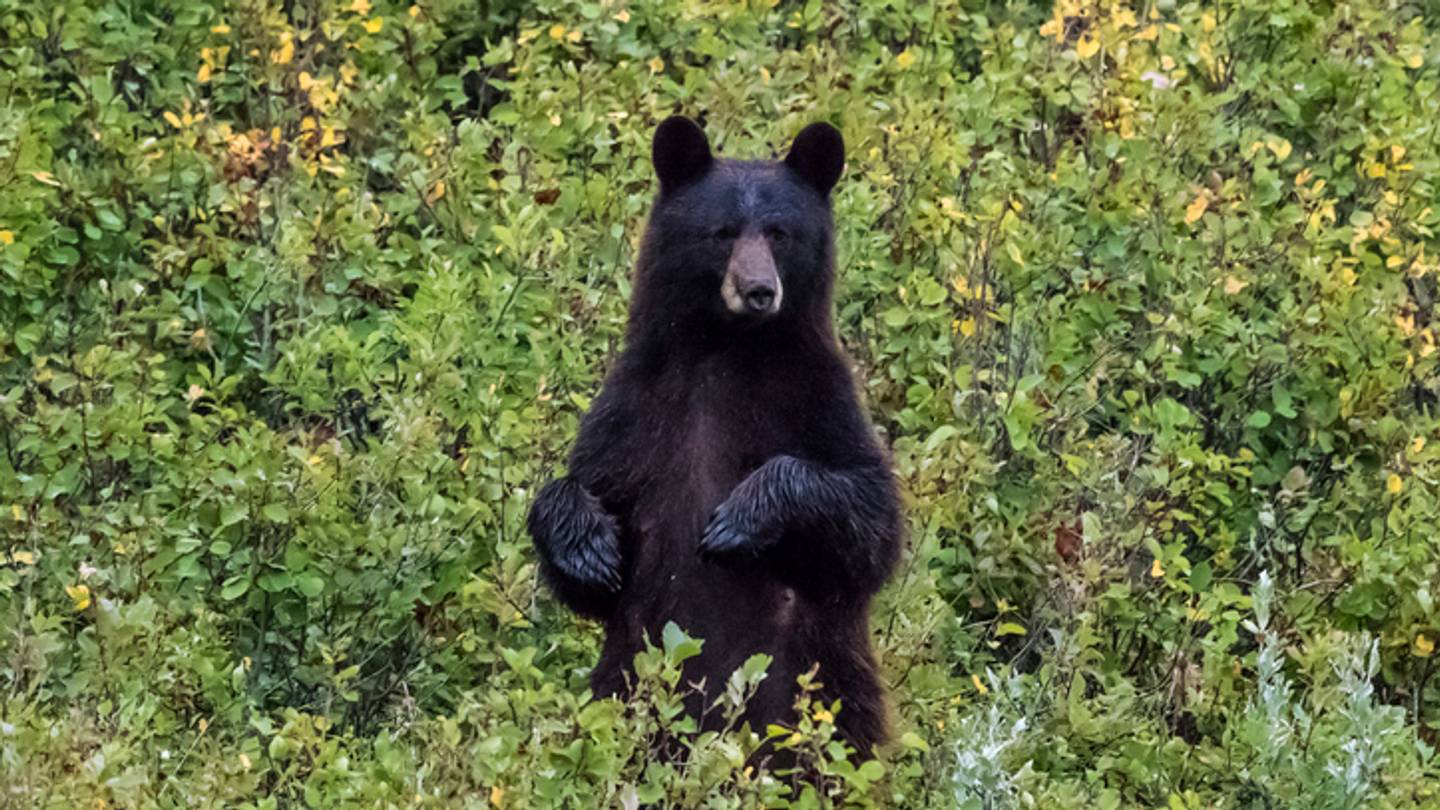
Bears are blamed for a lot of things that arenât their fault: Theyâve been implicated for moonlighting as the Himalayan Yeti. Visitors at a Chinese zoo accused a sun bear of actually being a human in a bear suit . Grizzly bearsâ seasonal weight gain is displayed for public judgment. Now, a study published earlier this year in the Journal of Zoology suggests humans are mistaking American black bears ( Ursus americanus ) for Bigfoot .
Its author, data scientist Floe Foxon âwho is fond of titling cryptozoological studies with rhyming phrases (âThe Loch Ness Monster: If Itâs Real, Could It Be an Eel? ,â ââ If Not a Fake, Whatâs in the Lake? â)âhypothesized that the more black bears there are in a given area, the more likely it is that people will report cryptid sightings. In other words, if Bigfoot is there, it could be a bear.
Previous studies have found a link between alleged Bigfoot encounters and black bear populations in the Pacific Northwest, long believed to be sasquatchesâ natural habitat . In an expanded analysis, Foxon compared the most recent information for bear populations in 37 U.S. states and seven Canadian provinces with the Bigfoot Field Researchers Organizationâs dataset of alleged sightings, adjusting for human populations and natural area, to model the correlation for all of the U.S. and Canada.
The study found that sasquatch reports were âstatistically significantlyâ associated with black bear populations. For every 1000 bears in an area, Foxon found a 4 percent increase in the number of Bigfoot sightings. Across North America, each sasquatch report was associated with about 5000 black bears.Â
âBased on statistical considerations, it is likely that many supposed sasquatch are really misidentified known forms,â Foxon concluded in the study.Â
Itâs understandable that people mistake the native carnivore for the fictitious hominid. Both bear and sasquatch are thought to stand about 6 feet tall (if the bear is upright on its hind legs), be covered in dark hair or fur, and live in temperate forests . And theyâre not the only pair of frequently confused animals out there. Hereâs how to differentiate wallabies and kangaroos , leopards and jaguars , rats and mice , and more .