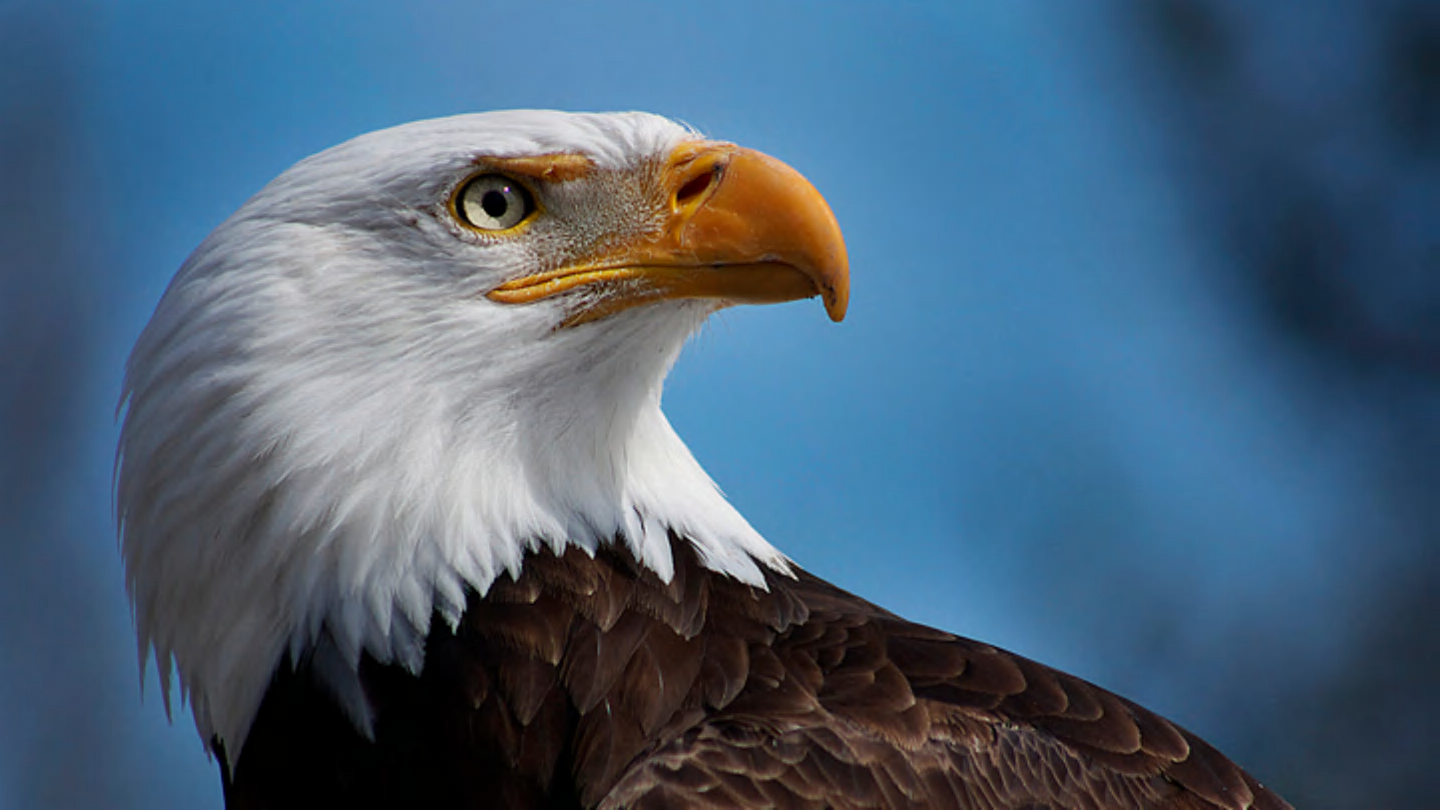
Bald eagles are powerful symbols of Americaâbut thereâs a whole lot more to these quirky birds .
Obviously, adult bald eagles arenât really bald, eitherâtheir heads have bright white plumage that contrasts with their dark body feathers, giving them a âbaldâ look. But young bald eagles have mostly brown heads. In fact, for the first four or five years of their lives, they move through a complicated series of different plumage patterns; in their second year, for instance, they have white bellies.
Itâs a scene youâve probably seen countless times in movies and on TV: An eagle flies overhead and emits a rough, piercing scream. Itâs a classic symbol of wilderness and adventure. The only problem? Bald eagles donât make that sound.
Instead, they emit a sort of high-pitched giggle or a weak scream . These noises are so unimpressive that Hollywood sound editors often dub over bald eagle calls with far more impressive sounds: the piercing, earthy screams of a smaller bird, the red-tailed hawk. If you were a fan of The Colbert Report , you might remember the showâs iconic CGI eagle from the openerâit, too, is making that red-tailed hawk cry. Listen for yourself in the video above and decide who sounds more impressive.
Picture a majestic bald eagle swooping low over a lake and catching a fish in its powerful talons. Yes, bald eagles eat a lot of fishâbut they donât always catch them themselves. Theyâve perfected the art of stealing fish from other birds such as ospreys, chasing them down until they drop their prey.
Bald eagles will also snack on gulls, ducks, rabbits, crabs, amphibians, and more. Theyâll scavenge in dumpsters, feed on waste from fish processing plants, and even gorge on carrion (dead, decaying animals).
Trash and carrion aside, theyâre pretty romantic animals. Bald eagles tend to pair up for life , and they share parenting duties: The male and the female take turns incubating the eggs, and they both feed their young.
Those romantic partnerships are even more impressive because bald eagles can survive for decades. In 2015, a wild eagle in Henrietta, New York, died at the record age of 38 . Considering that these birds pair up at 4 or 5 years of age, thatâs a lot of Valentineâs Days.
Bald eagles build enormous nests high in the treetops. The male and female work on the nest together, and this quality time helps them cement their lifelong bond. Their cozy nurseries consist of a framework of sticks lined with softer stuff such as grass and feathers. If the nest serves them well during the breeding season, theyâll keep using it year after year. And, like all homeowners, they canât resist the thought of renovating and adding to their abode. Every year, theyâll spruce it up with a whole foot or two of new material.
On average, bald eagle nests are 2-4 feet deep and 4-5 feet wide. But one pair of eagles near St. Petersburg, Florida, earned the Guinness World Record for largest birdâs nest: 20 feet deep and 9.5 feet wide. The nest weighed over two tons.
In many animal species, males are (on average) larger than females. Male gorillas, for example, dwarf their female counterparts. But for most birds of prey, itâs the opposite. Male bald eagles weigh about 25 percent less than females.
Scientists arenât sure why thereâs such a size difference. One reason might be the way they divide up their nesting duties. Females take the lead in arranging the nesting material, so being bigger might help them take charge. Also, they spend longer incubating the eggs than males, so their size could intimidate would-be egg thieves.
If youâre trying to tell male and female eagles apart, this size difference may help youâespecially since both sexes have the same plumage patterns.
People often get excited about a big soaring bird and yell âItâs an eagle!â just before it swoops closer and ⦠oops, itâs a vulture . Hereâs a handy identification tip. Bald eagles usually soar with their wings almost flat. In contrast, the turkey vultureâanother dark, soaring birdâholds its wings up in a shallow V shape called a dihedral. A lot of large hawks also soar with slightly raised wings.
Before European settlers arrived in North America, bald eagles were abundant across the U.S. But with settlement came habitat destruction, and the settlers viewed the eagles as competition for game and as a threat to livestock. So many eagles were killed that in 1940 Congress passed an act to protect the birds.
Unfortunately, another threat rose up at about that time. Starting after World War II, farmers and public health officials used an insecticide called DDT. The chemical worked well to eradicate mosquitos and agricultural pestsâbut as it traveled up the food chain, it began to heavily affect birds of prey. DDT made eagle eggshells too thin and caused the eggs to break. A 1963 survey found just 471 bald eagle pairs in the lower 48 states.
DDT was banned in the early 1970s, and conservationists began to breed bald eagles in captivity and reintroduce them in places across America. Luckily, this species made a spectacular recovery. Now the lower 48 states boast about 71,400 nesting pairs .
Youâve probably heard of Americaâs other eagle: the golden eagle. This bird lives throughout much of the northern hemisphere. But the bald eagle is only found in North America . It lives across much of Canada and the U.S., as well as northern parts of Mexico.
Though it may be North American, the bald eagle has seven close relatives that are found throughout the world. They belong to the genus Haliaeetus , which comesâpretty unimaginativelyâfrom the Latin words for âseaâ and âeagle,â and the genus Icthyophaga (âfishâ and âeaterâ). One relative, the African fish eagle, is a powerful symbol in its own right. It represents several countries; for example, itâs the national symbol of Zambia, and graces the South Sudanese, Malawian, and Namibian coats of arms.
It seems too weird to be true: While flying, bald eagles sometimes grab each otherâs feet and spin while plummeting to the earth. Scientists arenât sure why they do thisâperhaps itâs a courtship ritual or a territorial battle. Usually, the pair will separate before hitting the ground (as seen in this remarkable set of photographs ). But sometimes they hold tight and donât let go. These two male bald eagles locked talons and hit the ground with their feet still connected. One subsequently escaped and the other was treated for talon wounds.
What if you could close your eyes and still see? Besides the usual pair of eyelids, bald eagles have a see-through eyelid called a nictitating membrane. They can close this membrane to protect their eyes while their main eyelids remain open. The membrane also helps moisten and clean their eyes.
Eagles also have sharper vision than people, and their field of vision is wider. Plus, they can see ultraviolet light. Both of those things mean the expression eagle eye is spot-on.
If youâre a bald eagle that nests in northern Canada, youâll probably head south for the winter to avoid the punishing cold. Many eagles fly south for the winter and return north for the summerâas do plenty of other bird species (and retired Canadians). But not all bald eagles migrate. Some of them, including individuals in New England and Canadaâs Maritime provinces, stick around all year. Whether a bird migrates depends on how old it is and how much food is available.
There are several videos onlineâlike the one aboveâthat show a bald eagle swimming in the sea, rowing itself to shore with its huge wings. Eagles have hollow bones and fluffy down, so they can float pretty well. But why swim instead of soar? Sometimes, an eagle will swoop down and grab an especially weighty fish, then paddle it to shore to eat.
Discover More Amazing Facts About Birds:
A version of this story was published in 2019; it has been updated for 2024.