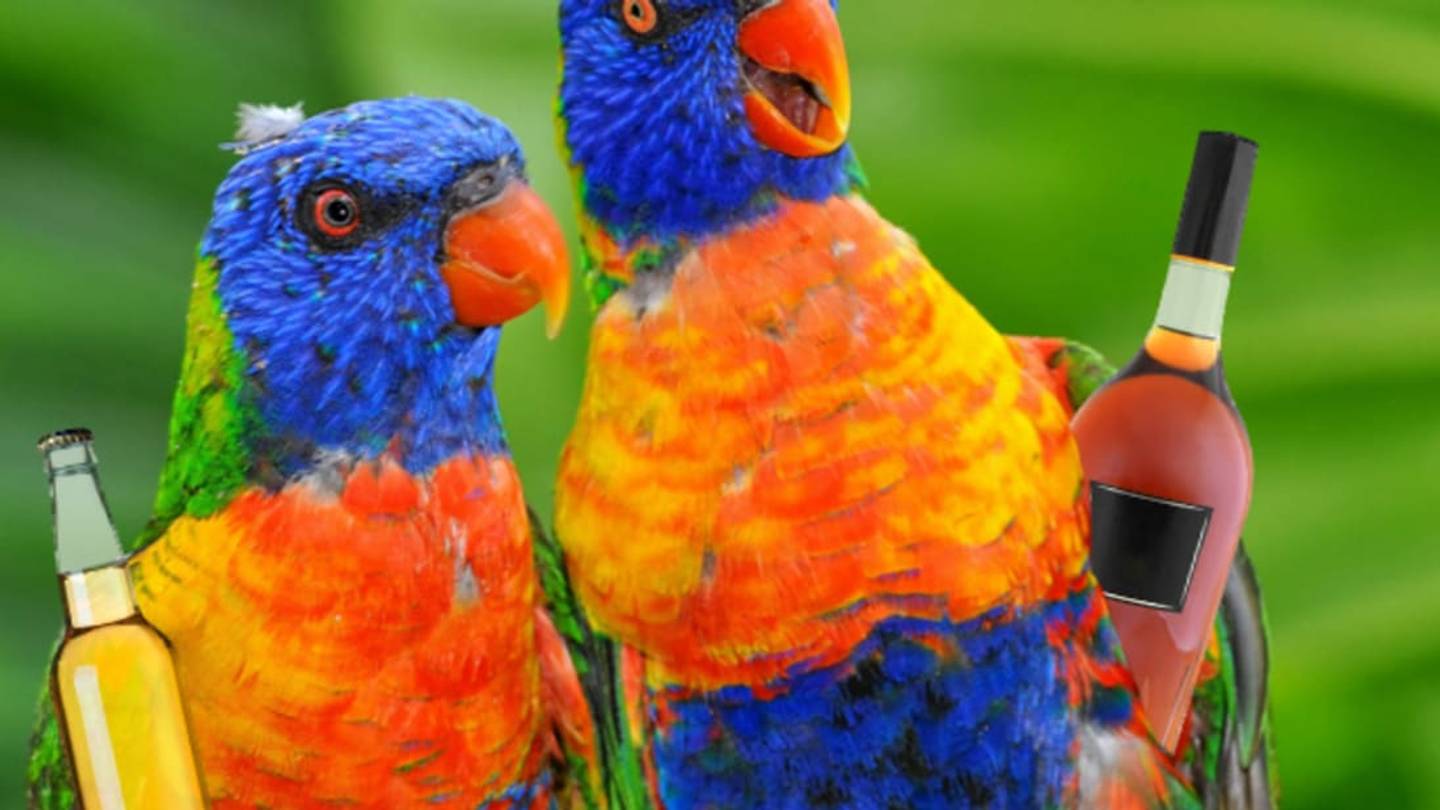
Every wet season, helpless Australians watch as wasted parrots rain down from their skies . Elsewhere, flocks of tipsy songbirds are constantly smacking into windows, towers, and moving cars. Whatâs behind this airborne alcoholism? Fermented berries and nectars, which can make life miserable for careless avians. Hereâs a quick primer on winged boozers.Â
Pro tip: Donât drink and tweet. In an offbeat study conducted last year  at Oregon Science & Health University, captive zebra finches ( Taeniopygia guttata ) received spiked drinking water. According to researcher Christopher R. Olson, the alcohol rendered these test subjects âa little bit quieterâ than normal and âless organized in their sound production.â Everyoneâs got a buddy like that.
âWeâve yet to invent the bird breathalyzer, but we can take a small blood sample,â Olson says. By doing so, his team found that the zebra finches started acting tipsy when their blood alcohol levels reached .05 to .08 percentâjust below Americaâs legal driving limit . Also, sobering up can be a long, arduous process because birds donât metabolize ethanol efficiently.
With an atypically-large liver , youâd think the Bohemian waxwing ( Bombycilla garrulous ) would have no trouble drinking its pals under the birdfeeder. However, as Hank Green explains above, another trait makes waxwings especially bad at handling the hard stuff: Their very stretchable esophaguses often double as temporary storage units wherein fruit can ferment internally.
Another tactic involves using their own wings to prop themselves up when flyingâs out of the question. Â Â
In 2011, a dozen English blackbirds ( Turdus merula ) were found lying dead for no apparent reasonâuntil autopsies revealed fermented berries in their stomachs. Curiously, the victims were all adolescents. Why? Scientists canât be certain, but itâs been suggested that blackbirds start to distinguish between safe and hazardous berries as they grow .
Loading recommendations... Please wait while we load personalized content recommendations