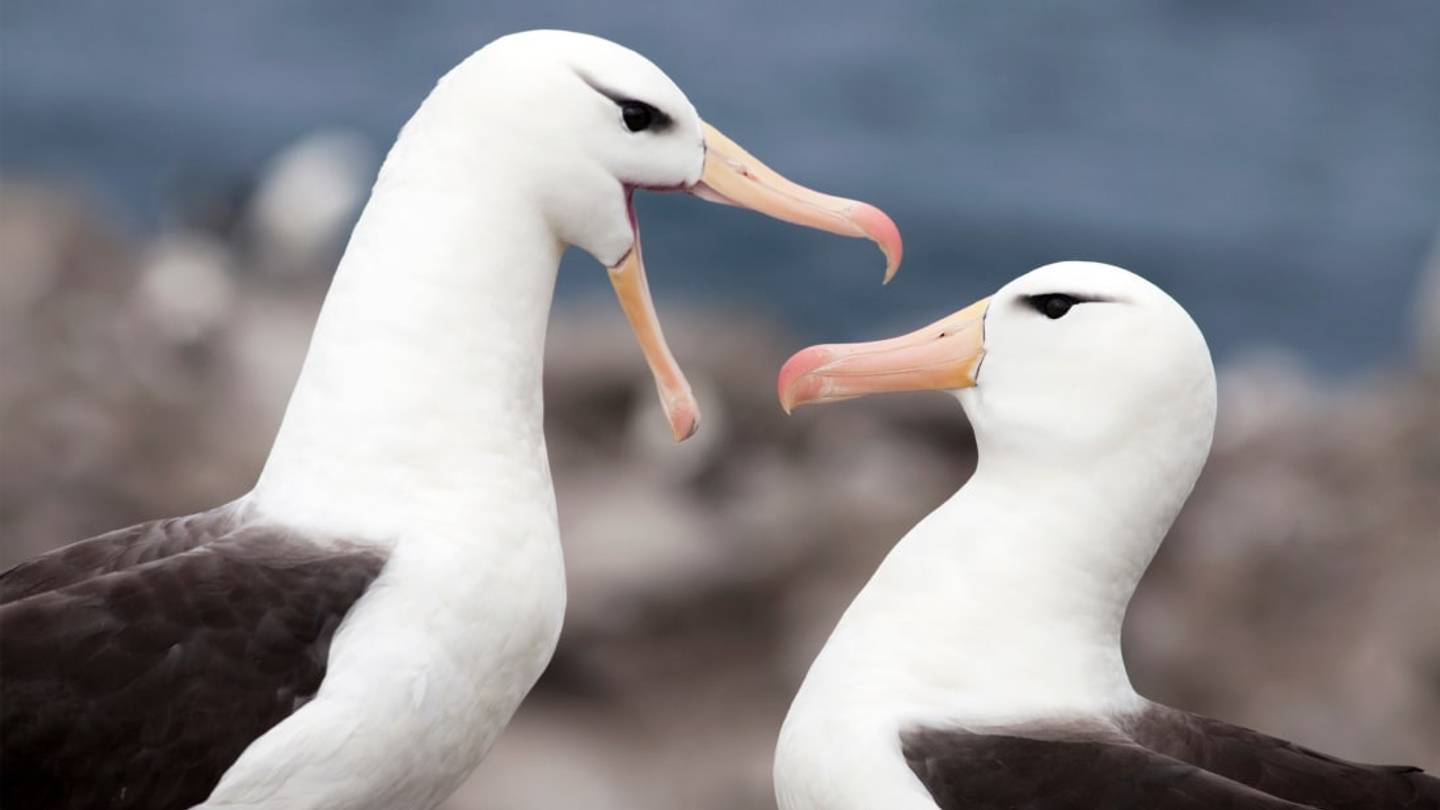
Despite its reputation as a handy metaphor for having a big problem wearing you down, the albatross is one of natureâs most intriguing creatures. They have the longest wingspan of any living bird at 11 feet, 4 inches; they can live well into their 60s; and once they find a partner, they typically mate for life.
But life is no longer typical, and lately albatrosses seem to be breaking the mold. Increasingly, theyâre opting for a kind of bird "divorce."
According to Atlantic writer Katherine J. Wu, researchers at the University of Lisbon have noticed a disturbing uptick of albatross separations over the past two decades. Under normal circumstances, the birds partner up with the same âspouseâ year after year, returning from solo sea journeys to mate and raise chicks on land. More recently, scientists have observed that the birds are going their separate ways, even if theyâve paired with successful breeders.
2017 makes for a good case study. That year, albatrosses on New Island in the Falklands âdivorcedâ at a rate of 7.7 percent, almost double the 3.7 percent average. Taking stock of their surroundings, researchers believe rising ocean temperatures contributed to lower food availability. When resources became scarce, the birds tended to splitâpossibly because poor nutrients impacted breeding. The birds may also need to stay away longer to find food, returning to find an impatient mate.
But that may not be the whole story. Climate conditions also appear to have an impact on the birdsâ moods, with more sniping and irritability demonstrated. Albatrosses have also never been strictly monogamousâtheyâre known to âcheatâ with other birds in a kind of albatross swinger scenarioâbut they typically return to their regular partners.
Itâs too soon to know whether more of these un-couplings will influence population. But itâs clear a changing world is straining what was once one of natureâs most enduring commitments.
Loading recommendations... Please wait while we load personalized content recommendations