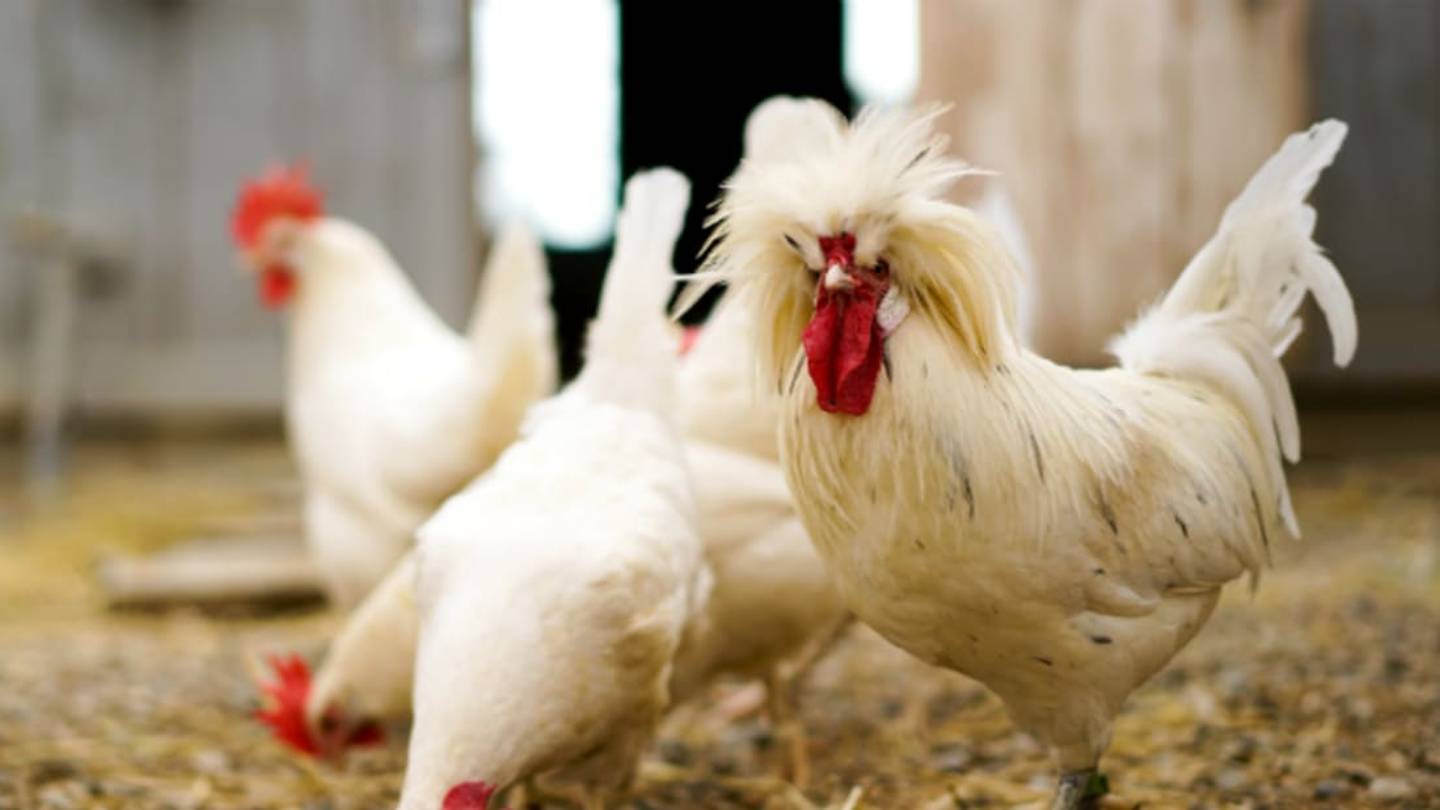
Why did the chicken cross the road? We donât know, but it probably had its reasons. A new paper published in the journal Animal Cognition reports that the barnyard birdsâ intelligence and social skills are far more complex than we thought.
Lori Marino is senior scientist for The Someone Project , which aims to challenge popular misconceptions about chickens, cows, pigs, and other farm animals. Her report, which was partially funded by the ASPCA, describes experiment after experiment showing that chickens are, in fact, very complex animals with rich inner and outer lives.
Last year was a big year for bird intelligence research. in 2016, scientists reported that some birds are at least as smart as apes . They found tool-making crows and clever pigeons and puzzle-solving bullfinches . The phrase â birdbrain â began to lose its meaning.
But amid the myth-shattering, some birds got more attention than others. âThereâs not a lot of scientific work being done on chicken cognition,â Marino tells mental_floss, âbecause if you assume an animal doesnât have a given trait, you arenât going to study it. But what research there has been is very, very compelling.â
For example: Studies have found that chickens have object permanenceâthat is, they understand that when you cover something, it does not go awayâa skill humans develop around age one. Theyâre also capable of counting and basic arithmetic, even as chicks. They understand logic and simple reasoning, including some concepts  we donât understand until weâre six or seven years old. They have some sense of time and complex social relationships. They have distinct personalities and show one another empathy.
âChickens have a mind. They have a life,â Marino says. âTheyâre not just these dumb, inert objects scratching in the dust. It is like something to be a chicken.â
Why is that so hard for us to believe? âItâs a perfect storm,â Marino explains. The first problem is our longstanding skepticism of avian cognitive abilityâthe "birdbrain" idea. Weâre getting over that, but âthe history is there,â she says. âThe other thing is that, well, we eat them.â
People have a vested interest in thinking of farm animals as inanimate commodities, Marino says, because otherwise weâd start feeling bad about killing and eating them. Instead, we focus on turning them into better meatâa strategy that she believes dulls our scientific rigor and robs us of the chance to learn more about our fellow organisms.
âMost of the work thatâs done on chickens, fish, and cows tends to involve trying to figure out how to make them lay more eggs or grow faster or not peck each other,â she said. âItâs all very applied, and it misses the whole point. These are animals who have an evolutionary and adaptive history just like a chimpanzee or a dog or a human being. Theyâre animals. And at the very least, we need to approach them as animals in their own right.â
Loading recommendations... Please wait while we load personalized content recommendations