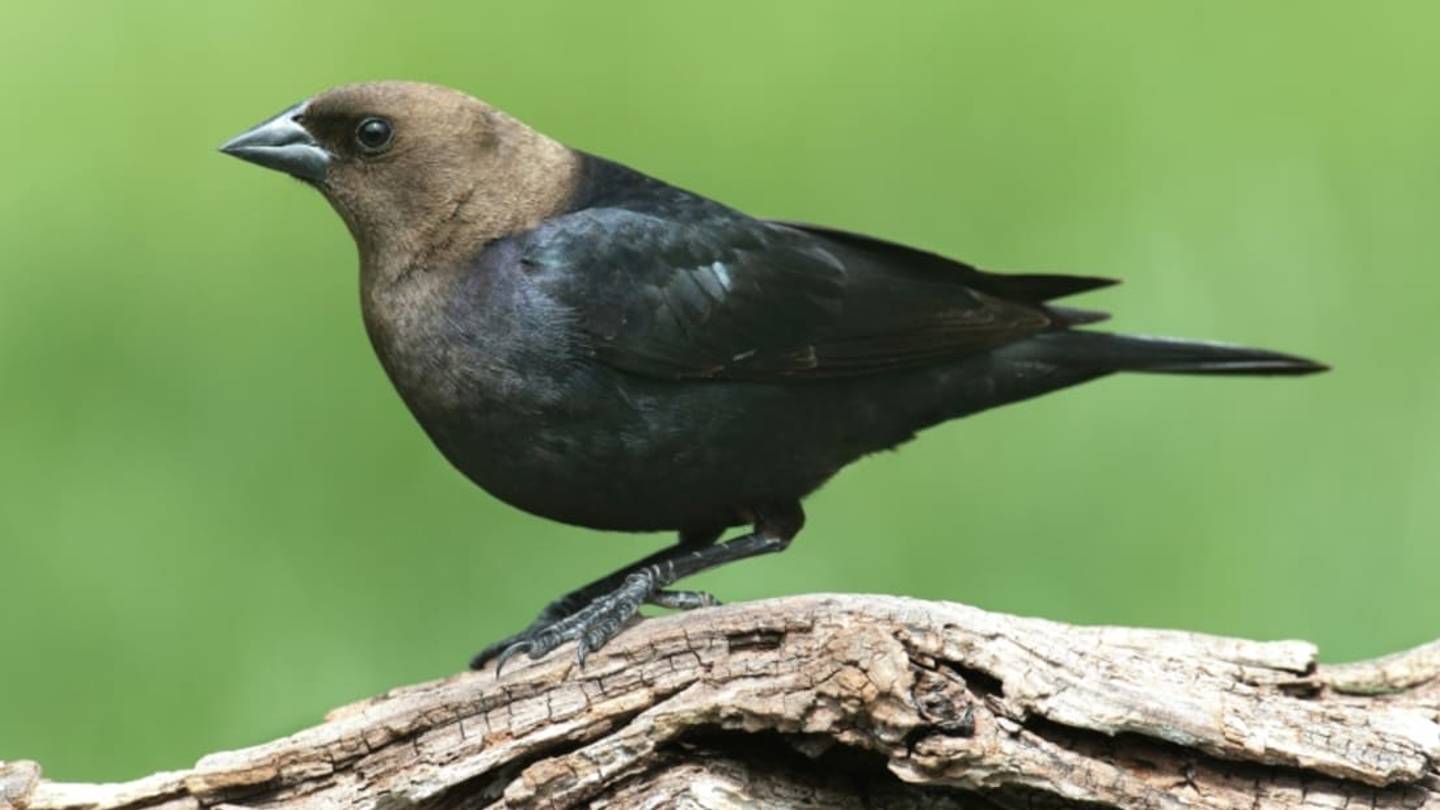
The brown-headed cowbird is never going to win any parenting awards. Like the more infamous cuckoos, these birds are brood parasites that lay their eggs in other birdsâ nests and let the clueless foster parents feed and raise their chicks. Theyâre deadbeats for sure, but new research suggests that they donât totally abandon their babies, and keep an eye on them after they hatch for the benefit of their future siblings.Â
Scientists used to think that cowbirds laid their eggs and then completely forgot about them, but that might not be the case. Cowbird moms have impressive spatial memories, says ecologist Jeffrey Hoover, and pay attention to their hostsâ nests for at least a little while after parasitizing them to make sure their eggs are accepted and not discovered as intruders. If the eggs are rejected, theyâll return to the nest and destroy the hostsâ eggs in retaliation . After uncovering these âmafiaâ behaviors, Hoover wondered just how long the birds keep tabs on host nests, and if they might keep coming back to hosts that they see raising their kids right.Â
To find out, Hooverâs team set up a large, long-term study. In 1994, they set up 1000 nest boxes in southern Illinois and monitored the prothonotary warblers that made their homes in them. For the next 20 years, they checked in on the nests every few days during breeding season, making note of any attempts by cowbirds to parasitize the nests, the number of cowbird and warbler eggs and chicks they contained, and the number of chicks that fledged and left the nests. They also manipulated some nests, removing the cowbird eggs from different nests during different years to mimic rejection by the foster parents.Â
They found that cowbirds were much more likely to return to nests that successfully raised cowbird chicks to independence and parasitize them again. Meanwhile, nests where cowbird chicks didnât fledge, either because of natural occurrences or because the researchers removed the eggs, were less likely to get return visits.Â
âWe demonstrated that cowbirds can discriminate between areas of high and low cowbird productivity within a single host species even while selecting among uniform nest sites,â the researchers write. The parasites arenât choosing hosts based just on habitat or nest characteristics, but on the foster parentsâ performance raising little cowbirds. Manipulating the nests over time also showed that the birds update their choices based on the latest information.
âThis pattern implies that cowbird females are monitoring their reproductive output to inform future breeding decisions,â the team says. They learn from the success or failure of one clutch of eggs to help them pick the best parents for the next one.
The researchers canât be sure that itâs the same mother birds targeting the same nests year after year, but it would make sense that each bird keeps track of their own chicksâ success and draws on that personal information for next time. They think that the cowbirds might also use âsocial information,â and keep tabs on nests where other cowbirds have laid their eggs so they can swoop in on productive nests that they havenât tried yet. In these cases words, the cowbirds arenât just brood parasites, but also information parasites, casing the nests of other cowbirdsâ hosts to gather intel.
Loading recommendations... Please wait while we load personalized content recommendations