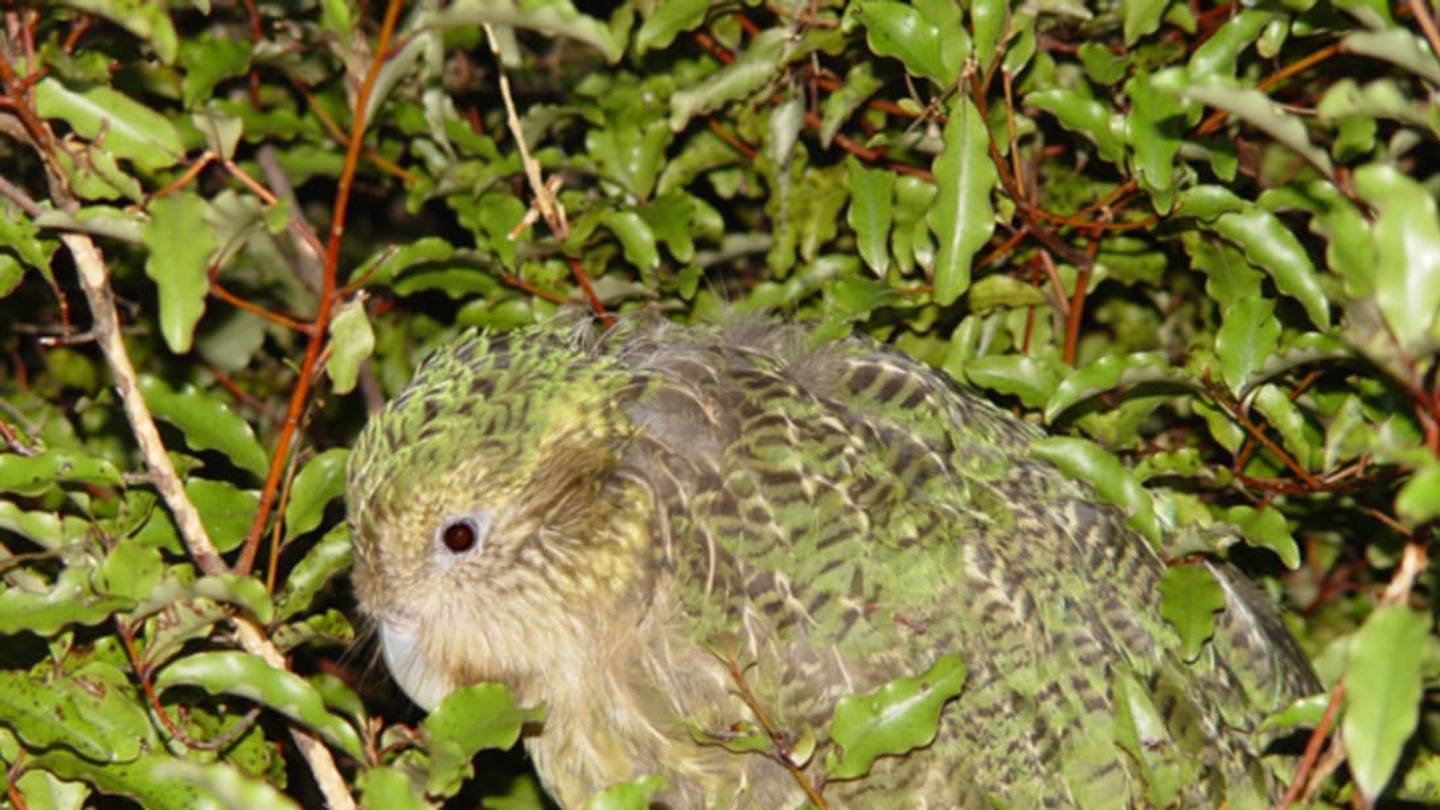
In the latest issue of the print magazine, I have a story about the kakapo, a cartoonishly cute species of parrot that looks like a parakeet crossed with an owl crossed with a Muppet. (You can read it here .) Kakapos are squat, chubby and flightless, and build their nests on the ground and in the open. Theyâre also nocturnal, and feel their way through the dark forests with patches of whisker-like feathers on their faces. The whole while, they give off a strong, musty scent thatâs impossible to ignore. All of this made them easy pickings for human hunters, plus the dogs, cats, rats, and other predators that humans introduced the to the parrot's home in New Zealand. In just a few centuries, one of the countryâs most common birds soon disappeared from the main islands, and today there are only 126 kakapo left in carefully monitored, predator-free communities on the smaller islands.
A handful of the birds were transferred to an island that is also, conveniently, one of the last remaining refuges of the Hades flower, an endangered plant that scientists only recently realized had strong ecological ties to the bird. I couldnât get into too much detail about the transfer operation itself because of space constraints, so hereâs the story of how a flightless bird finally took to the skies.Â
In the early morning hours one April day last year, parrot wranglers from the New Zealand Department of Conservationâs Kakapo Recovery Team (KRT) captured seven of the birds on Codfish and Anchor Islands by hand (all 126 remaining kakapo wear radio transmitters, so theyâre easy to find) and placed them into individual pet carriers. Their destination: Hauturu , the âresting place of lingering breezes.â
Called Little Barrier Island in English, Hauturu had been home to a group of kakapo ( Strigops habroptilus ) in the early 1980s, but the birds had to be removed after the discovery of accidentally-introduced kiore , or Polynesian rats. With the islandâs rats eradicated, the KRT hoped that Hauturu would now be safe for kakapo eggs and chicks, and a suitable place for a large, unmanaged kakapo population. On paper, itâs one of the last New Zealand islands where the birds could live without constant human babysitting. Itâs big enough for the birds to live and breed there, and outside of the swimming range of rats, stoats, and other predators living on the other islands.Â
After the kakapo were snatched up, they were taken by helicopter to the large South Island. There, they were loaded on an airplane and taken to North Island. At the Auckland airport, they were put on another helicopter and taken to Hauturu, where they were released from their carriers.
That might sound stressful, but kakapo didnât seem to mind.
âKakapo appear to be hardy travelers and the main risk is heat stress,â Kakapo Recovery Program Manager Deidre Vercoe Scott said. The birds just needed to be kept cool and comfortable with some damp towels in their crates and some apples and carrots to snack on.
âThis was one of the most complex transfers we have done simply because of the distance the birds had to travel,â Vercoe Scott said. âBut with careful planning we were able to achieve it within a day, meaning the birds were not disturbed during their normal active period during the night.â
A few months after they arrived, the birds were captured again so KRT members could see how they were adjusting to their new digs. On the whole, Vercoe Scott said, they had settled in well and were in good health. A few of the birds had been part of the islandâs previous kakapo population and seemed to have no problems coming back home again. One bird, after a 14 year absence, was able to find her old nesting sites and home range within a week of returning.
Sounds like a happy ending, but this is just the beginning of the kakapoâs adventures on Hauturu. The birds didnât breed last year, and the KRT wasnât expecting them to, so soon after transfer. This year might be different, and December through February, their human guardians will keep a close eye on them to âsee whether or not they are keen,â said Vercoe Scott. These birds arenât expected to establish a population on the island just yet, though, so thereâs no pressure for romance. Rather, theyâre pioneers and guinea pigs testing the suitability of Hauturu as a long-term, unmanaged home. Their service to their species could last as long as 10 years, giving conservationists enough data on breeding success to make the call on whether the birds will return to where they came from or be joined by waves of new settlers, and allowed to live alone and in peace on the little island where lingering breezes rest.
Loading recommendations... Please wait while we load personalized content recommendations