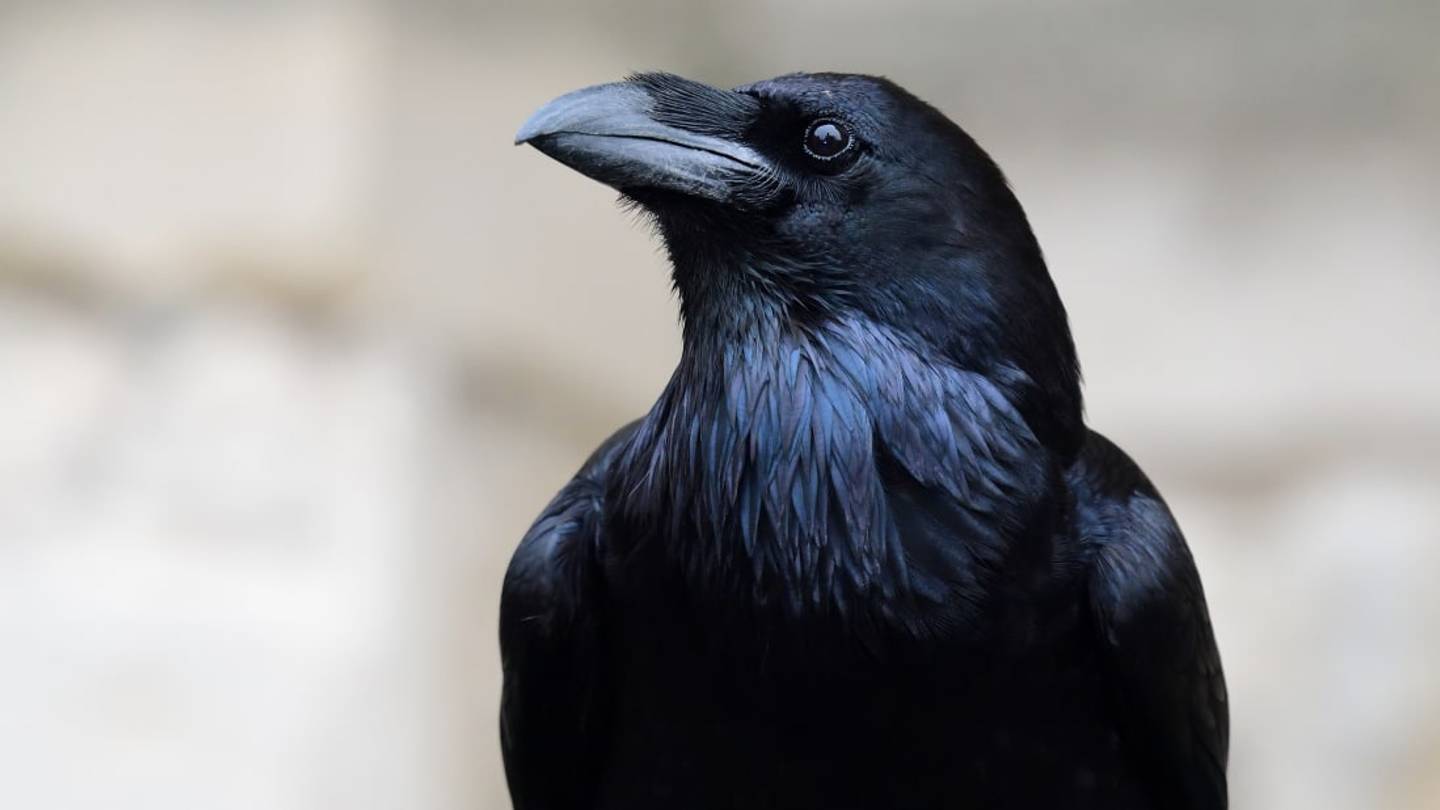
Crows and ravens are both all-black, smart, social members of the genus Corvus thatâll eat anything from dead animals to garbage. In other words, comparing them is less apples-to-oranges and more apples-to-other-apples; so it can be a little difficult to figure out if the bird perched on your fence is a raven or a crow.
But just as you can learn how to tell your Fuji apples from your honeycrisps, there are a few ways to differentiate between a crow and one of Edgar Allan Poeâs âgrim, ungainly, ghastly, gaunt, and ominous [birds] of yoreââand none involve waiting around for the creature to croak âNevermore.â
One, however, does involve some croaking. As Chase Mendenhall , assistant curator of bird conservation at the Carnegie Museum of Natural History, explains in the video below, American crows and common ravens have slightly different calls. Crows make a higher-pitched, lighter noise that sounds like theyâre saying âCaw!â A ravenâs call, meanwhile, is a lower, more guttural croak. A handy mnemonic device to help you remember this is that caw and crow both start with the letter c . If your mystery bird is making a throaty noise that sounds like it starts with an r , itâs more likely a raven.
Ravens are also noticeably bigger. According to Effie Yeaw Nature Center naturalist Kristen Angelini, their wingspan can reach 4 feet, while a crowâs is closer to 2.5 feet. But unless youâre looking at a crow and a raven side by side, this might not be much help. So try to sneak a peek at its beak: a crowâs bill is small and straight. A ravenâs, on the other hand, is larger and more curved, with much more noticeable bristly feathers on top.
If your bird takes flight before you can creep close enough to stare at its bill, check out its tail. A crowâs tail is shaped like a hand fan, while a ravenâs tail feathers donât spread nearly as muchâthey look more like a diamond.
Loading recommendations... Please wait while we load personalized content recommendations