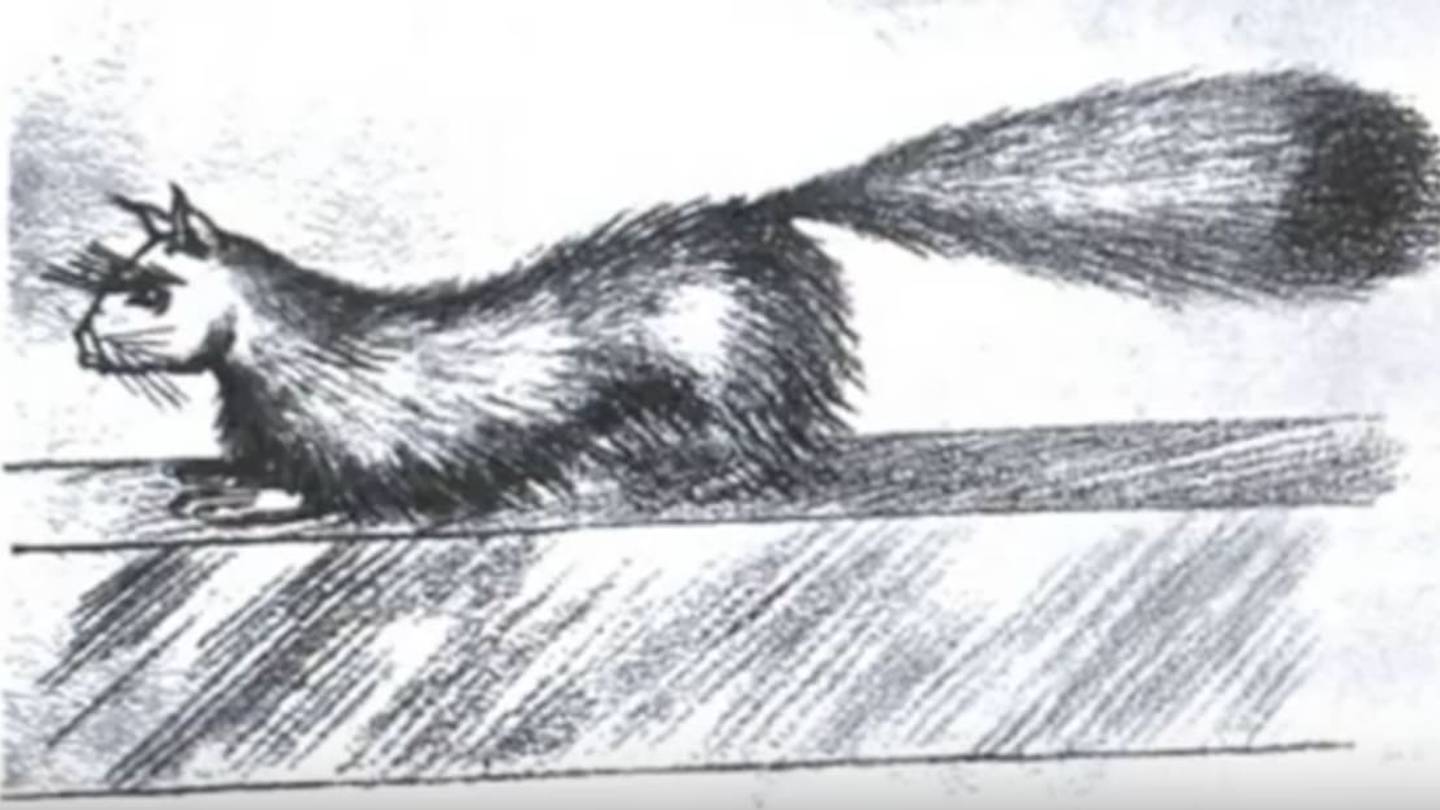
One morning in the early 1930s, James Irving of the village of Dalby on the Isle of Man was getting ready to open his daily newspaper when a high-pitched disembodied voice called out impatiently, âRead it out, you fat-headed gnome!â The voice didnât belong to Irvingâs wife Margaret or his teenage daughter Voirreyâthe only humans likely to be in the remote farmhouseâbut though Irving may have been offended, he wasnât surprised. He knew the voice belonged to a strange creature called Gef, who, for some time, had been living, largely unseen, in his familyâs home.
The mysterious creature first showed up in the Irving residence sometime in 1931, and, according to the accounts of James, Margaret, and Voirrey, initially lived in the walls and, not yet able to speak, imitated a range of animal noises. Quickly, the unseen entity started to pick up human language from the Irvings, and, before long, introduced itself to the family : His name, he said, was âGefâ (pronounced âJeffâ), and he was a mongoose from India.Â
Over the course of the 1930s, Gef The Talking Mongoose became something of a media phenomenon. He appeared in numerous tabloid newspaper stories , and was investigated by paranormal researchers.
Though many visitors wrote off Gef (occasionally spelled "Geoff" and "Jef") as some kind of hoax or mass hallucination, the Irving family insisted he was real . They told stories of Gef sleeping in Voirreyâs room, eating bacon and sausages, and even riding the bus and bringing back gossip about the neighbors. The family members all claimed to have seen Gef at some point with their own eyes, and in a 1932 interview with the Manchester Daily Dispatch , James described the creature as âa little animal resembling a stoat, a ferret, or a weasel, yellow in colour with a body about nine inches long. Its long bushy tail is speckled with blackâ [ PDF ].
The Irving familyâs descriptions of Gef seemed to shift from that of a real, corporeal mongoose to something of a sprite, who, though verbally activeâand possibly telekineticâwas rarely seen. Gefâs own âaccountsâ of himself also varied. At one point he described himself as merely âan extra, extra clever mongoose.â But at another, he proclaimed, âIâll split the atom! I am the fifth dimension! I am the eighth wonder of the world!âÂ
They accused Gef of throwing stones, killing rabbits, and singing bawdy renditions of "Home on the Range." The talking mongooseâs little speeches, meanwhile, veered from rude (âI have been to nicer homes than this. Carpets, piano, satin covers on polished tables. I am going back there. Hahaha!â) to terrifying (âI could kill you all, but I wonâtâ).Â
Though only one newspaper claimed to have actually seen Gefâin an article called "'Man-Weasel' Mystery Grips Island: Queerest Beast talks to 'Daily Dispatch' reporter"âsome members of the media took the case seriously enough to launch a full investigation. Rex Lambert, founding editor of The BBCâs Listener magazine took on the mongoose mystery with celebrity paranormal investigator Harry Price, and the two published their findings in a book called The Haunting of Cashenâs Gap: A Modern âMiracle' Investigated (1936).Â
Lambert and Price emerged from their investigation skeptical of Gefâs existence. Hair samples allegedly plucked from Gef were analyzed, and determined to belong to a âlongish-haired dog.â Clay imprints of Gefâs paws, meanwhile, lacked the irregular texture of an animalâs skin, and zoological experts suggested they were probably carved with a stick. Price speculated that Voirrey could have been using ventriloquism to create Gefâs voice.Â
Though the case couldâve ended there, it didnât. Over the years Gef has faded away, but has never been fully forgotten. First, Lambert (who is probably best remembered for his incorrect predictions about the future of television, including, âTelevision wonât matter in your lifetime or mineâ) nearly lost his job when retired colonel Sir Cecil Levita alleged that his coverage of the Gef story meant he was âoff his head.â Lambert responded to the allegation by bringing a slander suitâreferred to as "The Mongoose Case"âagainst Levita, which he eventually won.
Second, the eternal human fascination with talking animals has ensured that Gef still has a few diehard fans. In 2014, according to the Wall Street Journal , âthe worldâs pre-eminent authoritiesâ on Gef gathered in The University of Londonâs Senate House Library to discuss the great mongoose mystery. In addition to predictable speculation about who or what Gef was (and whether he existed), some investigators took a more academic approach to the Gef mystery. Richard Espley, director of the libraryâs English-language collection, for instance, argued that Gefâs story was part of a larger trend of talking animals in oral historiesâdating back as far as the Panchatantra, a collection of ancient Indian animal fablesâwhich he described as âthe mongoose Ur-narrative.âÂ
Though the mystery of Gef may never be satisfyingly solved, the talking mongoose does seem to fit into a broader history of talking animal legends, which appear in everything from ancient texts like The Bible and the Panchatantra to more recent pop culture phenomena, like the spate of YouTube videos featuring âtalkingâ dogs. In an article on the psychological roots of the talking animal myth, Aeon  notes, âSpeaking animals provide us with the potential of an entirely different worldâa world that is reminiscent of our own, even familiar, and yet still uncanny enough to maintain the fantasy.âÂ
Maybe the legend of Gef the Talking Mongoose was a collective fantasy, the product of a basic human desire for other-wordly wonder and magic. But then again, maybe Gef really was what he claimed to be: an extra, extra clever mongoose.
Loading recommendations... Please wait while we load personalized content recommendations