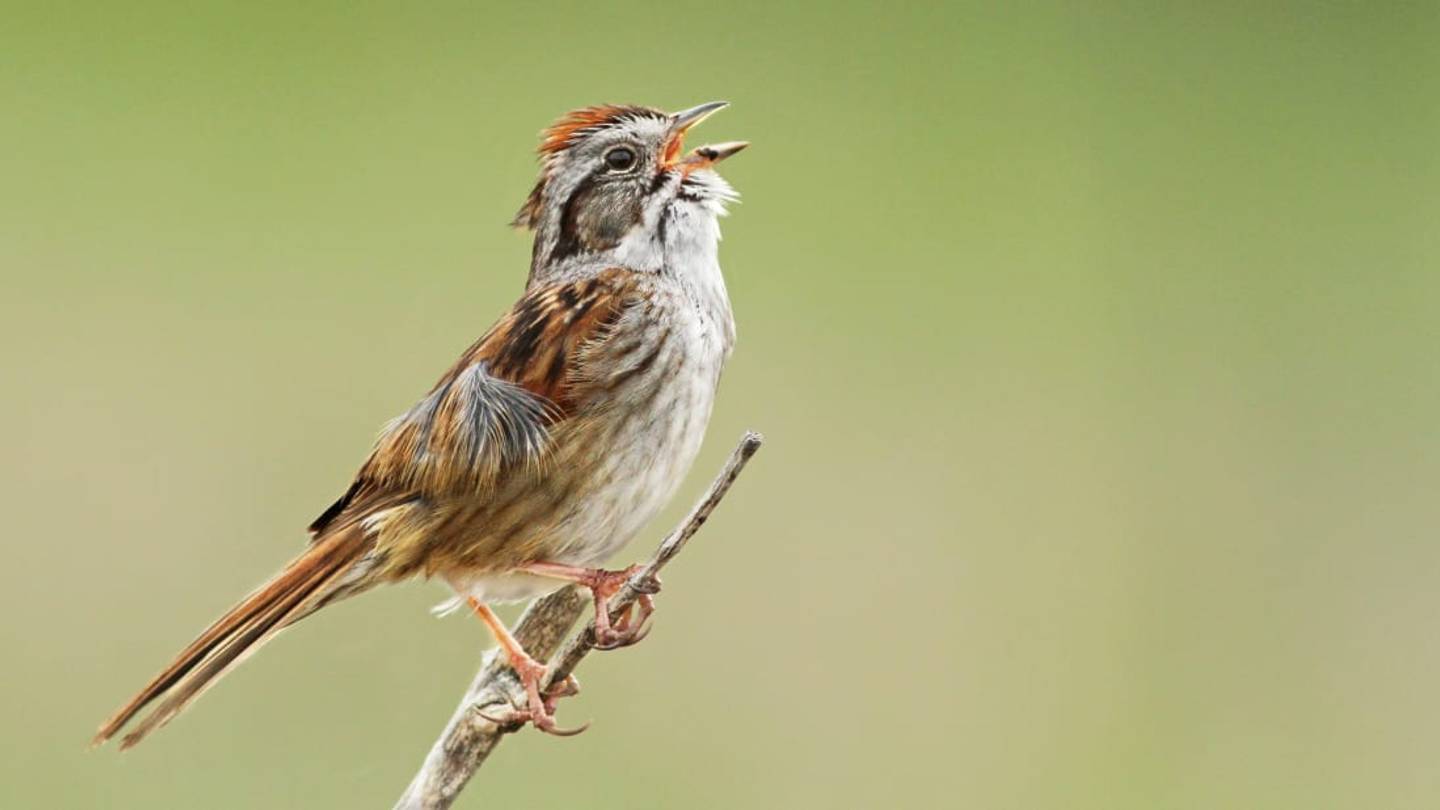
Swamp sparrows are creatures of habitâso much so that theyâve been chirping out the same few tunes for more than 1500 years, Science magazine reports.
These findings , published in the journal Nature Communications , resulted from an analysis of the songs of 615 adult male swamp sparrows found in six different areas of the northeastern U.S. Researchers learned that young swamp sparrows pick up these songs from the adults around them and are able to mimic the notes with astounding accuracy.
Hereâs what one of their songs sounds like:
âWe were able to show that swamp sparrows very rarely make mistakes when they learn their songs, and they don't just learn songs at random; they pick up commoner songs rather than rarer songs,â Robert Lachlan, a biologist at Londonâs Queen Mary University and the studyâs lead author, tells National Geographic .
Put differently, the birds donât mimic every song their elders crank out. Instead, they memorize the ones they hear most often, and scientists say this form of âconformist biasâ was previously thought to be a uniquely human behavior.
Using acoustic analysis software, researchers broke down each individual note of the sparrowsâ songsâ160 different syllables in totalâand discovered that only 2 percent of sparrows deviated from the norm. They then used a statistical method to determine how the songs would have evolved over time. With recordings from 2009 and the 1970s, they were able to estimate that the oldest swamp sparrow songs date back 1537 years on average.
The swamp sparrowâs dedication to accuracy sets the species apart from other songbirds, according to researchers. âAmong songbirds, it is clear that some species of birds learn precisely, such as swamp sparrows, while others rarely learn all parts of a demonstratorâs song precisely,â they write.
According to the Audubon Guide to North American Birds , swamp sparrows are similar to other sparrows, like the Lincolnâs sparrow, song sparrow, and chipping sparrow. Theyâre frequently found in marshes throughout the Northeast and Midwest, as well as much of Canada. Theyâre known for their piercing call notes and may respond to birders who make loud squeaking sounds in their habitat.
[ h/t Science magazine ]
Loading recommendations... Please wait while we load personalized content recommendations