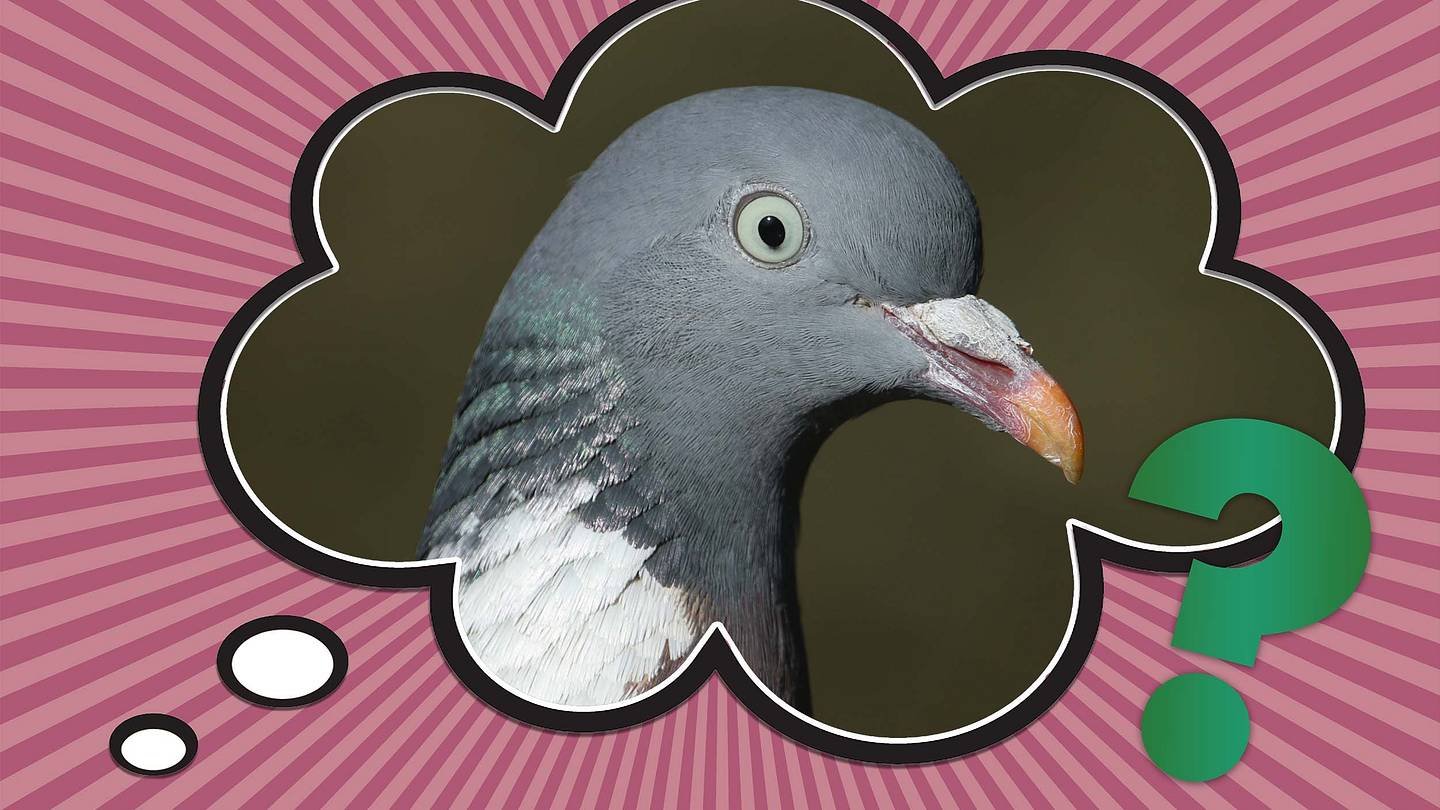
To the layperson, the difference between pigeons and doves has something to do with color âmaybe. Or location. Or general appeal (doves usually get much better press than pigeons do). But whatâs the actual scientific difference between doves and pigeons ?
As it turns out, there isnât one. Paul Sweet , the collection manager for the department of ornithology at the American Museum of Natural History, said the difference is more linguistic than taxonomic.
âThe word dove is a word that came into English from the more Nordic languages , whereas pigeon came into English from French,â Sweet told Mental Floss in 2018.
Both dove and pigeon refer to the 300-plus species of birds in the Columbidae family , Sweet said. Thereâs no difference between a pigeon and a dove in scientific nomenclature, but colloquial English tends to categorize them by size. Something called a dove is generally smaller than something called a pigeon , but thatâs not always the case. A common pigeon, for example, is called both a rock dove and a rock pigeon .
More Articles About Pigeons:
âPeople just have their own classification for what makes them different,â Sweet said. âSo in the Pacific, for example, the big ones might get called pigeons and the smaller ones might be called doves , but theyâre actually more closely related to each other than they are to other things in, say, South America, that are called pigeons and doves .â
The difference boils down to linguistic traditions, so feel free to tell people youâre releasing pigeons on your wedding or that youâre feeding doves in the park. Scientifically speaking, youâll be correct either way.
Have you got a Big Question youâd like us to answer? If so, let us know by emailing us at [email protected] .
A version of this story ran in 2018; it has been updated for 2024.
Loading recommendations... Please wait while we load personalized content recommendations