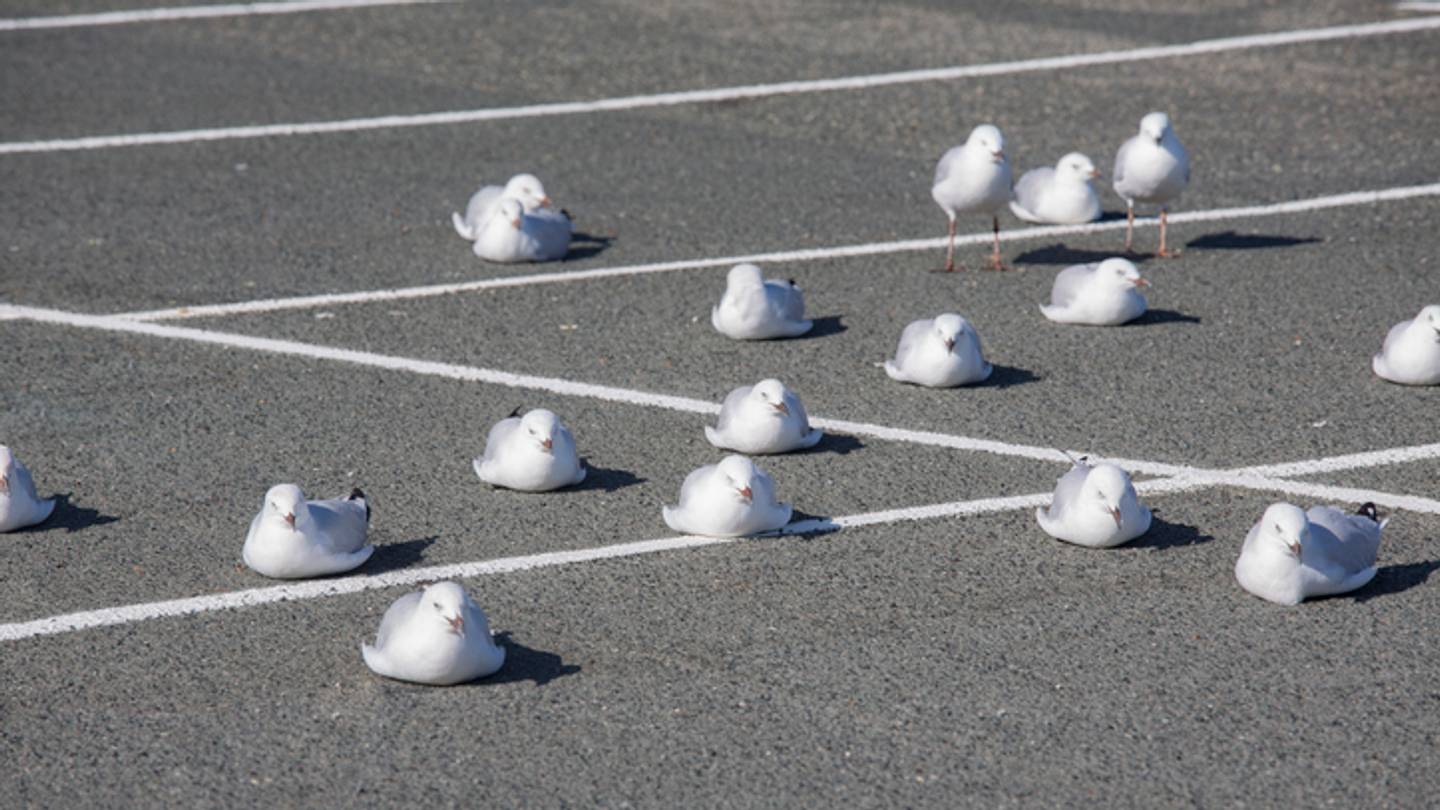
Technically, seagull is a misnomer. Birds in the subfamily Larinae are called âgulls,â and while they do like to be near water, they donât strictly live by the sea.
Some populations of the ring-billed gull prefer the interior of the U.S., and some never even get near the ocean. The American herring gull , which the Cornell Lab of Ornithology calls the quintessential âseagull,â can be found pretty far inland. While there, they often congregate in parking lots. Why?
The gulls are drawn to parking lots mainly for two reasons. The first is food. Gulls are opportunistic feeders and will eat most things that are available to them, rather than specializing in one kind of food source. Theyâll feed on fish, crustaceans, small rodents, fruit, and even other gulls . They also go after a lot of things discarded by humans, from straight-up trash to Kentucky Fried Chicken . Along England's seacoasts, gull have become adept at dive-bombing beachgoers and stealing their chips right out of their hands.
Parking lots are smorgasbords of food wrappers and scraps, especially if thereâs a supermarket or restaurant nearby. Lots are often adjacent to dumpsters or municipal trash cans and frequented by motorists who canât be bothered to use either of those. Plus, manicured grass and other landscaped patches around the pavement can be good places to look for bugs or fruit as they drop from ornamental trees.Â
Add Mental Floss as a preferred news source !
Thereâs one more aspect to the appeal of parking lots as bird buffets. People actually feed them âon purpose. In a 2015 study , researchers in Massachusetts looked into why big groups of ring-billed gulls were gathering in area parking lots. They found that many drivers were tossing food out of their windows at the waiting gulls, but the bigger contributors were people who showed up at the parking lots and dumped out tons of food, including multiple loaves of bread, whole boxes of cereal, leftover spaghetti, and pizza. The researchers put up signage prohibiting the feedings to see if it changed peopleâs behavior, but it didnât have much of an effect on the number of gulls in the parking lots.
The second thing that parking lots have going for them is that theyâre spacious, open, and flat, like their more natural beach or marshland habitats. These factors allow gulls to congregate near food sources and gives them clear views in all directions so they can keep an eye out for danger. (Apparently, they donât considers cars or pedestrians dangerous.)
Overall, parking lots offer the benefits of gullsâ natural habitatsâlike space and a general lack of predatorsâwith constantly replenished food sources that they don't need to spend energy to find.
A version of this story originally ran in 2014; it has been updated for 2025.
Loading recommendations... Please wait while we load personalized content recommendations