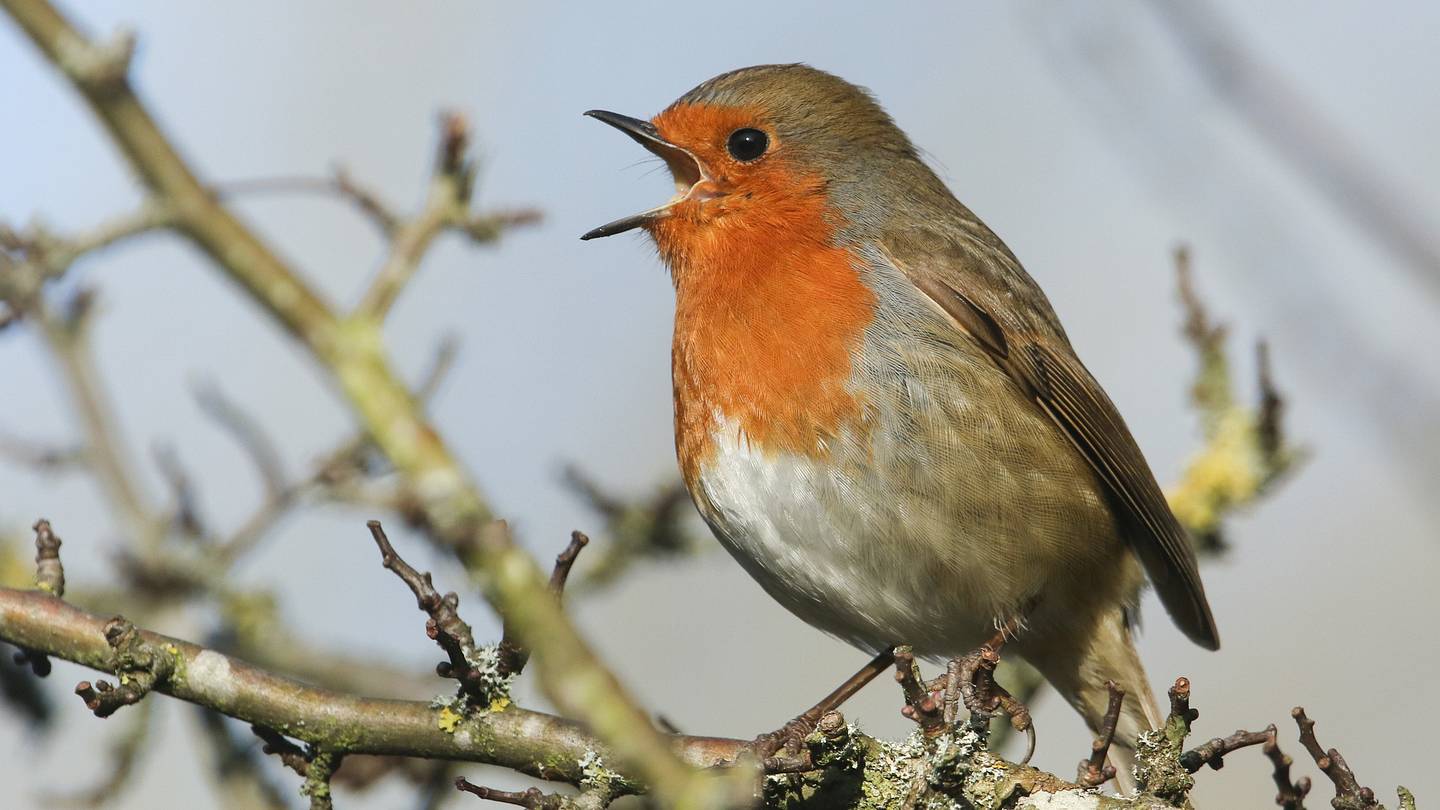
Ever wonder why some birds tweet, some sing, some quack, and the ones outside our bedroom windows at 5:00 in the morning caw ?
A birdâs âvoiceâ comes from the syrinx, which is the avian variety of the human voice box. The syrinx contains membranes that vibrate when air from the birdâs lungs is passed over them. But while the human larynx is positioned high in the throat, birdsâ syringes (thatâs the plural of syrinx ) are located down closer to the chest, where the bronchial tubes branch off into each lung. That means that the syrinx has two sources of sound, one from each bronchus, which gives birds a wider range of vocal sounds than humans.
But even in the bird kingdom, life isnât fair. The melodiousness and versatility of a birdâs voice is a product of evolutionâthe more and higher-developed muscles a bird has around its syrinx, the sweeter its song. Birds that donât have to rely on conversing with others to find a food source, like ostriches and vultures , have no syringeal muscles. Ducks spend their days paddling around lakes and waddling along the shore, in clear view of one another, so they donât need elaborate songs to attract a mate. A simple âquack!â and the shake of a tail feather is sufficient.
But birds that spend most of their time in trees need voices that carry, since all those leaves act as sound dampeners. And they also need distinctive sounds, so that sparrows can communicate with other sparrows. As a result, songbirds have from five to nine pairs of muscles around their syringes that squeeze out the tunes that serve as everything from a danger signal to a dinner bell to a love song.
A version of this story was published in 2013; it has been updated for 2024.