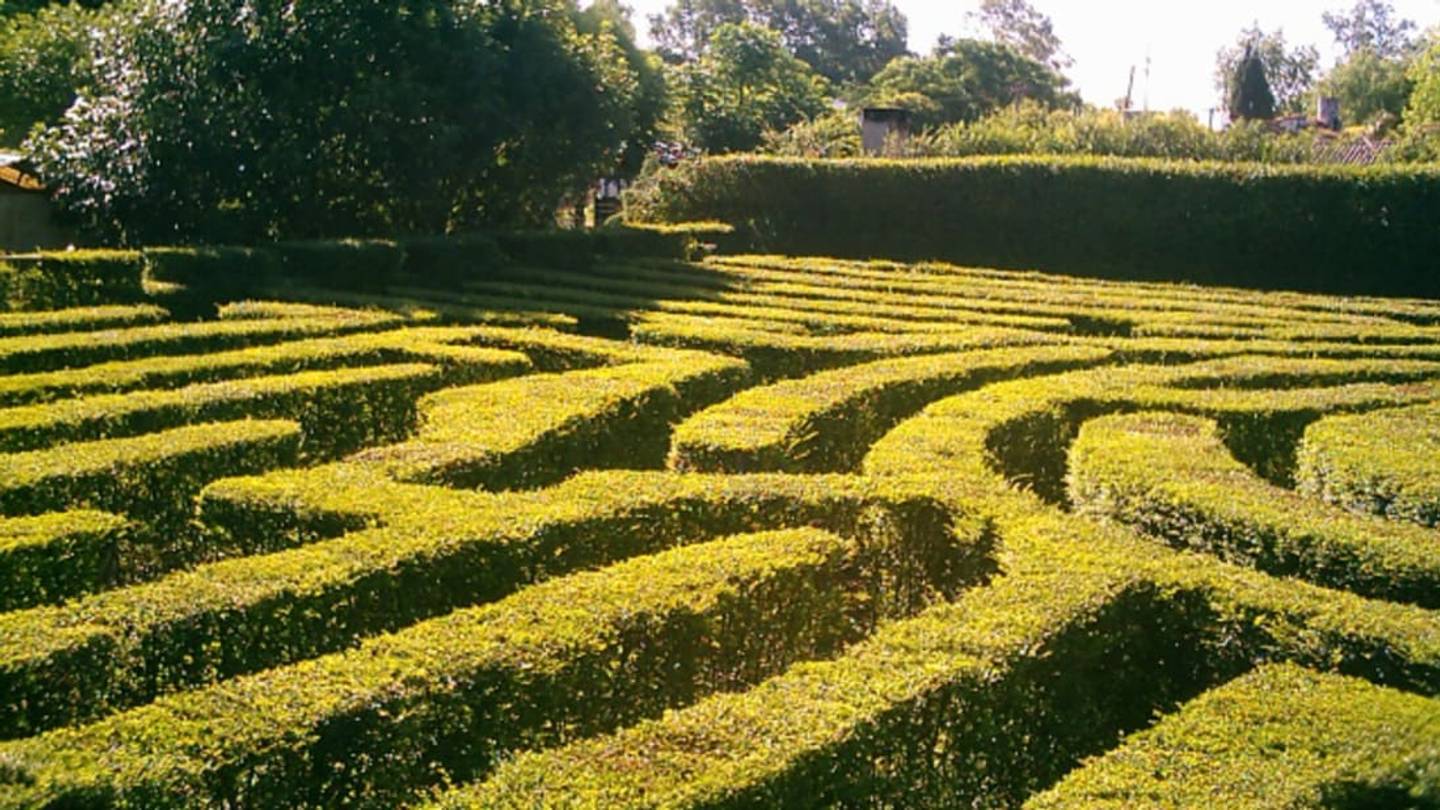
For thousands of years, humans have been fascinated by mazes and labyrinths: We've built them, told stories about them, created games and puzzles around them, and even trained animals to solve them. From the mythological labyrinths of Ancient Greece to the massive corn mazes of the 21st century, here are a few facts about puzzles of the past and present.
were designed to be serene and introspective, and followed a single circuitous path. In Germany, for instance, young men would walk through a labyrinth as part of their initiation into adulthood.
Though the terms are often used interchangeably, mazes and labyrinths have slightly different definitions . Officially, the word âmazeâ refers to a collection of branching paths, through which the traveler must find the correct route. âLabyrinth,â meanwhile, refers to a pathway which, while winding and potentially disorienting, is non-branching, and leads directly to its endpoint.
Ancient Greek historian Herodotus claimed to have visited the Egyptian labyrinth, and described it as a winding building, made up of thousands of rooms, many of which were underground and held the tombs of Egyptian kings. He wrote that âall the works and buildings of the Greeks put together would certainly be inferior to this labyrinth as regards labor and expense."
According to legend, the original labyrinth was built by architect Daedalus and his son Icarusto to house the Minotaur , a creature with the body of a man and the head of a bull.Â
It comes from the Middle English word meaning âdeliriumâ or âdelusion.â
Starting in the 16th century, European royalty began building elaborate hedge mazes on their property. The mazes were meant to entertain, as well as to provide private, out-of-the-way places for secret meetings.
In 1882, polymath John Lubbock started designing mazes to study the navigational skills of insects. He built impromptu mazes and navigational puzzles out of household items, and observed the way ants made their way around them. He published the results in his book Ants, Bees, and Wasps .
CircaSassy, Flickr  // CC BY 2.0
Built to study how rodents learn and navigate, the maze was the creation of Clark University graduate student Willard Small , who was inspired by the real-life hedge maze at the Hampton Court Palace.Â
Entitled MAZE: Solve the World's Most Challenging Puzzle , the 45-page picture book asked readers to find their way to the center of an imaginary house, solving riddles along the way. Though the task seemed relatively simple, the puzzlesâof which there were more than 116âwere wickedly tough. It took almost two years for someone to find a solution and collect the prize.Â
During the 1970s, pen-and-paper maze books became something of a fad. Kids and adults alike would draw a line through different maze illustrations, trying to make as few wrong turns as possible. Around the same time, early video game companies started building simple 2D maze games, aesthetically similar to the pen-and-paper games, which featured races through mazes, or maze puzzles. For instance, Atariâs fourth video game, Gotcha , released in 1973, had players chase each other through a black-and-white maze.
The Dole Plantationâs giant Pineapple Garden Maze is made up of 14,000 tropical plants, and was declared the longest in the world in 2008.
In 2014, visitors to Cool Patch Pumpkins in Dixon, California got to explore the sprawling, looping temporary maze, which the Guinness Book of World Records confirmed was the largest ever created.
âI donât know what to do anymore. Weâve been in here like four hours,â said one caller . Several callers worried the maze would close before they found their way out. In response to the panic, the local police deputy wearily suggested future visitors remember to bring a map.
Called aMAZEme , the pop-up installation in London was built over the course of four days by hundreds of volunteers, and immersed visitors in classic literature. Brazilian artists Marcos Saboya and Gualter Pupo designed the structure to mimic the shape of Spanish language writer J.L. Borgesâ fingerprint.
In most simply constructed mazes, all of the walls are connected to the outer boundary of the mazeâwhich means, trailing your hand along the wall when you start the maze will help you avoid getting lost in unconnected passageways.Â
Loading recommendations... Please wait while we load personalized content recommendations