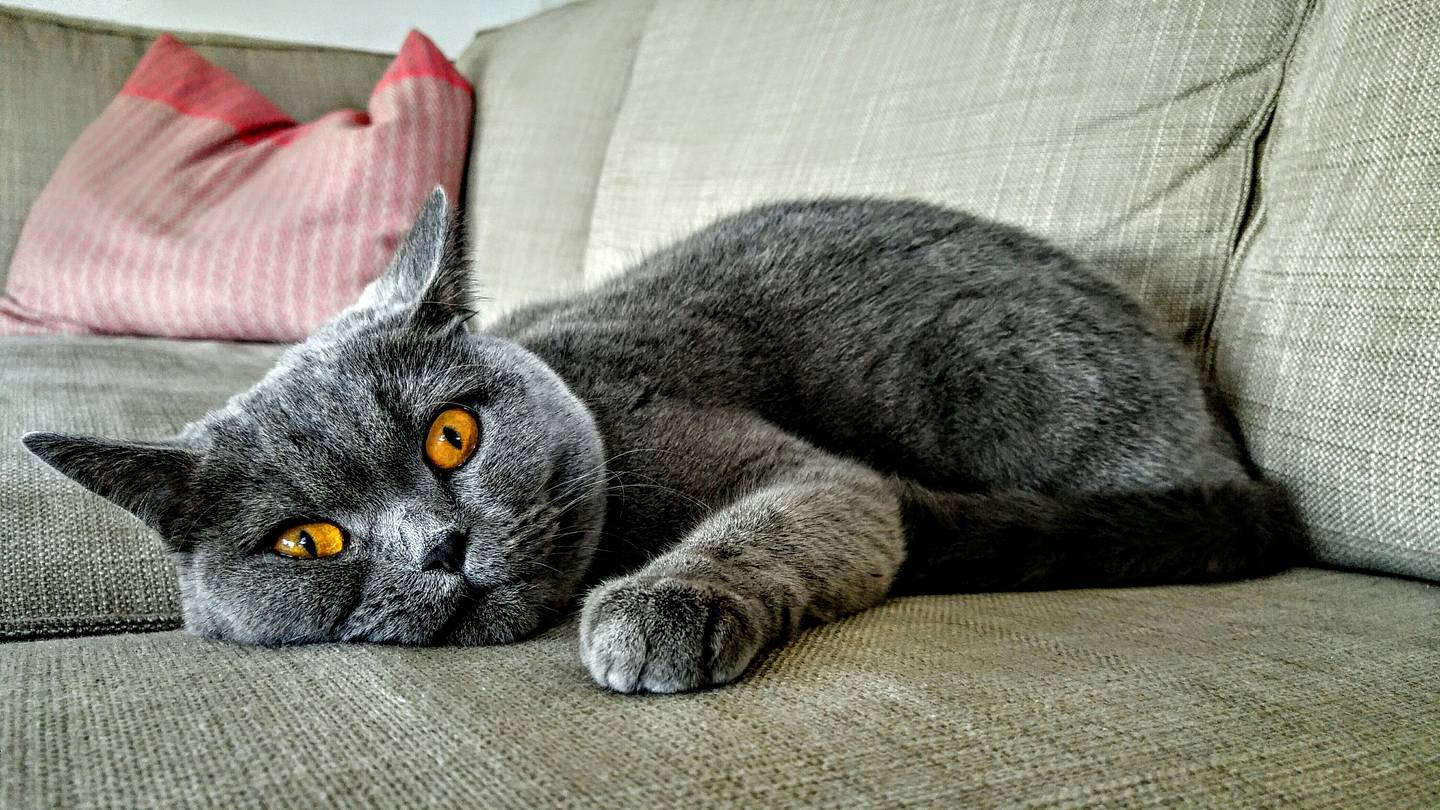
Donât mistake Chartreux cats for British shorthairs . With their plush blue-gray fur and round faces, the two cats look a lot alike. However, the Chartreux is thought to hail from France, where itâs unofficially known as the countryâs national cat . Here are seven facts about the elegant Gallic kitty.
Like most cat breeds, there are colorful (and potentially mythical) tales surrounding the Chartreuxâs origins. The most enduring explanation is that the Chartreuxâs ancestors were feral mountain cats from the Middle East. During the 13th century, merchants or Crusaders brought the cats to France.
Itâs said that Carthusian monks later bred the cat at the Grande Chartreuse Monastery in southeastern France. The monks have distilled a liqueur called Elixir Végétal de la Grande-Chartreuse from herbs, plants, and flowers since 1737 , so the gray kitty was called the Chartreux after their famous alcohol. However, monastery records donât mention the Chartreux cat, so the juryâs still out on whether this romantic story is true.
Meanwhile, others say the feline received the name âChartreuxâ thanks to their thick, wooly coats, which look similar to a Spanish wool called la pile de Chartreux .
While experts donât know where the Chartreux comes from, they say itâs lived in France for a very long time. In 1558, French poet and critic Joachim du Bellay wrote a poem called â Vers Français sur la mort dâun petit chatâ (âFrench verse on a small cat's death â ). The verse mourns a tiny gray kittyâs untimely passingâa cat that many people believe to be a Chartreux. He wrote:
âHere lies Belaud, my little gray cat, Belaud, that was the most handsome perhaps That nature ever made in catâs clothing. This was Belaud, death to rats. Belaud, to be sure his beauty was such That he deserves to be immortal.â
And in 1747, French portrait artist Jean-Baptiste Perronneau painted an aristocratic woman , Magdaleine Pinceloup de la Grange, holding a large cat with gray fur. Thanks to its distinctive coloration and build, art experts say that the feline is a Chartreux. Many naturalists, historians, and writers have also mentioned the elegant cat in their works.
Like many feline breeds, the Chartreux catâs existence was threatened after cat fanciers stopped breeding it during World War II . To save it, breeders outcrossed the Chartreux with cats including Persians. Today, youâll still occasionally see a poufy Chartreux appear in a litter of shorthaired kittens if both of its parents carried the recessive gene for long fur.
The Chartreux didnât officially make it to America until 1970 , when two cat lovers named Helen and John Gamon from La Jolla, California, read about the Chartreux in a book and wanted to purchase one for themselves. The couple traveled to Paris, where they bought two Chartreux cats. The Gamons brought the kitties back to America, and discovered that there were no other Chartreux kitties registered in the U.S. and Canada. They seized the opportunity to import even more of the beautiful blue felines. Today, those two individuals are thought to be the likely progenitors of all Chartreux cats in the U.S. [ PDF ]. Eventually, the Cat Fanciersâ Association (CFA)âthe worldâs largest registry of pedigreed catsâgave the breed full recognition in 1987.
Many think that the Chartreux and the British shorthair are the same, but if you look closely, youâll spot subtle differences between the two felines. For instance, the British blueâs coat is short, plush, and extremely dense, with a crisp feel to the touch. In contrast, the Chartreuxâs water-repellent fur has a shorter undercoat, a longer topcoat, and is slightly tufted and woolly.
Meanwhile, British shorthairsâ eyes can be copper, green, gold, and blue. A Chartreux catâs eyes are brilliant orange. And while both cats are stocky and have round, âgrinningâ faces, the Chartreux has fine-boned legs. Thanks to this trait, some cat fanciers lovingly refer to the Chartreux as a âpotato on toothpicks.â
French author Colette owned several Chartreux cats , including a feline named Saha. The cat inspired Colette to write a short novel, 1933âs La Chatte , about a man named Alain who loves his Chartreux catâalso named Sahaâmore than his wife. In the book, Coletteâs affection for the breed shines through: She lovingly describes Saha as a âpearl gray devilâ and a âlittle bear with fat cheeks and golden eyes.â
According to legend, the Carthusian monks selectively bred Chartreux cats so they wouldnât interrupt the monksâ meditation. This explanation for the felinesâ muted meow is likely more fictional than fact-based. However, the Chartreux is known for being a quiet breed. They rarely make noise, and when they do, they chirp and trill.
A version of this story originally ran in 2016; it has been updated for 2022.
Loading recommendations... Please wait while we load personalized content recommendations