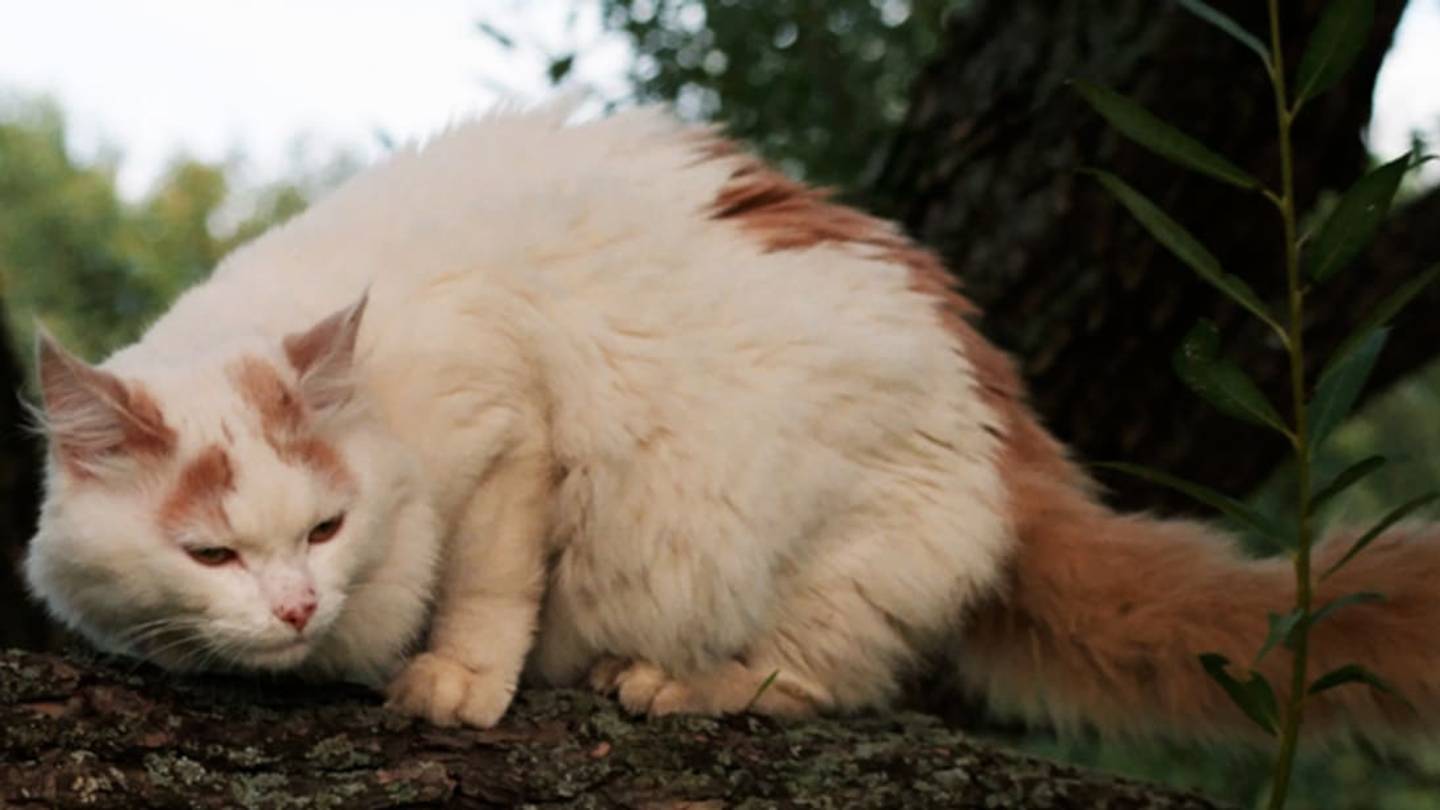
The Turkish Van is a striking, silky cat with a white body and colored head and tail. True to its name, it's thought to hail from modern-day Turkeyâs eastern Lake Van region. Here are seven facts about the gorgeous kitty.
InkeriSiltala via Flickr // CC BY NC-ND 2.0
Like many cat breeds, no one quite knows the Turkish Vanâs true origins. According to legend , ancestors of the Turkish Van sailed aboard Noahâs Ark. Once the boat reached Mount Ararat âa volcanic mountain in eastern Turkey that serves as the Biblical vesselâs mythical landing placeâthe cats hopped off and swam for dry land. God blessed them , and his divine touch caused their white coats to develop their signature coloration. These cats became the progenitors for the Turkish Van breed.
In reality, the Turkish Van breed probably developed in central and southwest Asia. It's believed that the furry cat has lived in Turkeyâs isolated Lake Van regionâa mountainous area thatâs home to the countryâs largest lakeâfor generations, thanks to local legends, traditional folk songs, and ancient artifacts that reference the cat and its unusual markings. The Turkish Van has reportedly also been spotted in neighboring countries including Iran, Iraq, and parts of the former Soviet Union.
Inkeri Siltala viaFlickr // CC BY NC-ND 2.0
The Turkish Van eventually migrated from Turkey to central Europe, possibly thanks to merchants, explorers, military troops, or returning Crusaders, who brought the cat home with them during the late 13th century. But according to most sources, the cat didnât make its mark on the world until the mid-1950s , when two British women named Laura Lushington and Sonia Halliday were photographing Lake Van for the Turkish Tourist Board; when they had finished their project, the Tourist Board thanked them with a pair of unrelated dark red and white felines . Lushington took them back to England, began breeding the kitties, and imported more cats from Turkey to further the bloodline.
Eventually, the foreign breed was registered with the Governing Council of the Cat Fancy (GCCF). Originally called âTurkish cats,â their name was later changed to the Turkish Van to avoid confusion with the Turkish Angora breed . (Over the years, the Turkish Van has also been known by a handful of other names .) In 1969, the GCCF officially granted the Van full championship status.
No one knows quite how or when Turkish Vans made their way to America, but in the early 1980s, two breeders named Barbara and Jack Reark imported two of the cats from France, helping to pave the way for the Vanâs acceptance as a new breed. By 1985, The International Cat Association (TICA) also recognized the Van, and the Cat Fanciersâ Association (CFA) followed suit in 1994.
The Turkish Van is still relatively rare in America, so if you want to purchase one you might have to search long and hard for a breeder who sells the silky kitties. In 2013, CFA registration statistics showed that the Turkish Van ranked 41st in popularity out of the 43 breeds the organization accepts for championship statusâprobably because so few of them exist in the U.S.
Even though the Turkish Van is beloved in the Republic of Turkey, one 1992 survey revealed that only 92 of the purebred felines remained in the country's Lake Van region. To expand the cat's bloodline, the Turkish government officially recognized the Van and launched measures to protect it, while a local university developed breeding programs. Today, very few Turkish Vans are exported to other countries, and most of Americaâs breeding stock comes from Europe.
Chris viaFlickr // CC BY-SA 2.0
If youâre a cat aficionado, youâve likely heard the term Van markings , which describes a mostly-white feline with colored markings that are restricted to its head and tail. This phrase was originally coined to describe the Turkish Vanâs unique coloration. The Vanâs markings can come in multiple shades, including red, cream, black, and blue, and patterns like tabby and tortoiseshell [ PDF ]. Cat registries have rules about how many colored markings can cover the white portion of the Vanâs body before itâs considered a bicolor cat instead of a Turkish Van. The CFA, in particular, only allows for 15 percent of the Van's entire body, excluding the head and tail color, to be colored.
Youâll also find solid white Turkish Vans, and Vans that have been âblessedâ with a color patch between their shoulder blades; cat fanciers refer to this as the âMark of Allah.â
Aside from its markings, the Van is known for its beautiful fur. It has a plumed tail, and a silky, semi-long coat thatâs water-repellant. The coat is thick and dense in the winter, sheds to a shorter length in the summer, and has no undercoat, so itâs tangle-free and easy to groom. This fur covers a broad-chested, muscular body, which according to some accounts, can weigh anywhere from 7 to 20 pounds .
Turkish Van kittens are initially born with pale blue eyes, which change to a deeper blue or amber as they grow older. Occasionally, youâll also see a Van with one amber eye and one blue eye , or two blue eyes of different hues. This unusual trait stems from the catâs piebald white spotting gene, which sometimes prevents melanin, or pigment, from imbuing one eyeâs iris with color.
gadgetgirl viaFlickr // CC BY-NC-ND 2.0
Turkish Vans are often called âthe swimming catsâ because theyâre said to love water. Fans of the fluffy feline claim theyâve seen the kitty jump into showers, pounce at dripping faucets, and splash through puddles, kiddie pools, and thunderstorms.
Itâs unknown why Vans like water, but itâs likely that the breed developed its love for swimmingâand its water-repellant coatâto hunt for the fish that live in Lake Van. Still, these claims are speculative, so unless your Turkish Van has proven its love for all things liquid, donât try giving it a bath without clipping its claws first.
If youâre looking for a quiet, cuddly lap cat, the Turkish Van is not the pet for you. But if youâre looking for a livewire feline that likes to play games, leap onto high surfaces, and race around the house, the Van might be your best bet.
Loading recommendations... Please wait while we load personalized content recommendations