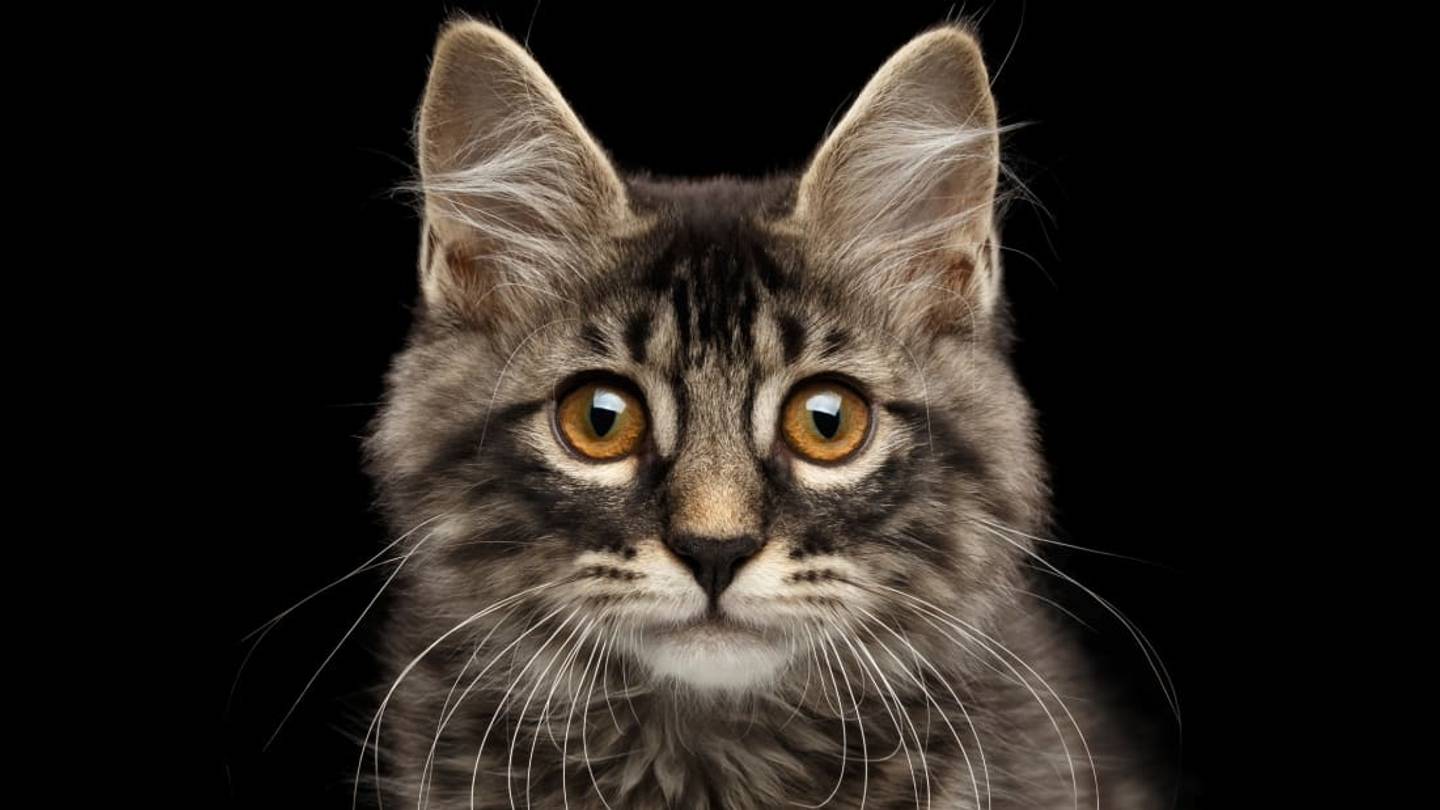
From the time you wake up with a fluffy pile purring on your face to the time you go to bed with that fluffy pile purring on your face again, there are a lot of reasons to love our cats. If you want to celebrate Felis catus in all its furry glory, try sharing some of these 50 bits of cat trivia.
Are you that clean ? This behavior serves several purposes: It helps cats tone down their scent so they can avoid predators, it cools them down, it promotes blood flow, and it distributes natural oils evenly around their coat, allowing them to stay warm and dry. Grooming also serves as a sign of affection between two cats, and itâs thought that saliva contains enzymes that serve as a natural antibiotic for wounds.
Cats often make the sound when theyâre content , but they also purr when theyâre sick, stressed, hurt, or giving birth.
Scientists donât quite know why cats purr, but one hypothesis is that the sound frequency of purringâbetween 25 and 150 Hertzâ"can improve bone density and promote healing," theorizes Leslie A. Lyons, an assistant professor at the School of Veterinary Medicine at the University of California, Davis, in an article for Scientific American. "Because cats have adapted to conserve energy via long periods of rest and sleep, it is possible that purring is a low energy mechanism that stimulates muscles and bones without a lot of energy."
Ever wonder why catnip lulls felines into a trance? The herb contains several chemical compounds, including one called nepetalactone , which a cat detects with receptors in its nose and mouth. The compounds trigger the typical odd behaviors you associate with the wacky kitty weed, including sniffing, head shaking, head rubbing, and rolling around on the ground.
More than half of the worldâs felines donât respond to catnip. Scientists still donât know quite why some kitties go crazy for the aromatic herb and others donât, but they have figured out that catnip sensitivity is hereditary . If a kitten has one catnip-sensitive parent, thereâs a one-in-two chance that it will also grow up to crave the plant. And if both parents react to 'nip, the odds increase to at least three in four.
More Articles About Cats:
Canât afford a private eye? A feline might be able do the job for free. In the 1960s, ambassador Henry Helbâwho then lived in the Dutch Embassy in Moscowânoticed that his two Siamese kitties were arching their backs and clawing at one of the walls. Helb had a hunch that the cats heard something he couldnât, and sure enough, he found 30 tiny microphones hidden behind the boards. Instead of busting the spies, Helb and his staff took advantage of the surveillance and griped about household repairs or packages stuck in customs while standing in front of the mics. The eavesdroppers took care of their complaintsâand apart from Helb and his companions, no one was the wiser.
A rich British antique dealer named Ben Rea loved his cat Blackie so much that when he died in 1988, he left most of his estateâtotaling nearly $13 millionâto the lucky (albeit likely indifferent) feline. The money was split among three cat charities, which had been instructed to keep an eye on Reaâs beloved companion. To this day, Blackie holds the Guinness World Record for Wealthiest Cat.
But they might like tunes written by composer David Teie , who partnered with animal scientists to make an album called Music for Cats . Released in 2015, the songs are âbased on feline vocal communication and environmental sounds that pique the interest of cats,â Teieâs website states.
A kindle isnât just an e-readerâitâs also a word thatâs used to describe a group of kittens born to one mama cat. Meanwhile, a group of full-grown cats is called a clowder .
If you adore felines, youâre in good company: Many of historyâs most famous figuresâincluding Florence Nightingale , Pope Paul II, Mark Twain , and the Brontë sistersâall owned, and loved, cats.
Still, the title of historyâs craziest cat man might go to Abraham Lincoln . Mary Todd Lincoln was once asked if her husband had any hobbies. Her response? âCats!â (He also liked dogs.)
Looking to elevate your vocabulary? Try using the word in a casual conversation. Itâs a fancy word for "cat lover," and itâs derived from the Greek word for cat, ailouros , and the suffix - phile , meaning "lover." Conversely, the word ailurophobe âa combination of ailouros plus phobe âdescribes someone who hates cats.
On October 18, 1963, French scientists used a rocket to launch the first cat into space. The felineâs name was Félicette, and she made it safely to the ground following a parachute descent. Almost definitely landing on her feet.
As for the worldâs oldest living cat, the title belongs to a sometimes-cranky white-and-orange kitty named Rubble, who celebrated his 31st birthday in June. The average lifespan is 12-18 years.
Officials donât want to encourage people to overfeed their pets, but in 2003, a Siamese cat named Katy was a serious contender for the unofficial record. Katy, who lived in Asbest, Russia, was given hormones to stop her mating. The treatment had an unintended side effect: It dramatically increased her appetite, and the hungry kitty ballooned to 50 pounds.
Sounds right. Experts havenât figured out why cats like to knead , but theyâve come up with several possible explanations , one being that your kitty is trying to mark their "territory" (thatâs you!) with the scent glands in their paws. And since kittens knead their mamaâs belly to stimulate milk production, thereâs also a chance that they carry this behavior into adulthoodâa phenomenon known as a "neotenic behavior."
In 2015, a 6-by-8.5-foot oil painting billed as the "worldâs largest cat painting" sold at auction for more than $820,000 . Itâs called My Wife's Lovers , and it once belonged to a wealthy philanthropist named Kate Birdsall Johnson. She loved felines so much that she owned dozens (some even say hundreds) of kitties, and commissioned a painter to capture her Turkish Angoras and Persians in their natural element. Since Johnsonâs husband called the clowder "my wifeâs lovers," the nickname was selected as the artworkâs title.
Contrary to popular belief, cats donât always land on their feet when they fall. But more often than not, all four paws end up touching the ground. Cats have a fantastic sense of balance, so theyâre able to tell âupâ from down and adjust their bodies accordingly. If they sense theyâre plummeting downwards, they twist their flexible backbones mid-air, allowing them to right themselves so they donât fall splat on their backs. Additionally, cats can spread their legs out to âparachuteâ through the air, and theyâre small, light-boned, and covered in thick furâmeaning their fall isnât going to be as hard as, say, a dogâs.
In 2018, Americaâs most popular cat breed was the Exotic âa flat-faced kitty thatâs essentially a short-haired version of a Persian cat. The second most beloved breed was the Ragdoll, and the British Shorthair ranked at No. 3.
The musical Cats is based on a collection of T.S. Eliot poems called Old Possumâs Book of Practical Cats . Published in 1939, it follows the whimsical antics of a group of felinesâbut the manuscript was originally intended to feature dogs, too. In the end, though, Eliot determined that "dogs donât seem to lend themselves to verse quite so well, collectively, as cats."
Usually we think it's the other way around, but even if youâre not allergic to cats, your cat might be allergic to you. One in 200 cats are believed to have asthmaâand this number continues to rise among indoor kitties as they're more frequently exposed to cigarette smoke, dust, human dandruff, and pollen.
A train station in Southeastern Japan is presided over by an adorable "stationmaster": a 7-year-old calico cat named Nitama . The Kishi train station near Wakayama City hired Nitama in 2015, just a few months after its prior feline mascot, Tama, died from acute heart failure at the age of 16.
Greyhound dogs are the ones with a bus line named after them, and cheetahs get the prestige, but house cats are pretty speedy, too: The average running feline can clock around 30 mph . That's enough to get a ticket in a school zone.
The ancient Egyptians revered cats , and even worshiped a half-feline goddess named Bastet. People who harmed or killed cats faced harsh legal sentences, including the death penalty.
This myth has persisted across Western civilization for centuries. Felines with dark fur first became linked with the Devil during the Middle Ages, and when the Black Death pandemic ravaged Europe in the mid-14th century, superstitious individuals responded by killing off the black cat population. Little did they know that vermin carried the deadly disease and that the rodent-eating cats actually helped curb its spread. And black cats eventually became associated with witches because women accused of practicing black magic tended to adopt alley cats as companions.
Black cats are considered to be a bad omen in the U.S., but in Great Britain and Japan, theyâre perceived as auspicious. In the English Midlands, new brides are given black cats to bless their marriage, and the Japanese believe that black cats are good luckâparticularly for single women. Meanwhile, the Germans believe that a black cat crossing your path from left to right is ominous, but if the feline switches directions and goes right to left, itâs fortuitous.
Remember Nyan Cat? The famous viral meme of a gray kitty with a Pop-Tart body who shoots rainbows from its posterior (the internet, folks!) was based on a real-life feline : a Russian Blue named Marty, owned by Nyan cat illustrator Chris Torres.
Cats are genetically predisposed to not be able to taste sweets . They will likely nibble off your plate if it contains meat, but theyâll leave it alone if itâs laden with cake.
The worldâs first major cat show was held at Londonâs Crystal Palace in July 1871. Hundreds of felines (and dozens of breeds) were placed on display, and around 200,000 guests are said to have attended the event.
Most cats weigh in the single or low-double digits, but some breeds are truly huge. For instance, Norwegian Forest Cats , Maine Coons , and Ragdolls often range in weight from 15 to 22 pounds. You should know this before you catsit for your friend with a Maine Coon.
Long before Keyboard Cat took the internet by storm, inventor Thomas Edison filmed two kitties "boxing" inside a ring. Created in 1894, the brief clip proves that humans have been obsessed with cute cat videos since long before the advent of YouTube.
Socks the Cat, a black-and-white tuxedo cat, was owned by Bill Clintonâs family during his time in the Oval Office. If you're like me, your third grade class handwrote letters to Socks. Anyway, during the early 1990s, Super Nintendo Entertainment System created a video game called Socks the Cat , featuring the First Feline. It was never officially released, and when the gameâs publisher shut down, Socks the Cat was lost for years, until video game collector Tom Curtin bought the (reportedly) only existing copy, purchased the rights, and partnered with game publisher Second Dimension to give it a second life. Socks the Cat Rocks The Hill was finally released in 2018.
Beyond their impressive size, Maine Coon cats are sometimes born with six toes .
While painful for the lady cat, they do serve a purpose : The barbs stimulate the vulva, allowing the female to ovulate, and they also keep her from escaping mid-coitus. (Felines are typically loners, and not that into sex.)
If you went to college, youâre more likely to have a cat than a dog. In 2010, researchers from the University of Bristol surveyed 3000 people about their pets, geography, and scholastic history. They found that people with university degrees were 1.36 times more likely to own a kitty than other pet owners. This phenomenon might be attributed to the fact that cats are low-maintenance, and therefore better companions for accomplished people with busy careers.
A cat has 244 bones in its entire bodyâeven more than a human, who only has 206 bones.
Sphinx cats donât have fur coats, but their body temperature is still four degrees warmer than a typical feline.
Experts think that cats hate water because itâs uncomfortable to have soggy fur, or because itâs frightening for a kitty to lose control of its buoyancy.
While many kitties do, breeds including the Turkish Van, Maine Coons, and Bengals are said to enjoy taking a dip every now and then.
Why do cats love to cuddle up in boxes? Animal experts think that the enclosed spaces make felines feel more protected, secure, and importantâkind of like theyâre back in the womb. (Sure enough, researchers found that when shelter cats are provided with boxes to cuddle up in, they adjust faster and are less stressed than kitties that aren't given boxes.) Also, sleeping in a box might help a feline retain more body heat so it stays nice and toasty, and therefore relaxed.
Nobody knows quite why cats meow , but experts think they might be channeling their inner kitten. Baby cats make the plaintive noises to get their motherâs attention, but as full-grown felines, they don't meow while interacting with other cats. Some experts think that felines use the noises they made as infants with humans to convey their emotions and physical needs.
Cats sweat through their paws (and sometimes when they get very hot they pant).
Beyond grooming all the time, according to one estimate, a cat spends nearly two-thirds of its life asleep .
Just like bodegas, the iconic Algonquin Hotel in midtown Manhattan owns a pampered lobby cat named Hamlet. He's one of a dozen rescue felines that have lived in the storied institution since the early 1920s. Hamlet took over the post following three Matildas. (Matilda III passed away in October 2017.)
Approximately 200 feral cats roam the grounds of Disneyland, where they help control the amusement parkâs rodent population. Theyâre all spayed or neutered, and park staffers provide them with medical care and extra food.
In the 1870s, the city of Liège, Belgium tried to train 37 cats to deliver the mail . Letters were enclosed in waterproof bags tied around the kittiesâ necks, but it turns out that cats werenât great at delivering the goods on time (or to the correct address). But maybe we simply haven't found the correct training method yet.
The Hungarian word for "quotation marks," macskaköröm, literally translates to "cat claws."
There are an estimated 85.8 million pet cats in the U.S. In contrast, there are only an estimated 78 million dogs.
Napoleon , Caesar, Genghis Khan, and Hitler are all said to have hated cats.
Or six times its lengthâ and make the entire thing look easy .
This story has been updated for 2020.
Loading recommendations... Please wait while we load personalized content recommendations