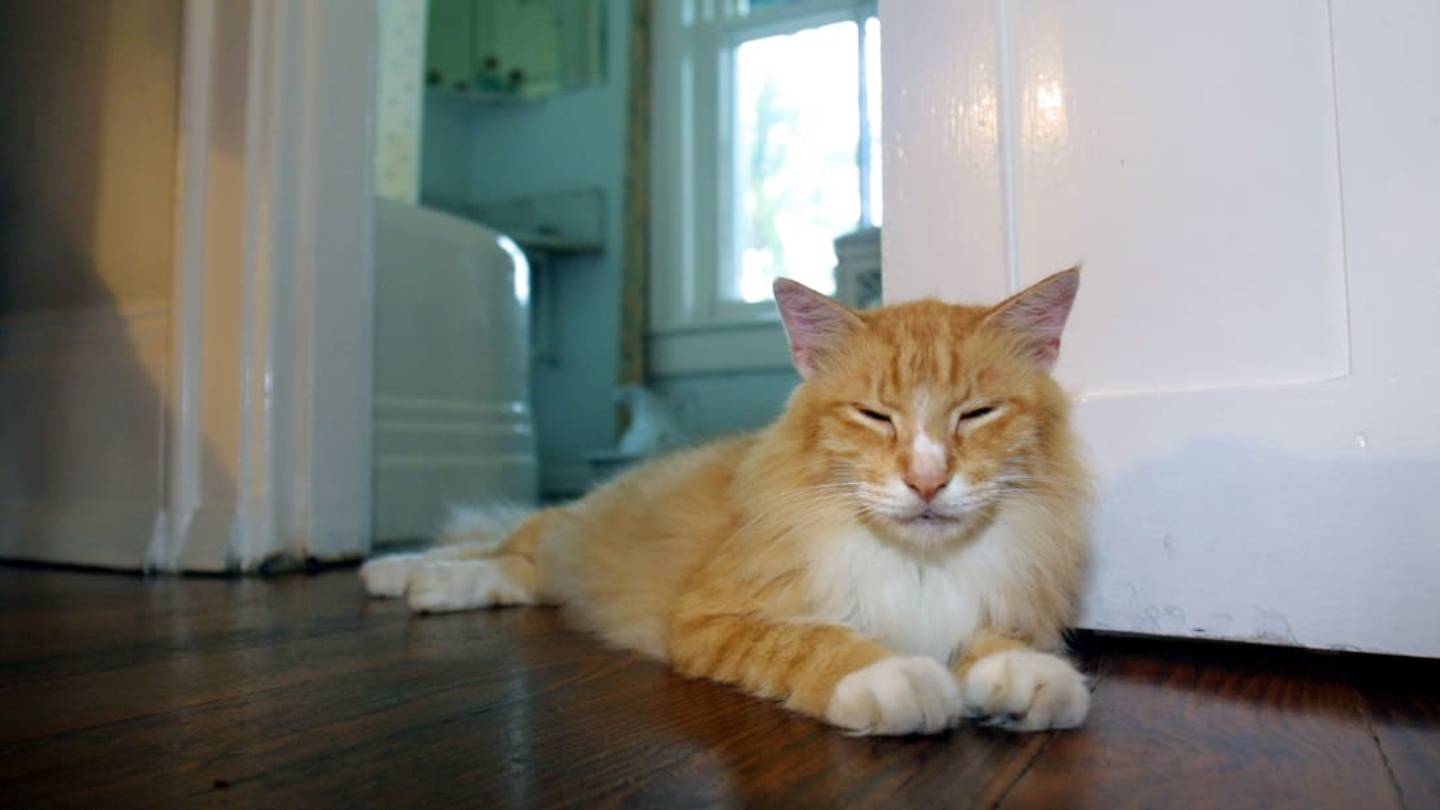
When the eminently quotable Ernest Hemingway wrote that âone cat just leads to another,â the lifelong ailurophile was talking about the veritable clowder of cats at Finca, his home in Cubaâbut he could easily have been referencing his home in Key West, Florida. The grounds of 907 Whitehead Street, now the Ernest Hemingway Home and Museum, house between 40 and 50 felines. (âCats in every room so donât go if you are allergic to them,â one reviewer on TripAdvisor notes.) Here are a few things you should know about them.
That means that they have extra toes. Cats normally have five toes in the front and four in the back; according to the Hemingway House and Museum website , âabout half of the cats at the museum have the physical polydactyl trait but they all carry the polydactyl gene in their DNA, which means that the ones that have four and five toes can still mother or father six-toed kittens. Most cats have extra toes on their front feet and sometimes on their back feet as well. Sometimes it looks as if they are wearing mittens because they appear to have a thumb on their paw.â
The reason the cats have extra toes, according to Kat Arney in the book Herding Hemingwayâs Cats , is âa mistake in the control switch for a gene called Sonic Hedgehog. And yes, it was named after the video-game character.â
Arney writes that two German scientists coined the name after noticing fruit fly maggots with a gene expression were âunusually stumpy and covered in bristles,â so they âpicked a name for the gene to reflect what these unfortunate creatures looked like: hedgehogs.â In the â90s, three types of the hedgehog gene were found in mammals; the third was named by Bob Riddle, who dubbed it Sonic after the hedgehog in his daughterâs comic book.
In her book Hemingwayâs Cats, Carlene Fredericka Brennen writes that Hemingwayâs son, Patrick, said in an interview that his father never had a cat in Key West. Later, a neighbor wrote that âhis family had several polydactyl cats, possibly some of the forebears of the cats in Key West now known as the famed âHemingwayâs Cats.ââ
But according to The Hemingway House and Museum website , Hemingway received a six-toed white feline from the captain of a ship, and some of the cats at Hemingwayâs Key West house are descended from that cat. A 1985 article in the Fort Lauderdale News quoted a guest relating that a guide had told him, âErnest met this sea captain at Sloppy Joeâs Bar one night and the two of them got drunk and then the sea captain gave Ernest a multi-toed cat off his ship.â
The Hemingway House and Museum website notes that Hemingway named all of his cats after famous people, a tradition the curators continue today. Over the years, cats have been named after everyone from Zane Grey and Marilyn Monroe to president âHairyâ Truman, Fats Waller, Kermit âShineâ Forbes, Truman Capote, Bugsy Siegel, Billie Holiday, and Cary Grant. Tour guide Jessica Pita told radio host Arden Moore that employees vote on the names.
Pita told Moore, âAll the cats here were born here.â To control the population, âeach female is allowed one litter; we keep a tom cat around to handle business, and then theyâre fixed. We keep between 40 and 50. When Hemingway was here, there was ⦠who knows. Sometimes reports of over 70, 80 cats.â
Those who are concerned about the welfare of the cats shouldnât worry: Theyâre well taken care of. In fact, their vet, Dr. Edie Clark, comes to the museum once a week to check up on the cats and perform âroutine procedures such as ear mite treatment, flea spraying, and worming,â as well as annual vaccinations, according to the museum's website.
The five-year battle kicked off in 2003, after a visitorâwho was concerned about the catsâ welfareâfiled a complaint with the federal government, according to NPR . The USDA claimed the museum was exhibiting the cats without the proper license (which it wouldnât have been able to qualify for anywayâthe license requires animals be enclosed). Employees of the Hemingway House claimed that the USDA sent undercover agents to âpose as tourists and get pictures and surreptitiously tape the cats,â according to CBS .
The agency threatened to fine the museum $200 per cat per day (or $10,000) or to remove the cats from the premises, and the museum eventually asked a federal court to intervene. Eventually, an animal behaviorist not affiliated with the museum or the USDA suggested that the catsâwhich appeared to be well cared forâbe allowed to stay if a special fence was installed. The museum agreed, and the cats got to stay.
In 2016, Martha Gellhornânot the war correspondent who was Hemingwayâs third wife, but the gray tabby named after herânipped at a tourist (who apparently didnât know how to decipher cat body language ) and found herself behind bars at the vetâs office. âIt was the first time ever and the woman was aggressive with the cat,â the homeâs manager told the Miami Herald . âThey are pets. We have 32 employees who consider them five-day-a-week pets.â After a 10-day quarantine, Martha was returned to the museum. Her jailers had dubbed her âa sweetheart.â
âActually, catnip is a problem for us,â Pita told Moore. âPeople want to being catnip here and play with the cats, but when thereâs 45, two of them want to go for the same cat thing. It can cause a little tussle.â The guide advised not bringing any catnip or treats, because the cats are on a particular diet. âWe ask, donât pick up the cats, but theyâre free for your petting,â she said, âand most of the cats, if you sit on a bench they will take to your lap, and of course thatâs cool with us.â
A full evacuation of the Florida Keys was ordered when Hurricane Irma approached the islands in 2017, but 10 employees insisted on staying behind with the cats. âWhen we started to round up the cats to take them inside, some of them actually ran inside knowing it was time to take shelter,â curator Dave Gonzales told MSNBC . âSometimes I think theyâre smarter than the human beings.â
The employees and the 54 cats rode out the storm, "The cats are accustomed to our voices and our care. We love them, they love us. We all hung out together," Gonzales said. The museumâs thick limestone walls kept them all nice and cool, and they had generators, food, water, and medical supplies on hand.
According to the Herald-Tribune , when Hemingwayâs cats pass away, theyâre laid to rest in the gardens behind the house. âThe burial spots are marked with concrete gravestones crudely etched with the names of now-deceased felines, some named for celebrities: Willard Scott, who died at age 12 in 1988; Kim Novak, who was 22 when she passed in 1997; and Gremlin (1986-2005).â
Loading recommendations... Please wait while we load personalized content recommendations