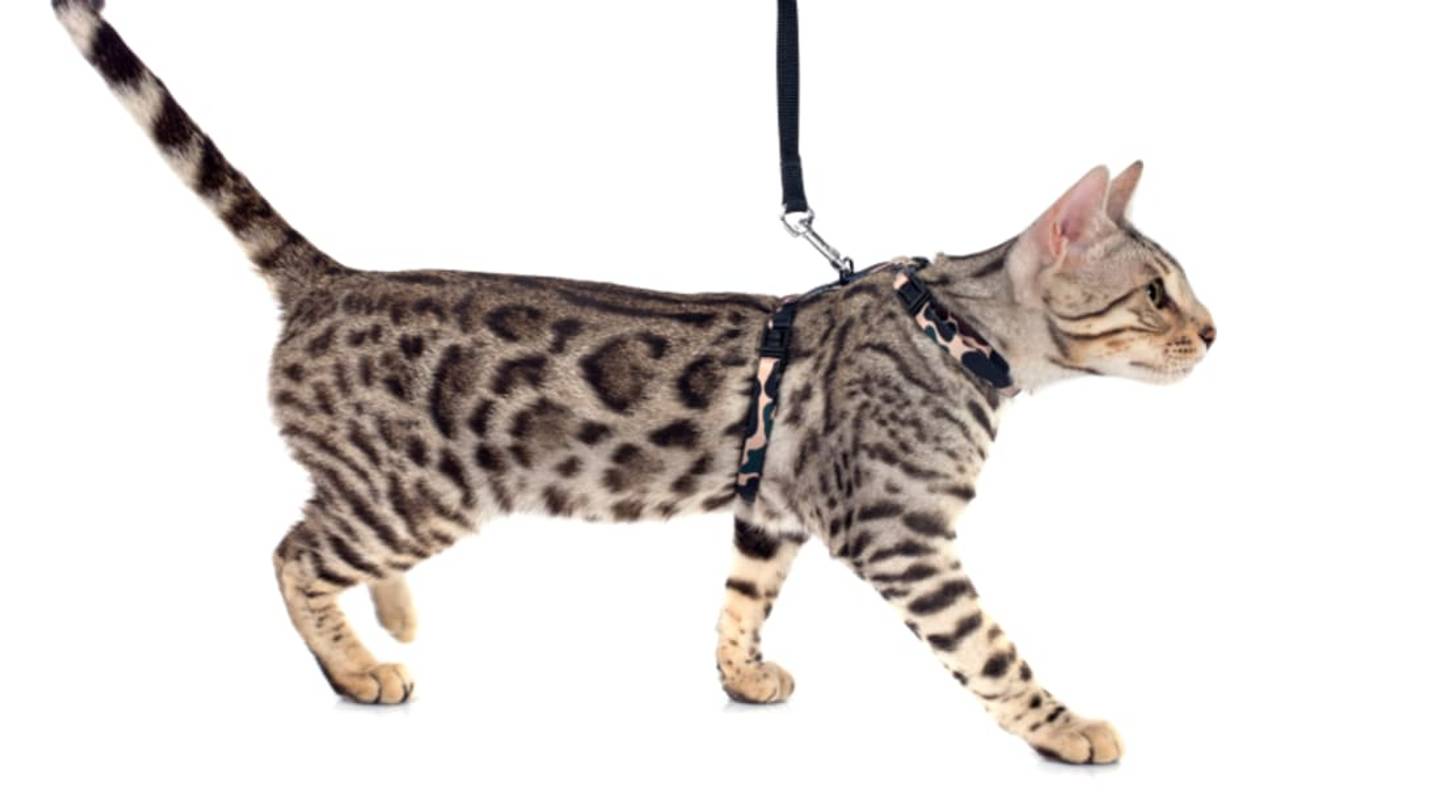
House cats share 95.6 percent of their DNA with tigers, but despite how adorable they can be, most people probably wouldn't want the latter as a pet. While big cats and our furry friends have several other things in common , one of the main differences is that many years ago, people successfully domesticated Felis catus . But how did it happen?
To understand how cats became pets, you have to understand what it means for a species to be domesticated. In scientist and author Jared Diamond's 1997 book Guns, Germs, and Steel , he lists failed attempts at domesticating zebras in 19th century South Africa, gazelles in the Fertile Crescent, grizzly cubs in Japan, and cheetahs in India. âOf the worldâs 148 big wild terrestrial herbivorous mammalsâthe candidates for domestication," he writes , "only 14 passed the test.â
According to Diamond, there are six criteria for successful domestication: the animals must be easy to feed; they must grow and mature at a rate that makes economic sense; they have to breed well in captivity to keep the population going; they have to be generally nice animals; they canât be prone to freak outs; and the social structure of the species has to be strong. Thousands of years ago, cats hit every mark for people looking to make them pets, though when that happened exactly is still a point of contention.
According to Smithsonian , cat remains have not made their domestication timeline any clearer, because house cats and wildcats have similar skeletons. Archaeologists have found evidence that suggests that cats in Cyprus were domesticated around 9500 years ago , long before the love affair with cats began in Ancient Egypt. A separate study and genetic analysis suggested that domestication of the animals began closer to 12,000 years ago . A theory about these wildcat ancestors, according to Stephen O'Brien of the National Cancer Institute in Frederick, Maryland, is that they âjust sort of domesticated themselves.â OâBrien said that one of the cat species had a âgenetic varianceâ that made the animals approach humans and hang around, while others were likely captured so that they could hunt mice and other pests for farmers.
Unfortunately, because cat domestication is believed to have started so long ago, history doesn't offer written manuals that explain every step of the process. By bringing the cats in as rodent killers, early domesticators may have given them certain amenities (like warmth and food ) that persuaded the cats to stay. Over the course of time, that mutual relationship led to the breeding of slightly tamer cats than their cousins in the wild, though some would argue that even the house cats of today aren't fully domesticated .
Smithsonian Institution archaeologist Melinda Zeder tells The New Yorker that itâs the mutual relationship that makes cats the âultimate domesticate.â But the domestication process didn't equal full subservience on the part of the felines. âI think what confuses people about cats is that they still carry some of the more aloof behaviors of their solitary wild progenitors,â Zeder said . âSometimes they donât give a damn about you, but they are very much part of your niche. Cats have us do everything for them. We clean their litter, stroke them, admire them, but unlike dogs they do not have to constantly please and satisfy our needs." Makes you wonderâwho's domesticating whom?
Loading recommendations... Please wait while we load personalized content recommendations