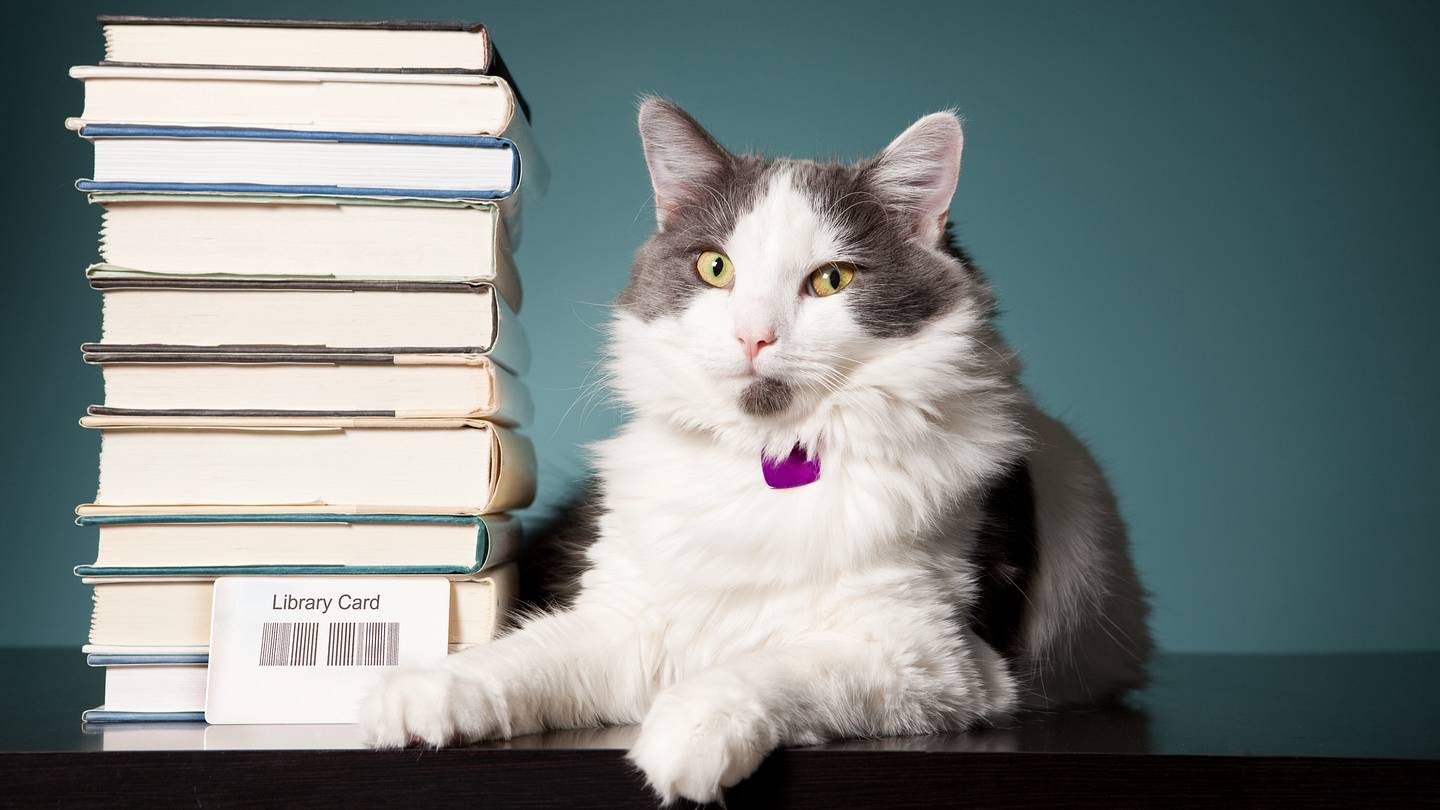
If youâve ever browsed a library and noticed a feline friend wandering through the stacks or snoozing beneath a shelf, youâve witnessed a tradition dating back thousands of years. Across the centuries, cats have been members of library life at institutions around the world. They remain a part of many todayâdespite some heated campaigns for their removal.
Domesticated cats were celebrated , esteemed creatures in Ancient Egypt , but they also had important jobs. People introduced cats to libraries to prevent mice and other creatures from eating and damaging precious manuscripts. As the friendly felines spread throughout the world, they put their pest-hunting prowess to work in various collections across the continents.
The threat rodents pose to treasured tomes has kept library cats gainfully employed ever since. Theyâve served some pretty high clientele: In the 18th century, Empress Elisabeth of Russia issued a decree ordering that the biggest, best mousers be brought into the royal palace (now the Hermitage Museum ) in St. Petersburg to catch rats that had invaded the library; their descendants continue to work there today.Â
More Articles About Cats:
In most cases, people tend to adore their local library cats. Some of these felines gain a celebrity-like status that stretches beyond the communities they serve. Thereâs even a map that shows some notable library cats that have worked across the United States.
One of the most famous of them all was Dewey Readmore Books , who lived in the public library of Spencer, Iowa. He was discovered there in 1988 at 8 weeks old after being abandoned in the libraryâs drop box, and remained with the institution until his passing almost 20 years later. The cat was a much-loved member of the libraryâhe was even given his own job description .Â
Not everyone is thrilled to find a purring "employee" slinking around the stacks. One of the most frequent conflicts involves library users who suffer from allergies . The Colon Township Library in Michigan had to remove its cat Jasper after one family threatened to take legal action as a result of allergy issues . Fortunately, Jasper was able to be rehomed with the libraryâs director.
One of the most high-profile controversies in recent years concerned a cat named Browser at a library in Texas. Browser was originally brought in to deal with a mice problemâthen became so popular with staff and patrons that he stayed on. But in 2016, the local council passed a motion demanding he be removed from the library due to allergy concerns. In response, a petition requesting he stay received over 12,000 signatures, and the townâs mayor said he received messages from âeverywhere in the United States as well as Germany, Australia, Malaysia, Guam, and England.â Browser was eventually allowed to remain at the library after all.
The international outcry about the prospect of Browserâs removal shows that library cats remain a beloved part of communities, thousands of years after they first patrolled the libraries of the ancient world. Despite the controversy they sometimes attract, they continue to have a valued place in the modern world, too.
Loading recommendations... Please wait while we load personalized content recommendations