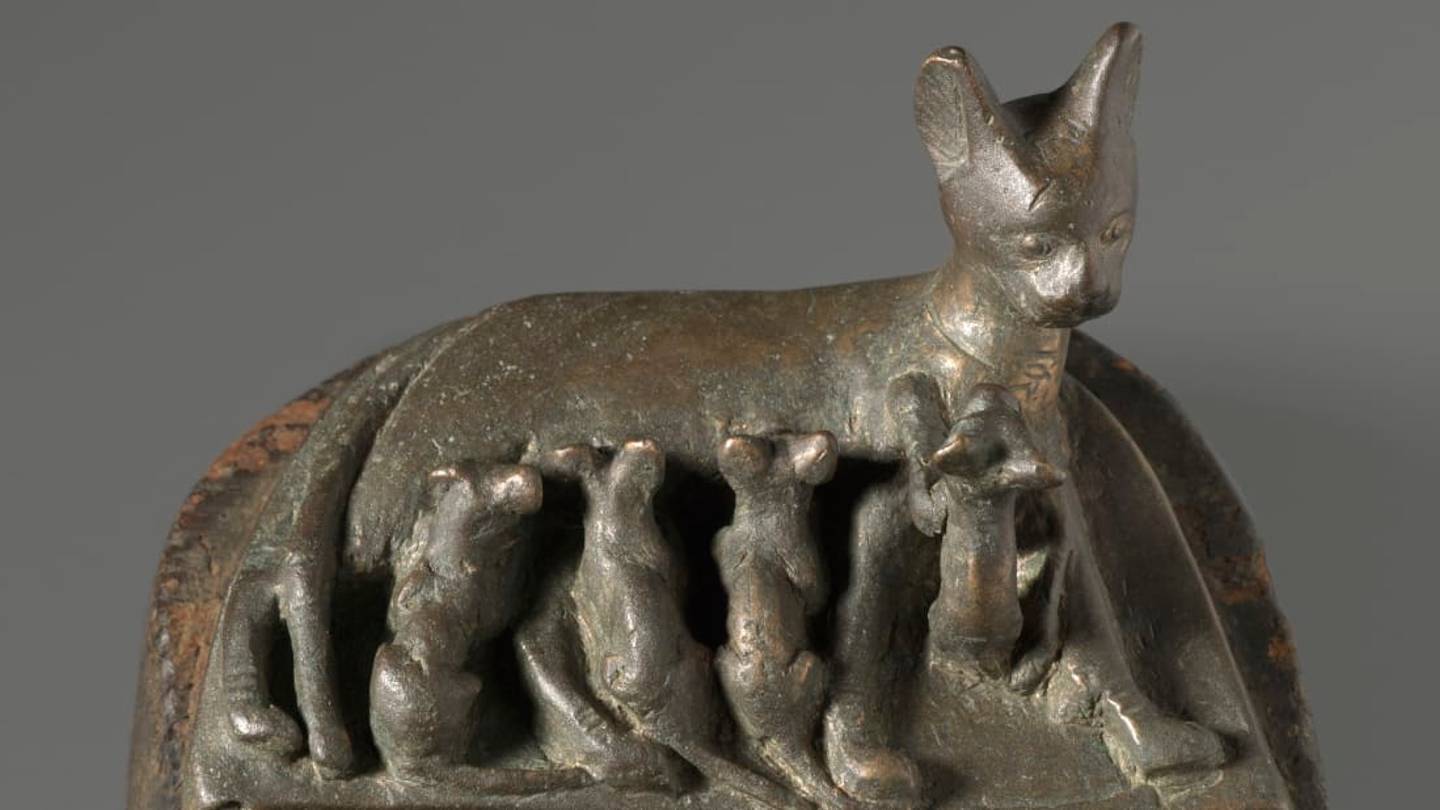
From bi-coastal cat cafes to celebrity pets like Lil Bub , felines are currently enjoying a peak moment in popular culture. Thatâs part of the reason why curators at the Smithsonianâs Arthur M. Sackler Galleryâwhich will re-open to visitors on Saturday, October 14, following a 3-month closure âdecided to dedicate a new exhibition to ancient Egyptâs relationship with the animals.
â Divine Felines: Cats of Ancient Egypt â looks at the cultural and religious importance of cats, which the Egyptians appreciated long before YouTube was a thing and #caturday was a hashtag. It's based on a traveling exhibition that began at the Brooklyn Museum in New York City. On view until January 15, 2018, it's one of several exhibits that will kick off the grand reopening of the Smithsonianâs Freer and Sackler galleries, the conjoined national museums of Asian and Middle Eastern Art.
The Freer has been closed since January 2016 for major renovations, and the Sackler since July 2016 for minor ones. The upgraded institutions will make their public debut on October 14 , and be feted by a free two-day festival on the National Mall.
Featuring 80 artworks and relics, ranging from figurines of leonine deities to the tiny coffins of beloved pets, "Divine Felines" even has a cat mummy on loan from the Smithsonianâs National Museum of Natural History. These objects span from the Middle Kingdom (2008 to 1630 BCE) to the Byzantine period (395 to 642 CE).
The term âcatâ is used loosely, as the Egyptians celebrated domestic mousers and fearsome predators alike.
âThe Egyptians were close observers of nature, so they were observing cat behaviors,â Antonietta Catanzariti, the exhibition's in-house curator, tells Mental Floss. âThey noticed that cats and lionsâ in general, felinesâhave aggressive and protective aspects, so they associated those attributes to deities.â
The ancient Egyptians viewed their gods as humans, animals, or mixed forms. Several of these pantheon members were both associated with and depicted as cats, including Bastet, the goddess of motherhood, fertility, and protection; and Sakhmet, the goddess of war andâwhen appeasedâhealing. She typically has a lion head, but in some myths she appears as a pacified cat.
While Bastet was a nurturer, Sakhmetâwhose name means âThe Powerful Oneââcould use her mighty force to either slay or safeguard humanity. These characterizations are typical of the ancient Egyptian worldview, which perceived the universe in dualistic terms. âThereâs always a positive and a negative,â Catanzariti explains.
Contrary to popular belief, however, ancient Egyptians did not view cats themselves as gods. âThe goddess Sakhmet does have the features as a lion, or in some cases as a cat, but that doesnât mean that the Egyptians were worshipping cats or lions,â Catanzariti says. Instead, they were simply noting and admiring her feline traits. This practice, to an extent, also extended to royalty. Kings were associated with lions and other large cats, as they were the powerful protectors of ancient Egyptâs borders.
These myriad associations prompted Egyptians to adorn palaces, temples, protective amulets, ceremonial vessels, and accessories with cat images. Depending on their context, these renderings symbolized everything from protection and power to beauty and sexuality. A kingâs throne might have a lion-shaped support, for example, whereas a womanâs cosmetics case might be emblazoned with a cat-headed female goddess of motherhood and fertility.
While cats were linked with heavenly figures and kings, they were also popular domestic pets. Their ability to catch vermin made them an important addition to households, and owners loved and anthropomorphized their pets just like we do today.
Egyptians often named, or nicknamed, their children after animals; Miit (cat) was a popular moniker for girls. It's said that entire households shaved their eyebrows in mourning if a house cat died a natural death. Some also believe that cats received special legal protection. (Not all cats were this lucky, however, as some temples bred kittens specifically to offer their mummified forms to the gods.) If a favorite cat died, the Egyptians would bury them in special decorated coffins, containers, and boxes. King Tutankhamen, for example, had a stone sarcophagus constructed just for his pet feline.
âDivine Felinesâ breaks down these facts, and more, into five thematic sections, including âCats and Kings"; âCats and Godsâ; âCats and Deathâ; âCats and Protectionâ; and âDogs as Guardians and Hunters.â Yes, thereâs also an exhibition section for dog loversââa small one,â Catanzariti laughs, that explains why canines were associated with figures like Anubis, the jackal-headed god of mummification and the afterlife.
Did the ancient Egyptians prefer cats to dogs? âI would say that both of them had different roles,â Catanzariti says, as dogs were valued as hunters, scavengers, and guards. âThey were appreciated in different ways for their ability to protect or be useful for the Egyptian culture.â In this way, "Divine Felines" is targeted to ailurophiles and canophiliacs alike, even if it's packaged with pointed ears and whiskers.
Loading recommendations... Please wait while we load personalized content recommendations