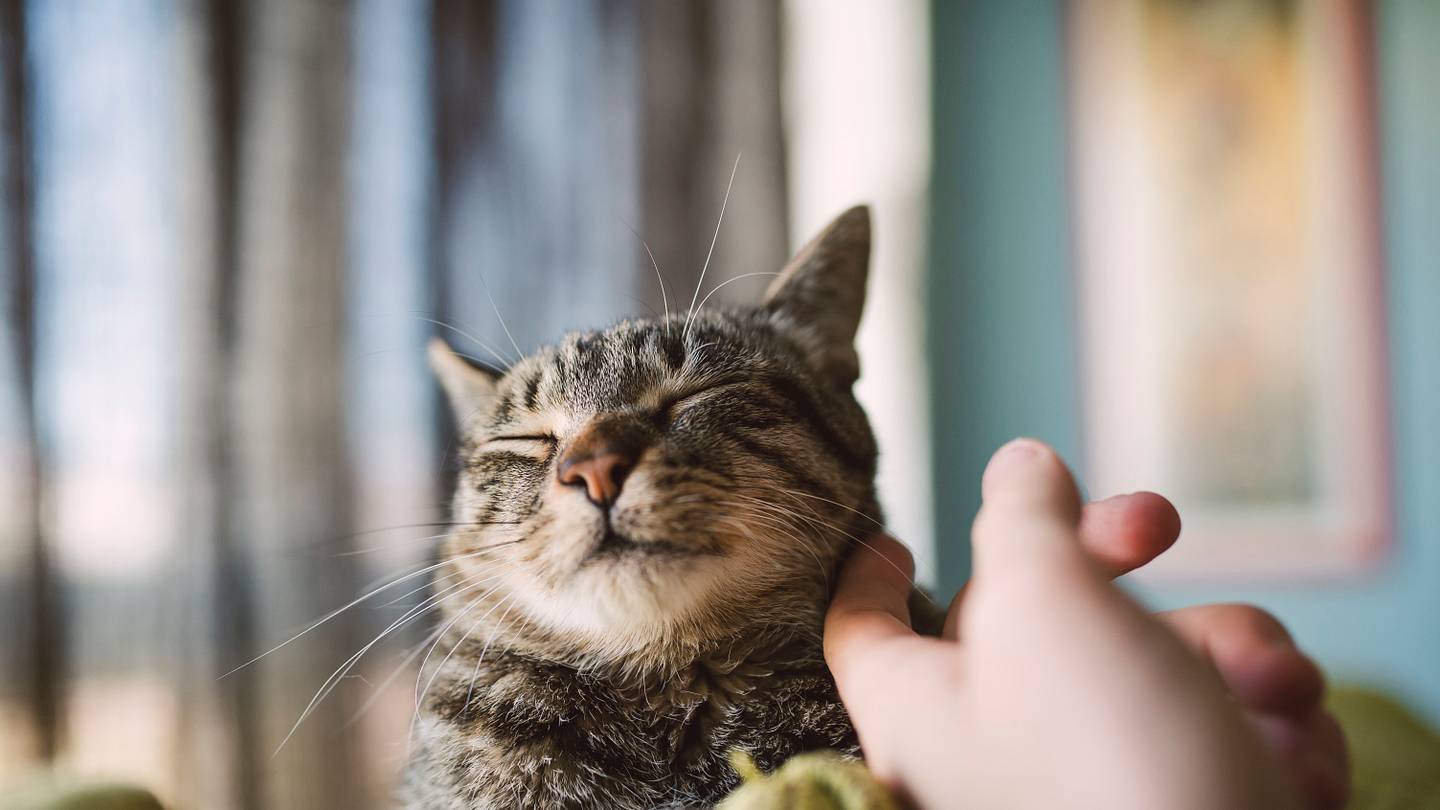
Like so many other humans, you might find cats to be mysterious creatures. But believe it or not, itâs not that hard to make friends with a feline if you know what to do. Here are some tips on how to effectively buddy up with a kitty, drawn from scientific studies and my own experience as a researcher and cat behavioral consultant.
When we see cats, we really want to pet themâbut according to two Swiss studies, the best approach is to let kitty make the first move.
Research done in 51 Swiss homes with cats has shown that when humans sit back and waitâand focus on something else, like a good bookâa cat is more likely to approach, and less likely to withdraw when people respond. (This preference explains why so many kitties are attracted to people with allergiesâbecause allergic people are usually trying to not pet them.) An older study from 1991 found that interactions last longer and are more positive when the kitty both initiates the activity and decides when it ends. Play a little hard to get, and you might find that they canât get enough of you.
Felines who are friendly with each other greet each other nose to nose. You can mimic that behavior by offering a non-threatening fingertip at their nose level, a few inches away. Donât hover, just bend down and gently extend your hand. Many cats will walk up and sniff your finger, and may even rub into it. Now thatâs a successful greeting.
Theyâre very sensitive to touch, and generally, they tend to like being petted in some places more than others. A small 2002 study demonstrated that cats showed more positive responsesâlike purring, blinking, and kneading their pawsâto petting on the forehead area and the cheeks. They were more likely to react negativelyâby hissing, swatting, or swishing their tailsâwhen petted in the tail area. A more recent 2021 study validated these findings with a larger sample sizeâand many owners can testify to these preferences.
Of course, every animal is an individual, but these studies give us a good starting point, especially if youâre meeting a cat for the first time.
More Articles About Cats:
There are plenty of signs that a cat doesnât like your actions. These can range from the overtâsuch as hissing and bitingâto the more subtle: flattening their ears, looking at your hand, or twitching their tails. When you get one of those signals, itâs time to back off.
Many of the owners I work with to correct behavioral issues donât retreat when they should, partially because they enjoy the experience of petting their cat so much that they fail to recognize that kitty isnât enjoying it too. You canât force a feline to like being handled (this is especially true of feral cats), but when they learn that youâll respect their terms, the more likely they will be to trust youâand come back for more attention when theyâre ready.
Many think that food equals love, and that withholding food might make your kitty hate you, but a 2016 study of obese felines from Cornell University showed the opposite is trueâat least for a period of time. About a month after 58 overweight kitties were placed on a diet, three-quarters of their owners reported that their dieting felines were more affectionate, purred more often, and were more likely to sit in their ownerâs lap. This adorable behavior came with some not-so-cute side effectsâthe cats also begged and meowed moreâbut by week eight, both the good and bad behavior had abated for about half the animals.
Regardless of whether a diet makes your pet cuddlier, keeping your pet on the slender side is a great way to help them stay healthy and ward off problems like diabetes, joint pain, and uncleanliness. (Overweight animals have difficulty grooming themselvesâand do you really want them sitting on your lap if they canât keep their butt clean?)
Most of the behavior problems that Iâve witnessed stem from boredom and a lack of routine playtime. No one thinks twice about walking their dog every day, but many people fail to recognize that felines are stealth predators who need a regular outlet for that energy. A 2017 study suggested that cats prefer human interaction over food, but a closer look at the data demonstrated that what really attracted them to humans was the presence of an interactive toy. One of their top choices is a wand-style toy with feathers, strings, or other prey-like attachments that evoke predatory behavior. Daily interactive play is a great way to bond with them when theyâre not in the mood to cuddleâand will help keep them fit.
A study conducted in Italy and published in 2013 showed that felines who stayed mostly indoors (they had one hour of supervised access to a small garden each day) were more âin syncâ with their owners than felines who were allowed free access to the outdoors. The indoor kitties were more active during the day, when their owners were likely to be active, and less active at night, when humans like to sleep. (Many people believe cats are nocturnal, but they are naturally crepuscularâactive at dawn and dusk.)
Multiple studies have shown that just a few minutes a day of positive handling by humans helps kittens grow up to be friendlier and more trusting of humans. The ideal age to socialize kittens is when theyâre between 2 and 9 weeks old. One 2008 study found that shelter kittens that had been given a lot of "enhanced socialization"âadditional attention, affection, and playâwere, a year later, more affectionate with their owners and less fearful than other kittens adopted from the same shelters.
You can help socialize kittens by volunteering as a foster caretaker. Fostering ensures they get plenty of interaction with people, which will help them will be comfortable around potential adopters. Youâll also be doing your local shelter a huge favor by alleviating overcrowding.
If you want to adopt an older animal, take some time at the shelter to get to know them first, since adopters of adult cats report that personality played a big role in their decision to take an animal home permanently and had an impact on their satisfaction with their new companion. Better yet, foster one first. Shelters can be stressful, so youâll get a better sense of what an animal is really like when theyâre in your home. Not all cats are socialized well when theyâre young, so a cat may have their own unique rules about what kinds of interactions theyâre OK with.
Itâs also key to remember that a catâs appearance isnât indicative of their personalityâand itâs not just black cats who get a bad rap . In 2012, I published a study with 189 participants that showed that people were likely to assign personality traits to felines based solely on their fur color. Among other things, they tended to think orange cats would be the nicest and white cats the most aloof. (Needless to say, these are inaccurate assumptions.) And itâs not just the kittyâs personality that mattersâyours is important too. Another study I conducted in 2014 of nearly 1100 pet owners suggested that self-identified âcat peopleâ tend to be more introverted and anxious when compared to dog people. (Weâre also more prone to being open-minded and creative, so itâs not all bad.) If youâre outgoing and active, a more playful feline could be for you. If you prefer nights spent snuggling on the couch, a mellow, shy-but-sweet lovebug could be your perfect pet.
Overall, use your common sense. Be a diligent and objective observer of how they respond to your actions. Feline body language can be subtleâsomething as small as an eye-blink can indicate contentment, while ear twitches might signal irritationâbut as you learn their cues, youâll find yourself much more in tune with how theyâre feeling. And if you adjust your behaviors accordingly, youâll find soon enough that you've earned a catâs trust.
Mikel Delgado received her Ph.D. at UC-Berkeley in psychology studying animal behavior and human-pet relationships. She âs a co-founder of the cat behavior consulting company Feline Minds .
This article was originally published in 2018; it has been updated for 2023.
Loading recommendations... Please wait while we load personalized content recommendations