If your cat has ever meowed along to your favorite pop song, itâs probably not because he liked it. That music was designed in pitches and tempos that humans enjoy, so your cat is, at best, likely indifferent to your tunes (and, at worst, maybe tortured by them). Now, two psychologists at University of Wisconsin and a composer at University of Maryland have teamed up to make songs especially for your felines, with beats in the frequency range that they use to communicate with each otherâand while the songs might sound unsettling to humans, research indicates that cats dig it.
The music is part of a larger project to create tunes for many members of the animal kingdom; the team has also created music for tamarin monkeys, which had a soothing effect on the creatures. The researchers hope that this species-specific music will enrich the lives of animals in captivity .
According to composer David Teieâs website , these songs are written specifically to appeal to the domestic cat, and are âbased on feline vocal communication and environmental sounds that pique the interest of cats.â All of the music was made using traditional instruments and the human voice; no actual animal sounds were used.
There are three types of cat songs: Playful Kitty Ditties, which âincorporate stylizations of some of the animal calls that are of great interest to catsâ and âare meant to arouse interest and curiosityâ; Cat Ballads, which mimic the suckling sound, and âshould be restful and pleasing for your kittyâ; and Feline Airs, which are âbased on the pulses of the purrâ and â[draw] sympathetic emotions from the listener.â You can listen to samples of the songs here .
In their study, which was published in Applied Animal Behaviour Science , the researchers made 47 kitties listen to human music, like Gabriel Fauré's Elegie and Bach's Air on the G String , which the cats weren't into. But when they heard the feline-specific tunes, they got much more interested , rubbing their faces on the speakers.
Olly and Pearl's debut album cover. Photo by Erin McCarthy.
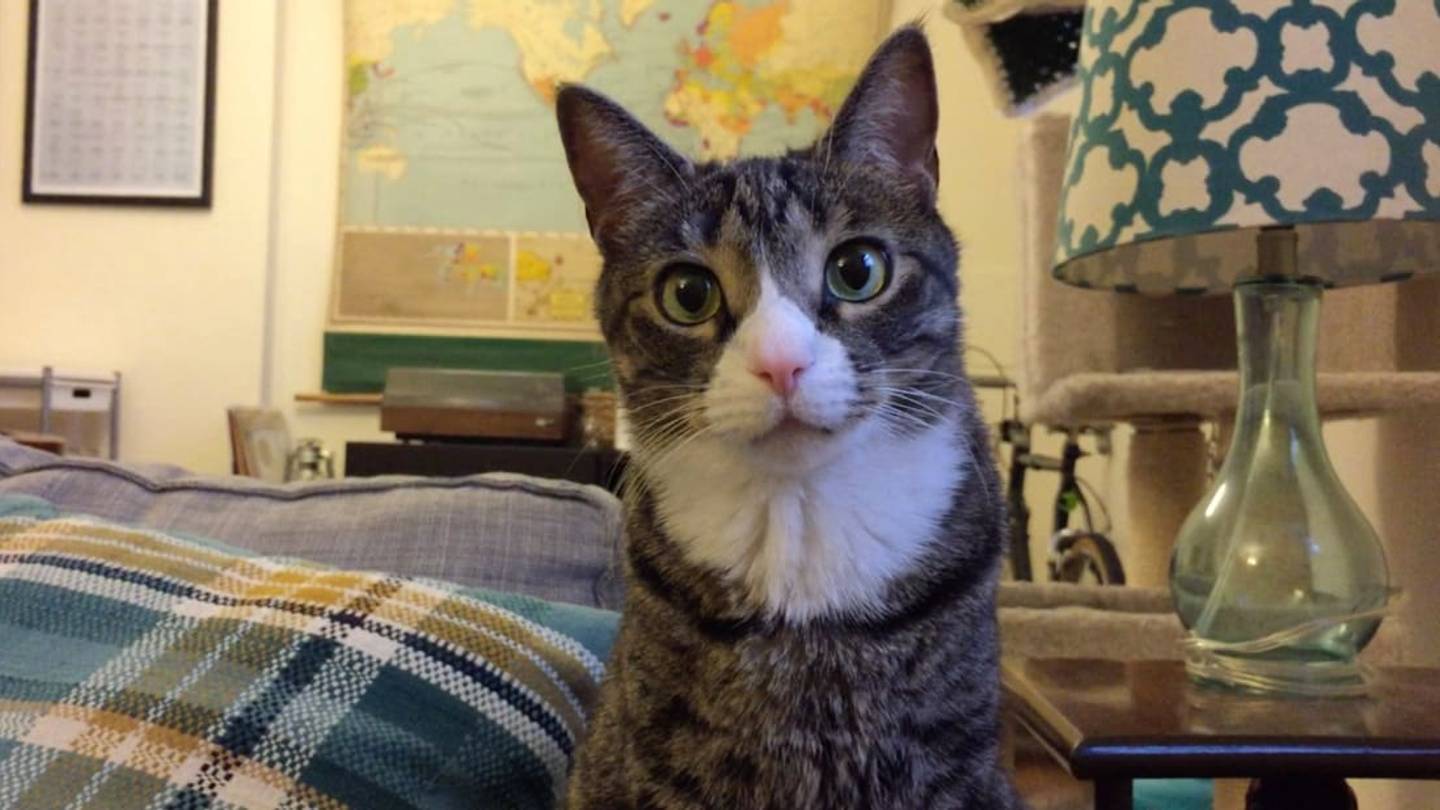
IÂ was intrigued by this experiment, and decided to run a little experiment of my own, using my two cats, Olly and Pearl, as the guinea pigs. What would they think of the music created specifically for them? I played the songs through our TVâs sound bar and shot video, which you can see below.
Olly seemed intrigued by the musicâlook at how his ears move!âbut not necessarily captivated by it. This could be in line with the researchersâ finding that older cats and younger cats are more likely to respond than middle-aged cats; Olly is almost 6, which, according to this chart , puts him on the cusp of âmature.â He's not a â senior â  or â geriatric â  yet (although he does act like a grumpy old man sometimes).
Pearl, on the other hand, is 1.5 years old, a âjunior,â and she really enjoyed the cat tunes. The only things she meows for more is her food and the string we use to get her to run around our apartment (sheâs a lazy little kitty with a big appetite). When I played the music for her again this morning, this time on my laptop, she stalked around it, rubbing her face against the edges of the screen and occasionally trying to take a bite (bad Pearl!). As a cat who was likely feral before she was surrendered to a shelter, Pearl can sometimes be standoffish, but I noticed that she became more affectionate during certain songs. And because I'll do anything for a cuddle, Iâll be downloading any cat songs Teie creates in the futureâand not just for Pearl and Olly. I found that, after listening to them long enough, they became kind of soothing for me, too.
Loading recommendations... Please wait while we load personalized content recommendations