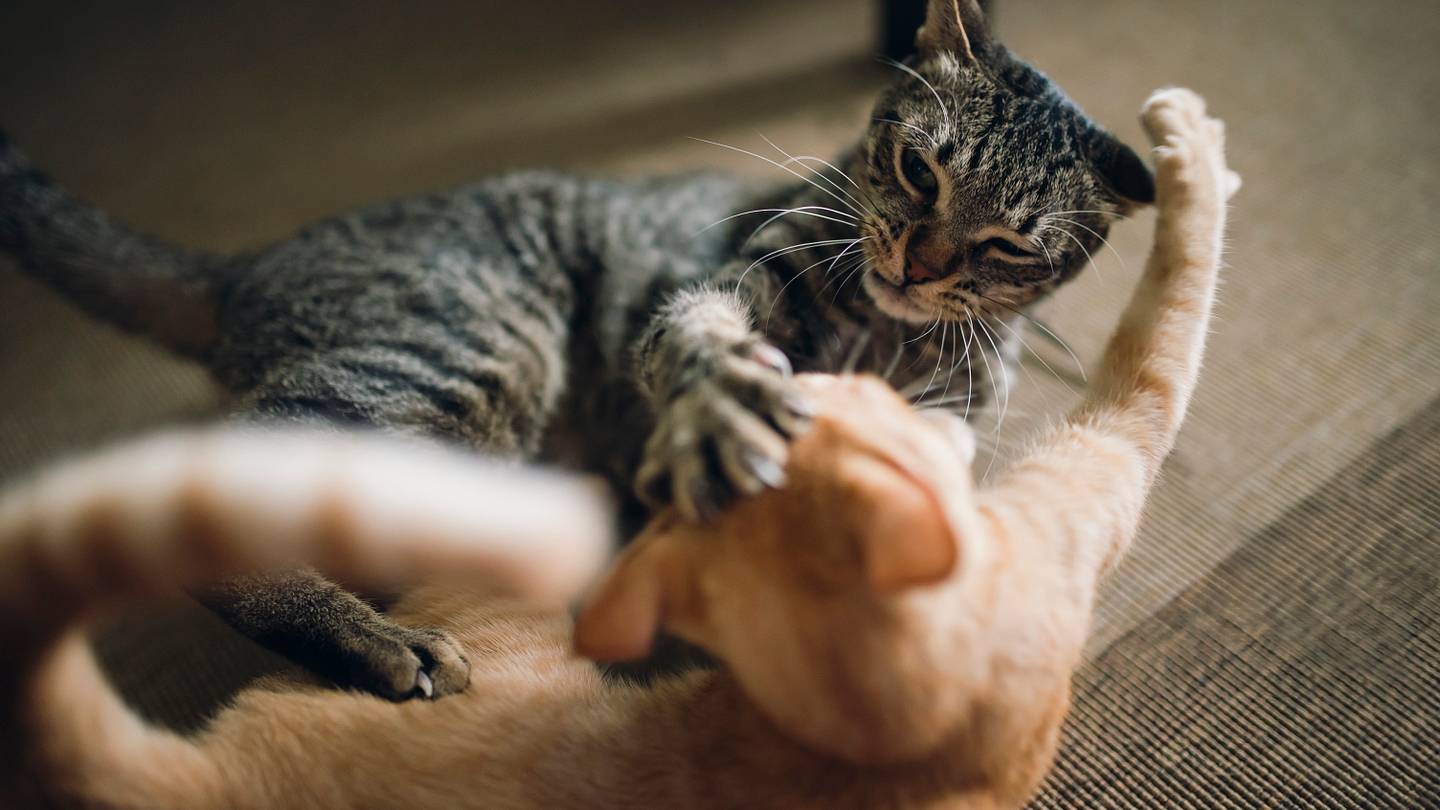
Having a multi-cat household can be complicated. Drama between felines is not uncommon, especially when introducing a new kitty to the home. But you donât have to resign yourself (and your beloved pets ) to endless hissing fits and fights.Â
There are several triggers that can cause tension and aggression between cats. Personality plays a part. Unneutered male cats are particularly territorial, so following Bob Barkerâs signature The Price is Right plea to spay and neuter your pets could help some kitties feel more at ease.
Anything that upsets the status quo can cause cats a lot of stress. An improper introduction could create a long-standing beef between the pets, and even cats who have previously lived together can suddenly turn on each other. âThere is also something called âredirected aggressionâ that can happen even between best-friend cats,â certified cat trainer Tori Schlosser tells Mental Floss. Redirected aggression occurs when the cat is agitated by something, like a strange cat roaming outside the window, and they lash out on their fellow felines in the home.Â
Other issues that may arise include changes to the catsâ environment, like moving to a new home or simply rearranging the furniture. Itâs also important to rule out any health concerns. âIf you donât know of an exact event that would have caused the aggression between cats, I would 100 percent tell the owners that they should see a vet,â Schlosser says. âAnd thatâs not only for older cat health problems, this applies to young cats as wellâthey may have pulled a muscle or are sensitive to the food they are eating, for example.âÂ
If you know something stresses out one of your cats, Schlosser suggests being proactive instead of reactive by trying to avoid the triggers in the first place. Donât assume the animals will work out their problems on their own. âI tell my clients itâs like a game of Tetris. If you keep putting down your blocks in negative ways, you are going to have a big mess or negativity,â she says. âBut, if you put your pieces in properly from the beginning, you break down that line and you have a clean slate.â Here are some steps to follow to help your cats get along.
The most important step toward establishing feline peace takes place the moment you bring a new cat into your home. Rushing the introduction can lead to a lot of tension. Rather than immediately letting your new pet have free rein of the house, start slowly, ideally with a âsite-swap.âÂ
Keep your resident cats and the newcomer in separate spaces, away from each other behind a door. Have the cats trade rooms several times a day so they can get familiar with each otherâs scents. âYou keep the new kitten or cat secluded in a room, and when they are allowed out, the resident cat will then take a turn in the same room,â Schlosser explains. âSometimes the cats start to interact kindly through the door, but other times, you might need to help them learn to live together.âÂ
Schlosser suggests incorporating separate playtimes for each cat. If a kitty is bored, they may spend their time irritating their fellow felines. Plan to play with your cats as you introduce them, too. A good play session will let them redirect any extra energy or agitation on something positive, like a puzzle feeder or favorite toy, rather than any newcomers.
Itâs also important to pay attention to how your cats play with one another. Some animals play rough, so youâll need to be able to distinguish between a good-natured wrestling session and a proper cat fight. âWhen cats are actually fighting with each other it can look scary. There is hissing, claws out, growling, and people often describe it as a ball of fur and claws and teeth,â Schlosser says. âWhen cats are playing with each other, they will bite and growl and hiss, but itâs very equal play.â If one cat is repeatedly picking on another one, thatâs a sign of trouble rather than play. You may need to diffuse the situation by tossing a blanket or towel over it if a cat gets aggressive .
Even after your cats have shown they can be at ease around each other, you should still ensure they have their own spaces they can retreat to. Every cat should have a separate litter box , bed, and scratching post , and you should feed them in different parts of the house. âMealtimes should be peaceful. We donât want our cats to be stressed out about the other cat coming for their food and having to scarf it down quickly,â Schlosser says.
Sometimes a âreintroductionâ is necessary. This occurs when cats who once co-existed suffer a breakdown in a relationship. It requires some mediation, but usually not as much as an initial introduction. Youâll want to keep the cats apart at first before slowly working on increasing their exposure to one another.Â
There are several products you can purchase to help calm your cats. Pheromone diffusers and sprays like Feliway mimic a catâs natural calming signals; Schlosser also recommends Pet Remedy, an essential oil blend that may help keep your animals more relaxed.
Take your pet to the vet to rule out any health issues if their aggression seems to be new and comes out of nowhere with no obvious trigger. If youâve done everything you can and your cats still arenât getting along, contact a pet behavior specialist who can offer you advice specific to your situation. âItâs especially important when you are introducing a new animalâany animal, not just another catâinto the home,â Schlosser says. âBut also if there is a breakdown between cats that used to be friends. The longer a cat relationship breakdown lasts, the harder it is to repair it.â