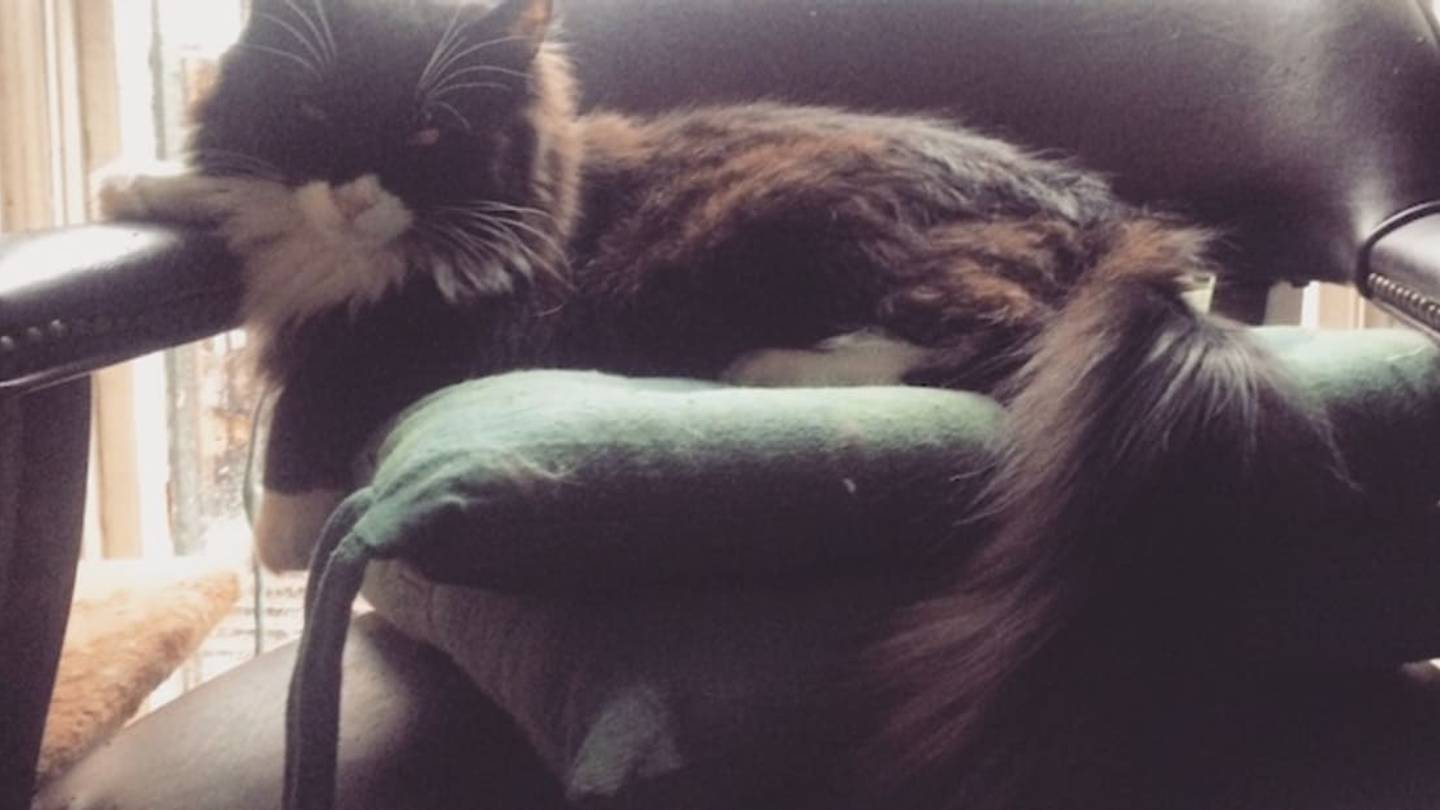
I have two cats, which means that when Iâm home, I spend an inordinate amount of time making up dialogue for them. And if you have cats of your own, Iâm willing to bet you do, too. And while Iâm certainly guilty of anthropomorphizing to an extent, scientistsâat least those who study cat-human communicationânow agree that your cat really is capable of communicating a wide range of emotions to you, and a lot of times, thatâs exactly what theyâre trying to do.
There isnât necessarily a cheat-sheet for understanding your cat, and youâve probably already picked up certain expressions just from being around them that the researchers couldnât possibly predict, but the Science of Us asked experts on animal behavior to break down the things plenty of pet owners get wrong.
Be careful, because this first one might break your heart: Sure, cats purr when theyâre happy, but they also purr when they just donât want you to leave them. âThey havenât got a good way of asking for helpâitâs not in their languageâso they do the next best thing, they do the purring thing,â said John Bradshaw, a University of Bristol anthrozoologist and the author of Cat Sense: How the New Feline Science Can Make You a Better Friend to Your Pet . In that sense, a sick or injured cat might purr to persuade you to stay home and take care of him.
If that doesnât make you want to run home and give your cat all the treats, this will: If, when you get home, your cat starts circling your legs and wrapping his tail around them, it really is because heâs excited to see you again. Sharon Crowell-Davis, a professor of veterinary behavior at the University of Georgia who gives talks on cat behavior, said that "what your cat is doing is taking a friendly greeting behavior that normally functions within their species and moves it to relating with the human species.â
Perhaps the most surprising aspect of cat-language that Science of Us dug up is that their meows are often only for our benefit. Cats (both feral and domestic) donât meow at each other much, but domestic cats have learned that meowing at their people is a great way to get someone to pay attention to them.
Cats develop their own meows specific to each household, and you probably recognize them better than you realize. A 2003 study done by researchers at Cornell found that owners were remarkably good at identifying not just which meow was from their cat but the situation during which it was recorded.Â
See? You probably can understand what your cat is trying to say better than you realize. Now we just have to teach our cats how to understand us when we say "Please stop knocking over the trash can!"
Check out the video below for a run-through of these rough translations:
[h/t Science of Us ]
Loading recommendations... Please wait while we load personalized content recommendations