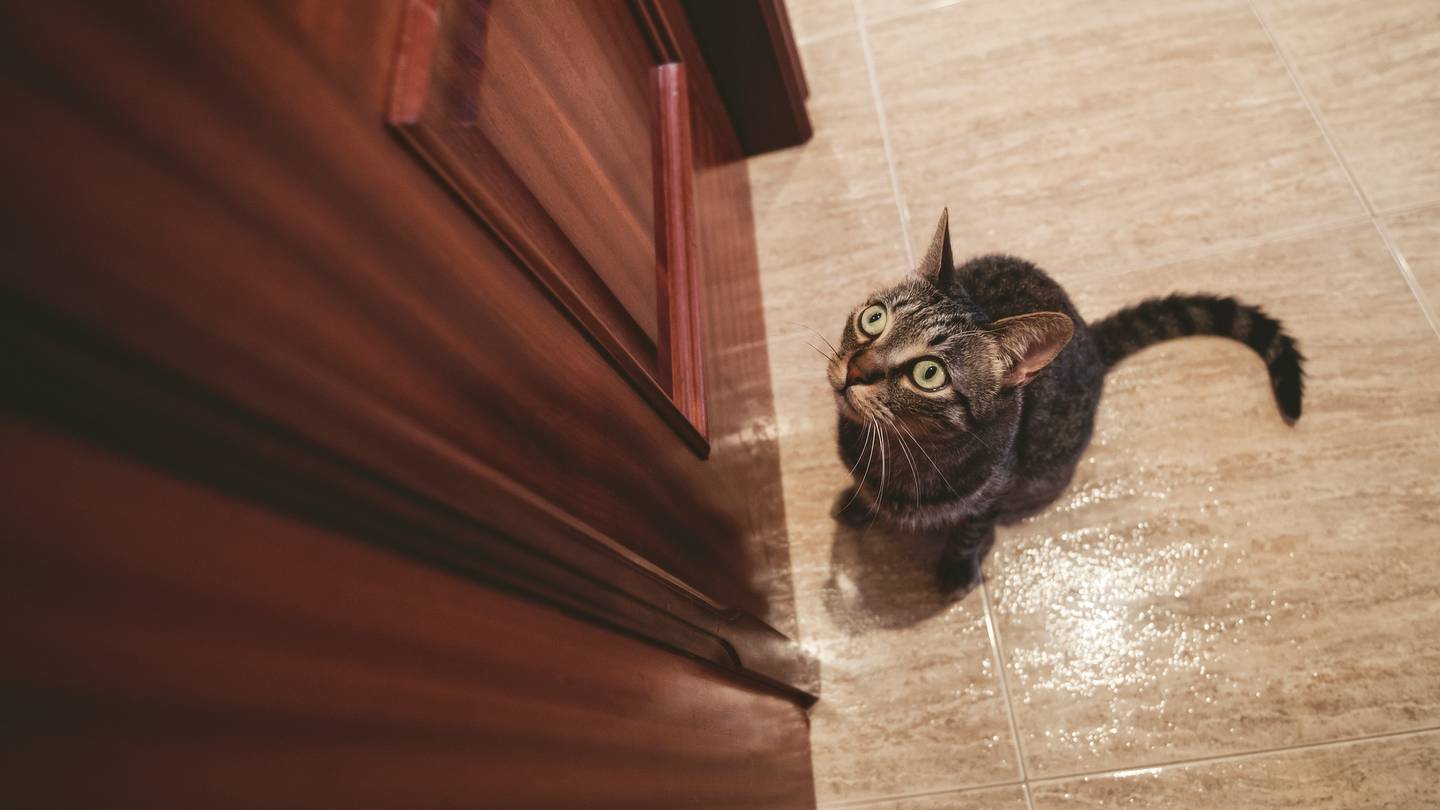
A closed door is often a frustrating thing for a cat . The clever creatures will often try poking a paw or leg under the barrier or scratch at it, all while growing agitated in their attempts to get into the blocked space.Â
âThere are three main reasons cats dislike closed doors,â Tori Schlosser, certified cat trainer and owner of Purrsuasion Cat Training in Regina, Saskatchewan, tells Mental Floss. âFirst, cats need to feel secure in their territory, and not having access to those important areas within their territory could drive them to not liking closed doors. Second, they need to feel in control of their environment, and then there is the social aspect of cats wanting to spend time with us.â
The last factor, social interaction, might just be the strongest of all. A 2017 study found that catsâdespite their reputation as being independent animalsâpreferred human interaction to other stimuli, including food, toys, and scents.Â
You may have no choice but to close a doorâmuch to your catâs disappointment. It might be because you need to block access to a room due to factors like construction in your home, a visitor who is afraid or allergic to cats, or needing to sequester the animal while introducing a new pet into the space. Thankfully, there are some ways you can make this undesirable situation slightly more tolerable.Â
Itâs important to have treats or some sort of activity to keep your kitty entertained and content. âSet up a few puzzle feeders or automated toys that your cat likes,â Schlosser says. âYour cat will always be happier if you give them some sort of food reward when they are being put away.â Some cats may need more than just food to distract them from a closed door, though. âIf you cat loves lounging in the sun, open the window, and put a bed there. If they are really play motivated, take out some toys,â she suggests.
If you know you will have to close your cat in a room, be proactive and spend some time doing fun things in the space before you leave them in there. Play with your pet in the room theyâll be confined to; this will hopefully let them associate the space with something fun. âHang out with them in there, so when you do put them away in the space, they wonât think âIâve never been locked in this space before, what is happening?â â Schlosser says.
If youâre closing a door not to deny entry to your feline companion, but to limit access for a troublemaking canine pet sibling, you could install pet latches or door straps like Door Buddy that allow just enough of an opening for a cat to pass through but keep Fido out of the room. Dog gates or pet doors could do the job too. (These wonât work, however, if you have a small dog.)
If your cat is showing their displeasure by aggressively trying to shove their paws below a door, consider installing a wedge beneath the barrier.Â
Sometimes just seeing a closed door might ignite your catâs curiosity about whatâs behind it, especially if itâs a door that is usually kept open. A cat will likely lose interest in a door that is always closed and has nothing rewardingâlike people, food, toys, or other petsâon the other side of it, though. âIf your cat never goes into your laundry room, for example, and that door stays closed, chances are they will never meow at the door,â Schlosser says.
She adds that if your cat is suddenly meowing at a closed door they didnât show interest in before, you should investigate the space. âMaybe something got into your house. If you notice a change in their behavior around a closed door, there is a good chance your cat knows something that you donât!â she says.
One thing is certain: Your cat will be more persistent at entering a space if youâre behind the closed door, as theyâll likely want to be in there with you.Â
Cats can sometimes prevent their owners from getting a good nightâs sleep, whether theyâre crying out or relentlessly scratching at the door. Schlosser has fielded a fair amount of calls from people dealing with this issue. âThey are losing sleep and itâs a tough situation to deal with,â she says.
To increase your chances of catching some proper ZZZs , be proactive about managing your petâs energy levels. Make sure that your cat is getting physical and mental energy out throughout the whole day; itâs an especially good idea to have a play session or some training right before bedtime.
If you have to sleep with your bedroom door closedâand your cat shut outside the roomâgive them something rewarding and stimulating, like puzzle feeders, to help distract them overnight. The cat should also have access to water, food, a litter box, and toys. âThere is also an option to put a bed on the other side of the door, so if your cat decides they want to settle near you, they can,â Schlosser says.Â
Whatever you do, donât reward the behavior that is preventing you from getting a good nightâs sleep. Getting up to pet them, or even talking to them from bed, will further encourage the behavior. âYou are teaching your cat that if they meow or scratch at the door, they are going to be let in,â Schlosser says.
Read More About Pet Behavior: