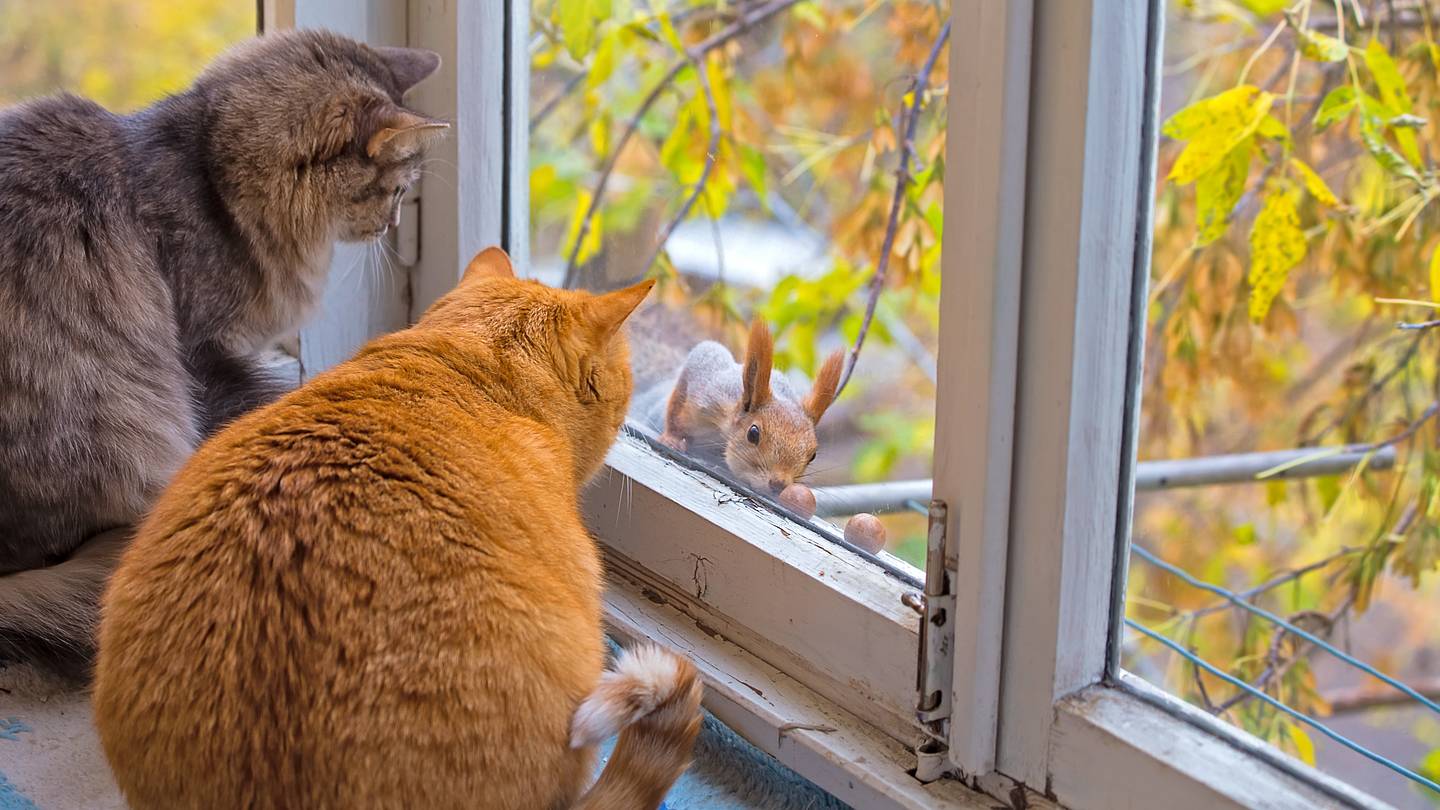
We know that cats are prone to purring, meowing, and even hissing, but what about chirping and chattering? The first time you notice it, it can be a bit jarring (and quite funny) to hear your cat making these strange sounds at a beast outside the window. But donât let the noises startle you. Thereâs a natural explanation for the very un-catlike vocalizations your pet starts emitting at passing birds and squirrels .Â
Our feline friends let out a diverse range of soundsâcats can reportedly make as many as 21 distinct types of vocalizations, though itâs estimated that the number might be even higher. When it comes to the noises your cat makes when it sees birds or other small prey animals, they can usually be classified into two types: chirping and chattering .Â
Why do they make these noises? Because theyâre staring at their next meal, of course! The chirping and chattering occur because your cat is (to the best of their ability) attempting to mimic the sounds of the animal theyâre after. Some theorize that this noise is the result of evolution, meaning that cats who made these specific noises were able to catch their prey with greater success.
It doesnât matter if you give Fluffy four meals a dayâyou canât change the fact that your cat is a predator, and itâs only natural for their hunting instincts to kick in when they see an appetizing animal.Â
Your catâs prey instinct isnât something thatâs going to suddenly stop, and if itâs not channeled in a healthy direction, you might be the next item on the menu. This is why playtime is so healthy for felines. When a cat is âbadâ and starts to go after your hands or furniture , itâs because their prey instinct isnât being directed toward any other, more appropriate objects.Â
It isnât just house cats that chirp and chatter , either. Itâs actually quite common to see big cats like cheetahs and lions making the very same sounds that your beloved pet expresses toward the living room window.
Read More About Cats: