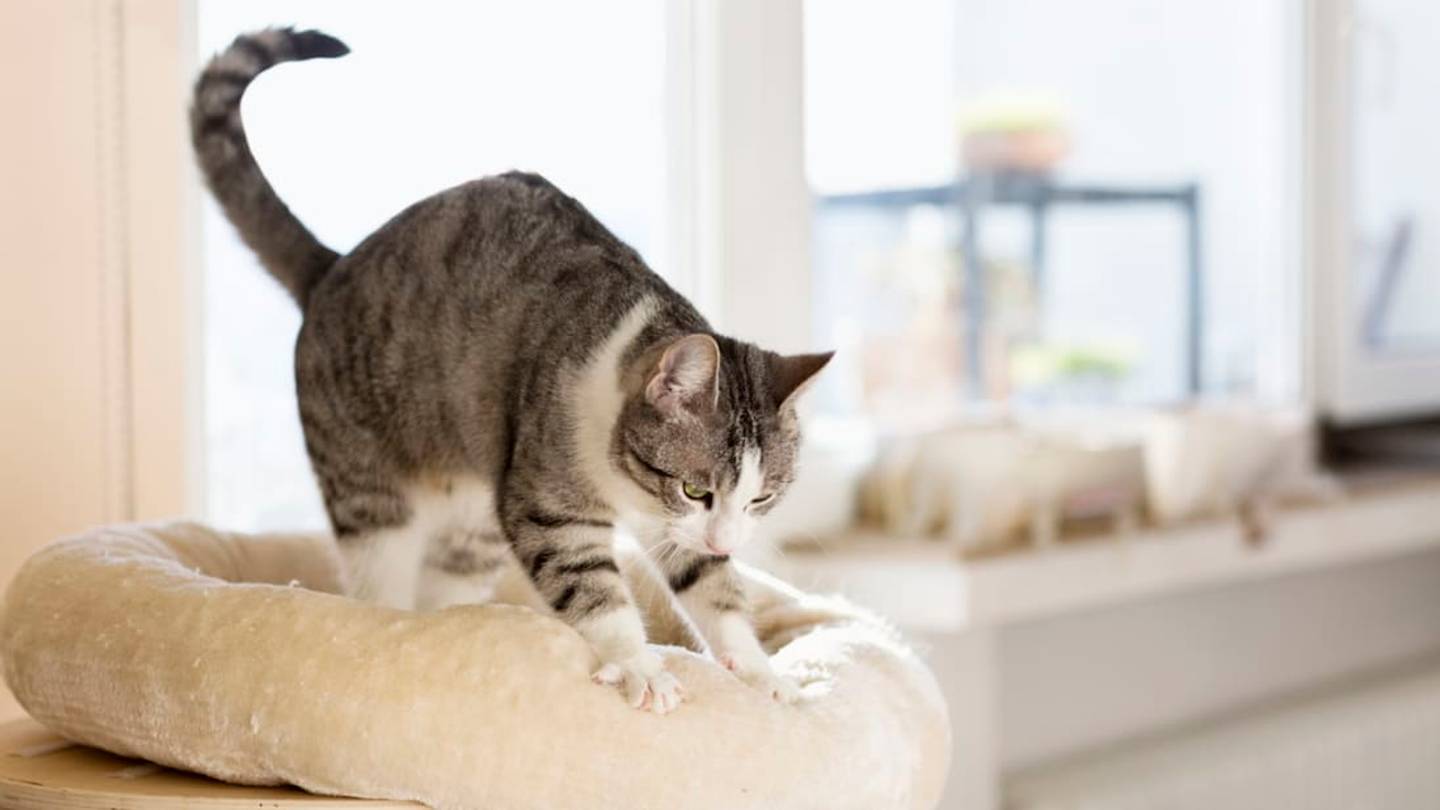
If you're a cat lover, chances are your favorite feline has shown a penchant for kneading, and at some point has given you and/or a favorite piece of furniture a massage with his or her rhythmic paws. Colloquially called âmaking biscuits,â kneading is a common behavior among kittens and adult cats alikeâbut animal experts still aren't sure exactly why they do it.
Scientists have a few theories, some of which SciShowâs Hank Green outlined in this fascinating video . One theory is that your cat's kneading is an attempt to mark its territoryâyes, even if that âterritoryâ is youâwith the scent glands in its paws. Another rationale is that kneading is a neotenic behavior, or a juvenile trait that sticks with cats into adulthood. Kittens knead their mother's belly to stimulate milk productionâan act thatâs nearly identical to that strange, Shiatsu-like practice itâs doing in your lap. (This could also explain why some adult cats also "suckle" the items they're kneading.)
Green does point out that domestic cats knead, whereas wild cats donât, which raises the question: Why have only domestic felines retained this behavior? Green attributes this to the fact that house cats were selected over thousands of years for their friendlier, less aggressive traits, but says they've "probably also held on to some of their more social, baby-like behavior, just because it serves them well when theyâre around people."
"I donât know if youâve heard this, but wildcats are not super social," Green jokes. "They donât come up and cuddle, so much as try to eat your flesh. Felis silvestris , the ancestor of all domestic cats, is a solitary hunter that only socializes with members of its own species when itâs time to breed. So wildcats only developed social behaviors for two situationsââmating and caretaking behaviors between mother cats and their kittens.
âUnlike wild cats though, domesticated cats have a lot of social behaviors as adults, because theyâre not wild loners anymore," Green adds. "They have us to cuddle with, con treats out of, and demand food from. So their innate tendencies for snuggling with mom and hitting on the lady cats are put to good use on us."
While occasionally painful or bothersome, kneading oneâs owner is definitely a loving act on the part of the cat, a way of letting you know that it feels comfortable and safe with you. That said, don't sweat it if your cat isnât big on the habitâor, conversely, worry that it kneads too much.
âSome cats are more needy and knead more than others,â Dr. Michael W. Fox , a veterinarian and author of the syndicated newspaper column "Animal Doctor,â advised one anxious reader who reported that her kitty had taken to kneading the family dog. âThis behavior is exacerbated when a cat is weaned from its mother too soon. Itâs an anxious catâs way of seeking contact comfort.â
If youâre not a fan of kneading, it's futile to train your cat to cease a perfectly natural behavior. Instead, consider investing in a pair of nail clippersâand when youâve finally had enough, gently push the cat away and enjoy the fleeting freedom of an empty lap.
Have you got a Big Question you'd like us to answer? If so, let us know by emailing us at [email protected] .
Loading recommendations... Please wait while we load personalized content recommendations