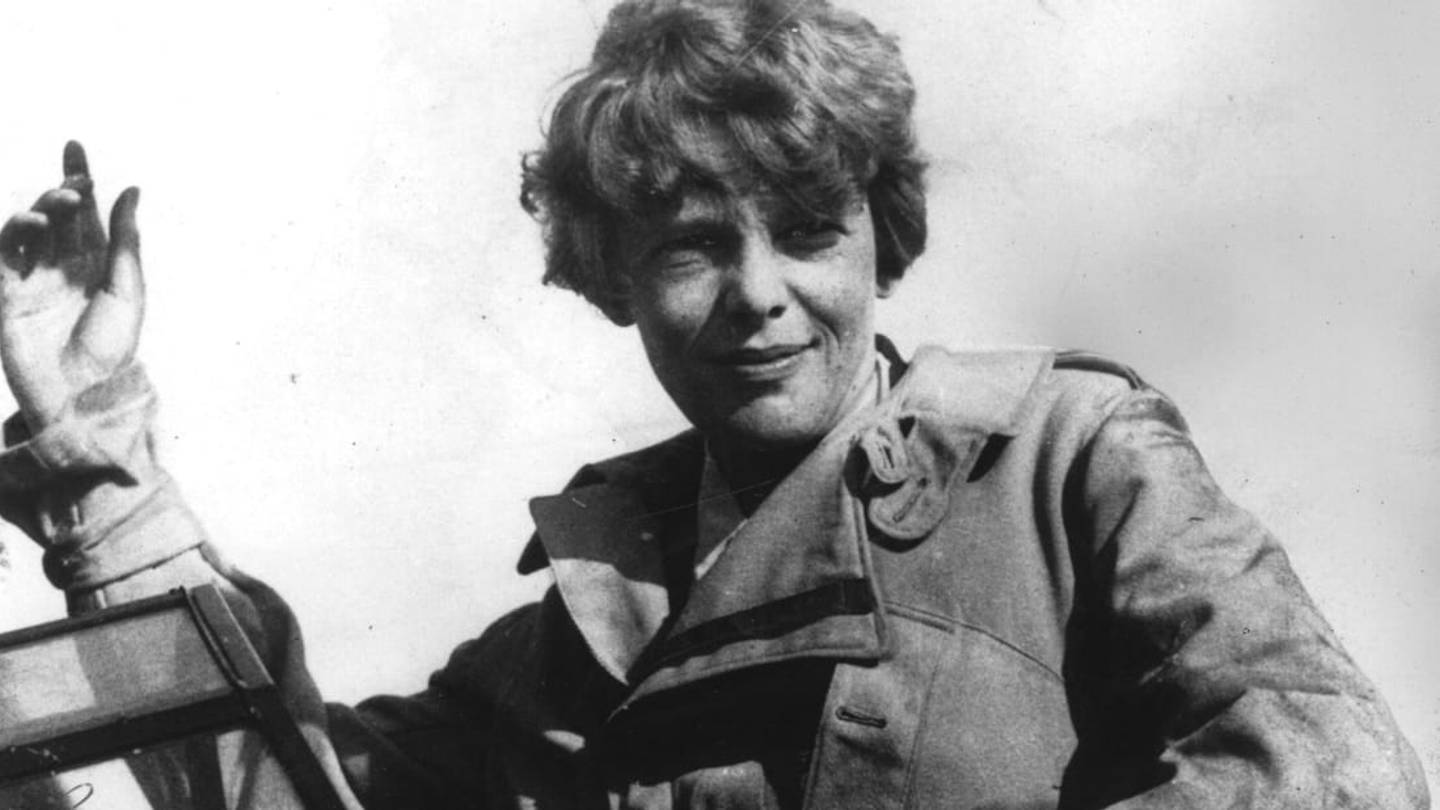
Amelia Earhart's disappearance during her attempt to fly around the world has captivated historians and conspiracy theorists for more than 80 years. One organization is now suggesting that her fate may have been sealed by giant crabs.
The International Group for Historic Aircraft Recovery (TIGHAR) believes that Amelia Earhart and navigator Fred Noonan may have landed their plane on Nikumaroro Island when they couldn't find their target, Howland Island, and that Nikumaroro's endemic crustaceans may have played a part in the ensuing mystery .
According to National Geographic , there are several clues supporting TIGHAR's theory. The large reef that hugs Nikumaroroâs coast makes it conducive to emergency aircraft landings. In 1940âjust three years after Earhartâs disappearanceâBritish colonists found 13 human bones beneath a ren tree on the island and shipped them to Fiji, where they were lost. The colony's administrator, Gerald Gallagher, sent a telegram back to England positing that it was Earhartâs skeleton. Then, in 2001, researchers uncovered U.S.-made artifacts around the ren tree including a jackknife, a womanâs compact, a zipper, and glass jars. The plot thickened even further in 2017, when four forensic bone-sniffing dogs all indicated that a human had indeed died at the site, though excavators failed to dig up any more evidence.
If those 13 bones beneath the ren tree did belong to the unfortunate castaway, where are the rest of her remains? Tom King, TIGHARâs former chief archaeologist, thinks that coconut crabs can answer that question.
Nikumaroro is home to thousands of the colossal creatures, which can grow to a terrifying 3 feet across and weigh 9 pounds. Theyâre sometimes called robber crabs because of their penchant for absconding with objects that smell like food, and theyâll eat practically anythingâcoconuts, fruit, birds, rodents, other crabs, their own discarded body parts, and carrion.
Itâs not unreasonable, then, to think that coconut crabs may have feasted on Earhartâs corpse and then taken her bones home with them. In one experiment to test the theory, TIGHAR researchers deposited a pig carcass on the island and filmed the aftermath. With the help of small strawberry hermit crabs, coconut crabs stripped the pig down to the bone in two weeks. After a year, some of the bones had been dragged 60 feet from the carcassâs original location, and some were never recovered at all.
King believes Earhartâs missing 193 bones could be hidden in the burrows of various coconut crabs. As in the pig experiment, crabs may have scattered some of Earhartâs bones dozens of feet away, but maybe not all of themâafter all, the forensic dogs smelled bones near the ren tree that havenât yet been located. Right now, TIGHAR is working with the Canine Forensics Foundation to further explore the area.
While we wait for more answers, dive into these other theories about Earhartâs disappearance.
[h/t National Geographic ]
Loading recommendations... Please wait while we load personalized content recommendations