From the wide-held belief that dogs see in black and white to the common misunderstanding that opossums hang from their tails, there are a lot of false facts out there about animals. We're getting to the bottom of some common misconceptions in this article, adapted from an episode of The List Show on YouTube .
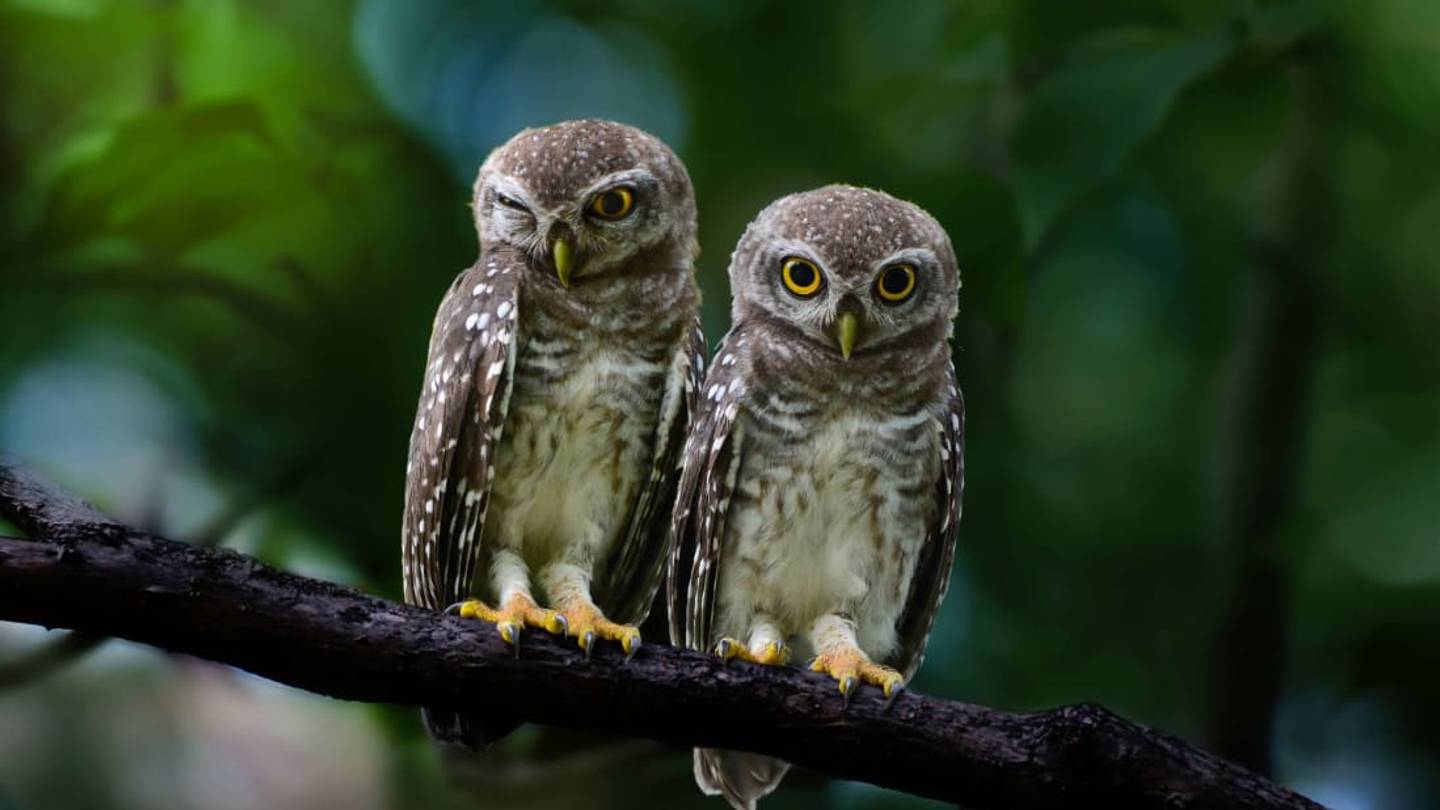
According to the International Owl Center , itâs physically impossible for an owl looking straight ahead to turn its head 360 degrees and look forward again. Owls are limited to turning their heads 270 degrees in one direction. And because they can turn 270 degrees to the right and left, they have a 540-degree range of motion, which makes the 140-degree human range of motionâa mere 70 degrees in either directionâseem pretty puny.
It's a bit of a misconception that giant pandas dislike sex. The truth is that in their natural habitats, pandas donât have a problem with mating . In fact, a pair might even have sex more than 40 times in just a few hours. The main issue is breeding in captivity. Female pandas arenât getting as many choices as theyâd like, and breeders tend to select mates for them based on genetic qualities rather than actual interest. Additionally, female pandas have a small window to get pregnant: Once a year, theyâre fertile for between 36 and 40 hours. Scientists have tried a number of things to assist captive pandas get it on, even resorting to panda porn.
Penguins arenât monogamous, despite popular belief. In fact, 85 percent of Emperor Penguins switch partners each breeding season while around 71 percent of king penguins do the same. And according to a study of 19 Gentoo penguins , they act monogamous, but the DNA of their offspring reveals that they cheat on their partners along with one-third of female Humboldt penguins .
Lobsters aren't monogamous, despite what the great Phoebe Buffay from Friends once suggested.
A female lobster spends a couple weeks with a given partner, but abandons him after that (and maybe even earlier if he canât fertilize all her eggs). And fun fact: Lobsters pee out of their faces, which is part of their mating ritual. The female pees into the maleâs shelter in order to seduce him.
Itâs a myth that an anteater will consume ants through its nose. Instead, anteaters use their claws to rip open anthills and then use their long tongues to eat the insects. Without teeth, they just swallow up to 20,000 ants whole each day .
There are a couple of Tyrannosaurus rex misconceptions that Jurassic Park had a hand in perpetuating, like that they couldnât see very well. In fact, one researcher at the University of Oregon determined that the T. rex may have had better depth perception than present day hawks and eagles. They also had a great sense of smell, so it wouldnât have been hard for one to notice a person standing nearby.
Paleontologists once believed that the T. rex was surprisingly fast and that they could possibly run up to 33 miles per hour. But, based on their structures, itâs now thought that moving faster than 12 miles per hour would have caused bone damage. However, this wasnât very limiting because the T. rex was mostly hunting down dinosaurs that were slower than them.
Itâs not true that vultures stalk living animals that they know are about to die. In reality, they just have excellent senses, which helps them find foodâwhich, in their case, is typically already-dead creatures. Turkey vultures have even been known to hang around leaked gas pipelines that contain chemicals that smell like decaying organic matter . Plus, vultures just know where animals tend to die, like places with limited rainfall, and they go there to find dead things .
Itâs a misconception that camels store water in their humps. The humps actually contain fat, which camels can use for energy. The humps contain the equivalent of three weeksâ worth of food. The feature is also used for body temperature regulation.
However, it is true that camels can spend long periods of time between drinks of water . That water gets stored and processed in their bloodstream, kidneys, and intestines.
Itâs just an old wivesâ tale that touching a toad will give you warts . And while these creatures look like they're covered in warts, those bumps are actually glands that help keep predators away by emitting toxins. Human warts happen when a person comes into contact with one of the hundred human papilloma virus subtypes.
You may have heard the idiom â rare as henâs teeth ,â but according to a study published in 2006, hens can grow teeth . Around 70-80 million years ago, birds had chompers. They went away, but the genes are still thereâso scientists can make adjustments and reintroduce the teeth, which are even found in similar places to where mammals have them.
Not all turkeys gobble. Itâs almost exclusively the males, or toms, that get their gobble on. They'll gobble to attract a hen, and have been known to do it from trees to be heard far and wide. But hens make noise too, just usually not gobbles. They can yelp, cackle, and whistle.
Another turkey myth is that they canât fly. Theyâre pretty much built to stay on the ground, but wild turkeys can take to the air . They usually donât go further than 100 yards , but they can travel at 55mph. Domestic turkeys can't, though, because theyâre bred with larger breasts.
Itâs not true that only male dogs hump . Female dogs might hump other animals, humans, or random objects. Dogs do this for a multitude of reasons, including to show dominance, because of excitement or stress, or even just because they want attention. Experts say that spaying a female dog may lessen the behavior.
A second dog misconception is that they see in black and white . This has been a belief since the 1920s, but dogs can see yellow and blue, which makes them colorblind in the same way that some humans are colorblind. Their eyes have two types of color receptors , or cones, as opposed to the three that the average person does.
The assumption that cats can't swim is usually based on the fact that domesticated house felines donât like being in water . Experts believe that this aversion is probably because theyâre used to staying away from natural elements and because they prefer to have all of their feet on the ground . But, pretty much every mammal , including cats, knows how to swim based on instinct. Apes seem to be the one exception to that rule.
If you gently touch a butterflyâs wing , it wonât die or lose the ability to fly. Their wings have scales and when you touch them, some scales might shed off, but that happens naturally as well. In fact, their sheddable scales may be what can help them escape from spiderwebs.
Itâs a myth that wolves howl at the moon . They do tend to howl at night, but thatâs because thatâs when theyâre active. And they look up while doing it because it helps the sound travel. Other wolves can hear them from about six to seven miles away and thatâs why they howl: to communicate. Thereâs even a specific sound a wolf will use when it has lost its pack .
It's also a misconception that every pack has an alpha wolf . This myth is probably based on how the animals act in captivity. When wolves are put together, thereâs more competition. But in the wild, on the other hand, wolves tend to stick with their families. So the elder family members naturally have higher status, but that isnât too different from any animal family where the parent is the powerful member.
Itâs a popular internet misconception that giraffes only get 30 minutes of sleep every day. According to one study of seven captive giraffes, they spend about four-and-a-half-hours asleep, which isnât unusual for animals that spend most of their active hours in the daylight. That study also found that giraffes typically laid down to sleep for less than 11 minutes at a time.
Virginia opossums donât hang by their tails. In fact, once theyâre fully grown, they canât hang for more than a couple seconds because theyâre too heavy to use their tails for support. In general, their tails are used for balance by holding onto tree branches during climbs. This isnât necessarily true for other species of opossums , thoughâat least one wraps its tail around a branch and hangs upside-down to mate.
Loading recommendations... Please wait while we load personalized content recommendations