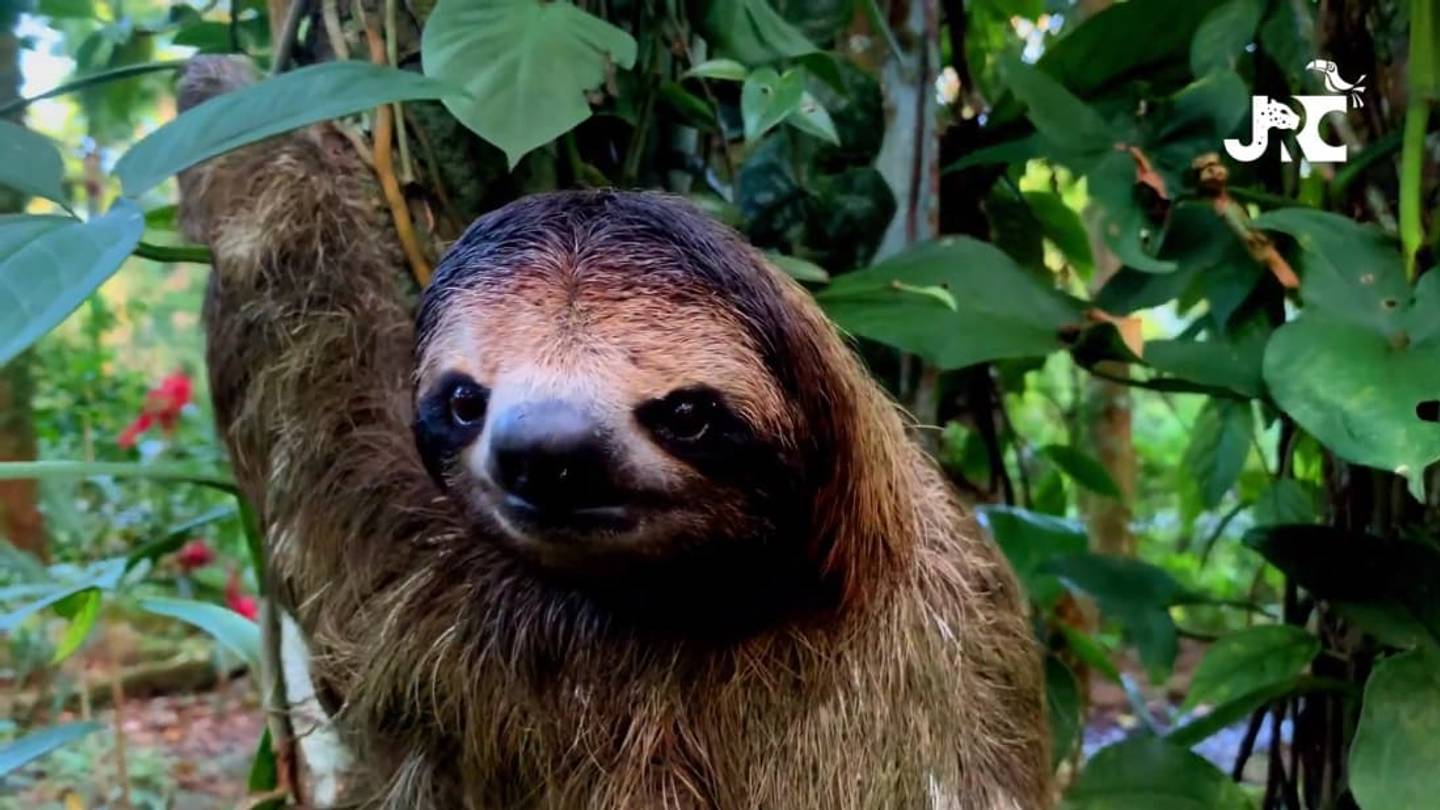
In 2005, Catalonian primatologist Encar Garcia and her husband, Italian herpetologist Sandro Alviani, were living in southwestern Costa Rica when locals began to bring them injured animals in hopes that the two experts could save them. As word spread and more animals arrived, their property slowly transformed into a full-fledged rescue center. So they purchased the surrounding land and named their new organization the Jaguar Rescue Center (JRC), after one of their early rescues: a young, orphaned jaguar whose mother had been killed by farmers.
Today, the center covers nearly 5.5 acres of land near Puerto Viejo de Talamanca in Costa Ricaâs Limón province. It can accommodate around 160 animals at a time, and is home to everything from spider monkeys to sea turtles (though, by law, staff members arenât allowed to accept domesticated animals like cats and dogs).
While locals still bring injured and orphaned animals to the JRC, others are brought by tourists, the Ministry of Environment and Energy, the National Animal Health Service, and even the police, who confiscate animals that have been poached or illegally kept as pets.
The rescues are often victims of road accidents, animal attacks, environmental destruction, human interaction, or electrocution from exposed power lines. After the animals are rehabilitated, theyâre released into La Ceiba Natural Reserve, a human-free (except for JRC workers) part of the forest where they can safely reacclimate to living in the wild. The JRC has cameras installed in the area to monitor the animals after their release and make sure theyâre finding enough food.
Unfortunately, not all the creatures brought to the JRC recover from their injuriesâin 2019, for example, 311 of the 749 rescues died [ PDF ]âso JRC staff members and volunteers understand just how remarkable it is to watch an animal regain its health and be successfully returned to its natural environment.
âThere are so many amazing things about working for the JRC, but I think we all can agree that seeing a rescued animal make it through rehabilitation and be released is the best and most rewarding part of the job,â Torey, a JRC tour guide, tells Mental Floss.
Some thought-to-be-orphaned sloths are even released right back into the arms of their mothers. After recording the cries of a baby sloth , JRC staff will take the sloth back to wherever it was first found, play the recording, and wait for the mother to recognize the cries and (slowly) climb down from her leafy abode to reunite with her child.
Despite its partnerships with government agencies, the JRC doesnât receive government funding. Instead, it relies on public donations and revenue from its visitor services. Find out more about how you can help below.
You can make a one-time or monthly donation that will go toward food, medical care, and supplies for the animals, or you can donate specifically to the JRCâs âShock Free Zoneâ program, which insulates power lines and transformers that run through forests to prevent them from electrocuting wildlife.
Check out the JRCâs Amazon wish list to see which items are most neededâand what theyâll be used for, too. Examples include Pampers diapers for baby monkeys, snake hooks for safely rescuing snakes, and cans of worms to feed birds, opossums, and bats.
One of the most important products on the list is powdered goatâs milk, which staff members use to feed orphans of many mammalian species at the JRC.
âIt has the most universally digestible enzyme compared to other milk,â Torey says. âUnfortunately, we do not have sloth milk, monkey milk, etc. readily available for the baby animals.â
For $105, you can virtually â adopt â an animal at the JRC. Choices range from Diavolino, a âfeisty little margayâ rescued from the illegal pet trade, to Floqui, a whitish two-fingered sloth who was born with only one digit on each hand and foot.
You can stay overnight at the JRC in one of its three visitor residences âLa Ceiba House, Ilán Ilán House, or one of the Jaguar Inn bungalowsâwhich offer a variety of amenities, restaurant service, and access to nearby beaches.
Whether or not youâre staying there, you can book a tour of the JRC, where youâll get to explore the premises and even meet some of the animals. There are private, public, nighttime, and VIP tours, and you can find out more here .
If youâre looking for a more hands-on, potentially life-changing way to help Costa Ricaâs wildlife, you can apply for the JRCâs four-week volunteer program or a position at La Ceiba Natural Reserve that lasts three to six months.
According to the website , JRC volunteers are housed in the Jaguar Inn and help with âa broad range of tasks, from doing the dishes and cleaning up after the animals ... to building and remodeling enclosures, or babysitting a new arrival to ease the stress of their new environment.â
La Ceiba volunteers , on the other hand, stay right on the reserve and do everything from monitoring captive and recently released animals to keeping the trails clear.
Find out more about becoming a volunteer here .
Loading recommendations... Please wait while we load personalized content recommendations