By Deeann Reeder, as told to Jed Lipinski
SOUTH SUDAN, 2013â On our way into the Bangangai Game Reserve, a protected area of lowland forest and glades, we pass an open-air bushmeat market. It looks like any African vegetable market, except the tables are lined with rows of blackened monkey arms, as well as bushbucks, dik-diks, even pangolinsâan endangered species. Hunting has existed here for thousands of years, but lately itâs become a commercial enterprise, emptying the forest of primates. And because Bangangai is near the Democratic Republic of Congo, cross-border poaching is a problem. We set up our tents on a high, grassy plateau in the center of the reserve, lush tropical rainforest sloping away on all sides. As night falls, gunshots echo in the distance.
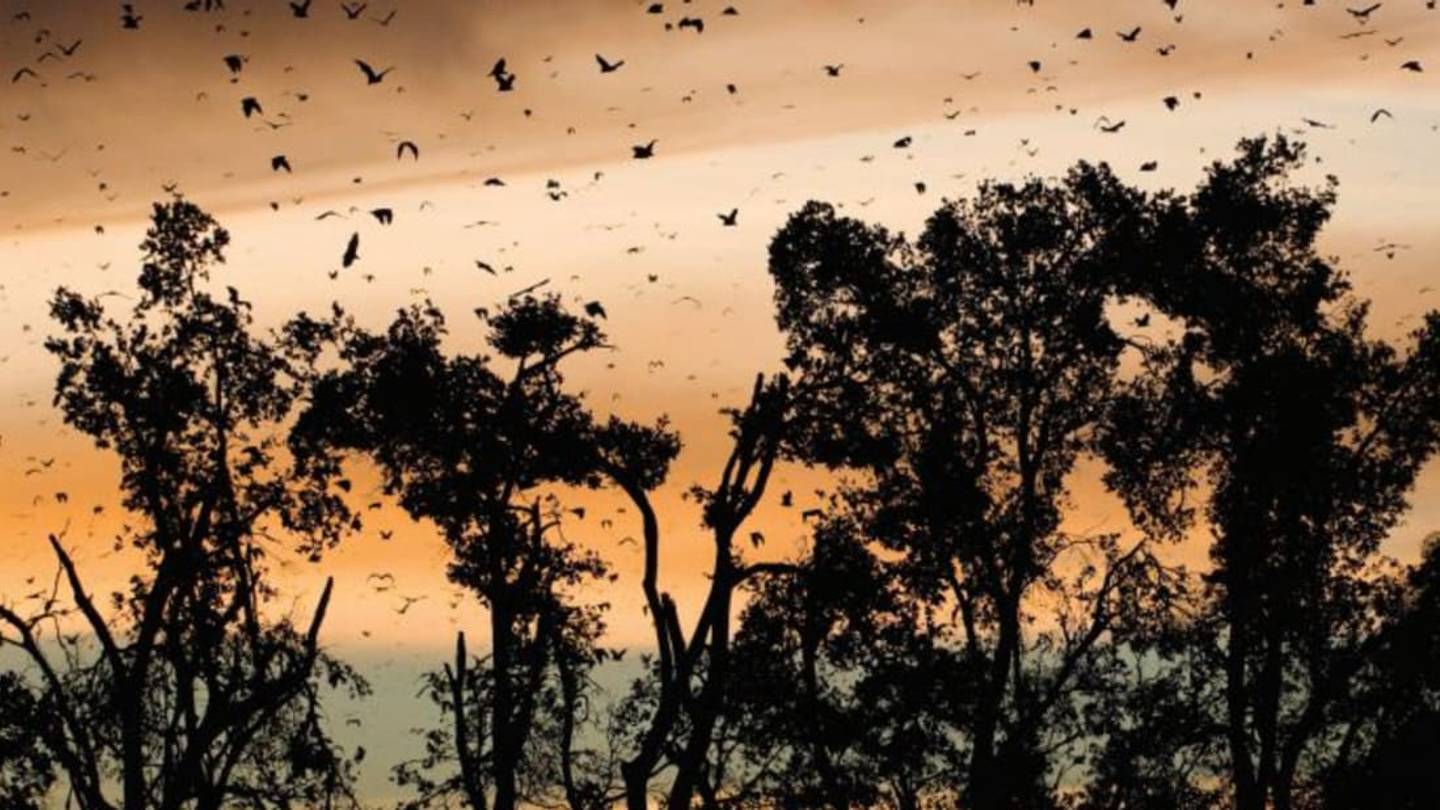
Iâm a bat biologist at Bucknell University. I survey a broad range of bat species to identify reservoir hosts, which harbor potentially fatal diseases like Ebola. But Iâm also interested in mammal biodiversity, conservation, and understudied ecosystemsâall of which brought me to South Sudan. After decades of civil war, the region finally declared independence in 2011, making it the newest country on earth.
It was in Bangangai a year earlier that my colleagues and I discovered a rare species of vesper bat rarely ever seen. When we established that it was a different genusâbased on its black wings and badger-like white stripesâwe renamed it Niumbaha , meaning ârareâ or âunusualâ in Zande, the local language. The discovery highlights the countryâs extreme biodiversity.
In the morning, we capture shrews, set up camera traps for larger mammals, examine footprints. Our team consists of two Smithsonian scientists, two African ecologists, a photographer, a South Sudanese camp manager and diplomat, and a recent Bucknell graduate with an interest in the immunology. Darrin, who keeps at least three knives on him at all times, captures specimens with a technique we call the âmeat dog.â He attaches a rope to a few pounds of meat and drags it on the ground for miles. Carnivores follow the scent. We identify the tracks.
By day two, however, our luck starts to run out. Our water supply is depleted, and the team is dangerously dehydrated. It takes hours to filter water from the murky pond nearby, so our portersâknown locally as âarrow boysâârush to a nearby village to stock up. They return with a dozen cans, but the water inside reeks of diesel. Weâre so thirsty we drink it anyway. As a diabetic, Iâm prone to bladder and kidney infections. Drinking diesel is not advised!
But the bees are the real problem. Theyâre not aggressive, but theyâre everywhereâa fact of life in the reserve. Over the next week, we catch three more Niumbahas, some gorgeous bats with translucent wings, and a mongoose. In the process, I sustain a critical mass of bee stings on my left ankle, which swells up like a puffer fish, and I develop a kidney infection. I get dizzy and nauseous. Each night, gunshots get closer.
As dusk falls, mammals convene to drink from the murky pond. One evening, Iâm at the waterâs edge, manning my bat net, when a rifle fires a hundred feet away. I freeze, pissed off. Darrin appears out of the darkness. âWeâve got to go,â he says. No one objects. In a confrontation with poachers, our white skin would protect us. But I canât say the same for our African ecologists, one of whom is Ugandan. An anti-Ugandan feeling pervades South Sudan.
Courtesy of Bucknell University
The next morning, we pack everything and begin a four-hour retreat to base camp in Yambio, home of the conservation group Fauna & Flora International. The arrow boys are furious at the poachers for cutting their work short.
I refuse to go to another game reserve, explaining that Iâm leery of poachers. Our contact suggests Bandala Hills, a 10-hour drive north on the western edge of Southern National Park. There, park rangers set up a perimeter around us. âFor safety,â they say.
In Bandala, we catch a variety of mammals, including epauletted fruit bats, nose-leaf bats, and horseshoe bats. By now my swollen ankle is seriously infected and my blood sugar astronomically high. I can barely stand up. Despite regular insulin injections, I come down with diabetic ketoacidosis, a potentially life-threatening condition in which the blood starts to acidify. We evacuate a second time.
It all happens in a blur: the flight aboard the 20-seat medevac plane; the arrival on the tarmac in Juba, the capital city; the drive to the Unity Clinic. They run some tests and prescribe an antibiotic. I sleep for about a week. Finally, my husband arrives from the U.S. and drives me to the âfamily compoundââwe own a mud hut in Kajo Keji, just south of Jubaâto recuperate.
Thereâs a good reason certain parts of the world are poorly studied. Many of my colleagues think Iâm insane for working in South Sudan. The atrocities caused by civil war canceled our latest trip. But Iâm willing to take the risks. For me, conserving wildlife goes hand in hand with community development and conflict resolution. So everyone wins. Just keep the bees away from me.
This story originally appeared in mental_floss magazine. Subscribe to our print edition here , and our iPad edition here .
Loading recommendations... Please wait while we load personalized content recommendations