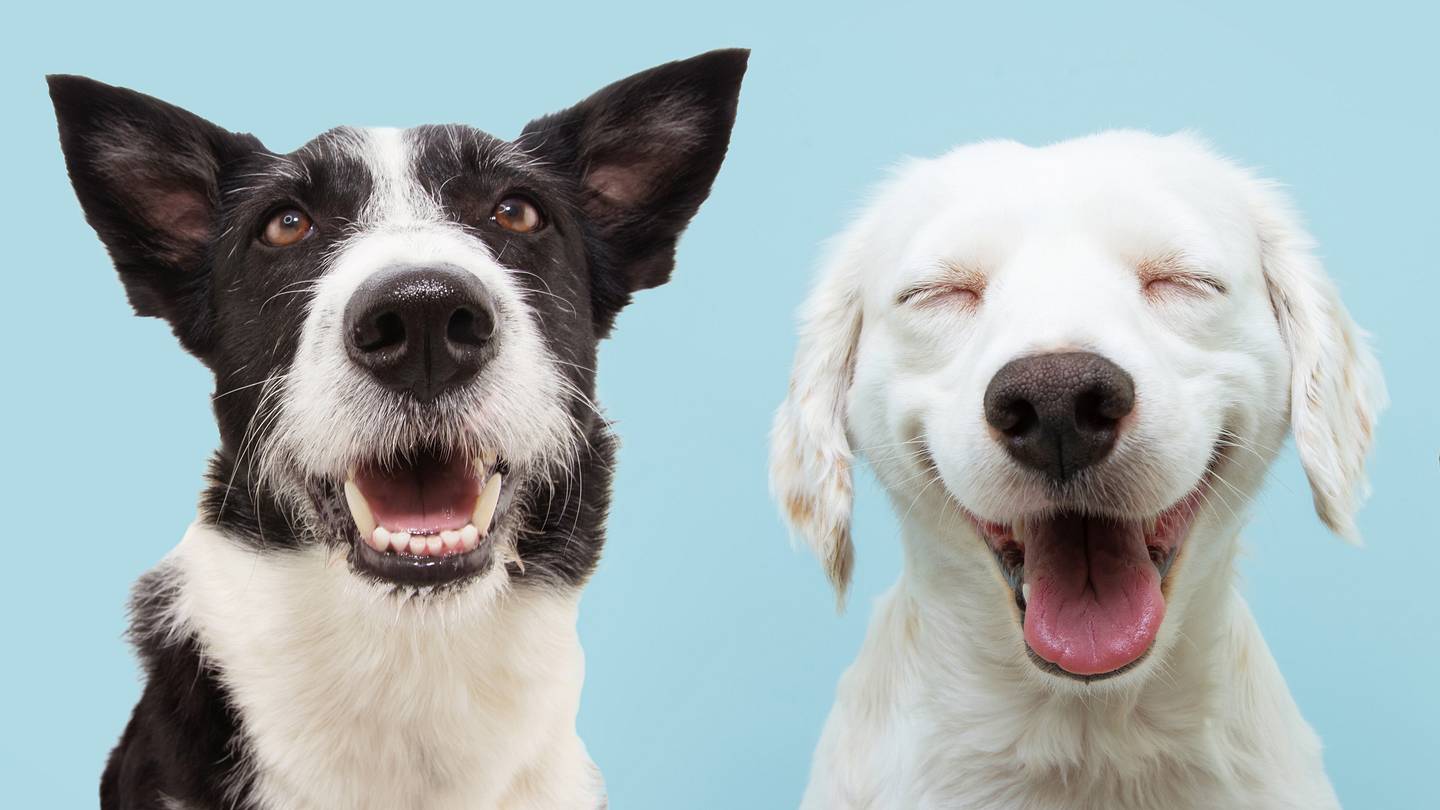
Cuddle up with your best friend (or borrow a best friendâs best friend) and detox from the world with interesting items about the animal that American humorist Josh Billings called âthe only thing on Earth that loves you more than you love yourself.â
Puppies will lick their mothers or owners as a sign of affection or to indicate that theyâre hungry. As adults, licking becomes a sign of submission to an authority figure. So if your dog licks you , theyâre probably trying to let you know that they want somethingâprobably food and/or attention.
Licking your face releases endorphins that calm and relieve your dog's stress. But if a dog is constantly licking itself, they might be bored or have a skin problem you need to have checked out by a vet.
If we spun around three times before taking a nap it would seem like a waste of time or adherence to ancient superstition, but for dogs itâs a matter of old habits dying hard. Dogs do it as a behavior evolved from their wild ancestors. Their nightly routine entailed (ahem) pushing down tall grass, which scared off bugs or snakes while forming a small bed. Turns out spinning achieves a lot.
According to the American Kennel Club, a dog should never be left alone in a carâwith no exceptions . Not only will your dog miss you but, the temperature inside cars increases rapidly regardless of whether or not the car is parked directly in sunlight, and dogs overheat extremely easily!
On day one, a puppyâs eyes are firmly shut and their ear canals closed. Why? In brief, itâs part of an evolutionary trade-off . Because pregnancy can hurt a carnivoreâs ability to chase down food, dogs evolved to have short gestation periods. Brief pregnancies meant that canine mothers wouldnât need to take prolonged breaks from hunting. However, because dog embryos spend such a short time in the womb (only two months or so), puppies arenât born fully developedâand neither are their eyes or ears.
According to a study from 2017 , dogs raise their eyebrows to give âpuppy eyesâ and make other dramatic facial expressions when they know humans are watching . Shelter dogs have learned this trick, too; pups who employ the puppy eyes trick tend to get adopted more quickly than dogs that show other behaviors, like wagging their tails.
That feeling of happiness you get while watching a bunch of puppies fall all over each other is genuine. Studies have found that spending time with dogs, especially in high-stress situations, can ease tension in humans . They can also lower your blood pressure (and they like going on walks, which helps you, too).
Löwchens are a petite, long-haired dog that have been a popular breed since the Renaissance , and even showed up in some paintings from that period.
The average dog is estimated to be as intelligent as a 2-year-old child.
Itâs a common misconception that your dogâs wet nose is a sign of good health, but the real reason for the moisture on Fidoâs nose is a little murkier. One explanation is that dogs repeatedly lick their nose throughout the day to keep it clean. Another is that the moisture helps them cool off. Dogs donât sweat the way humans do, so they pant and let off extra heat through their noses. A special gland in the nose produces a clear fluid that helps them cool down faster.
Dogs can read your mood. A 2016 study from the universities of Lincoln and Sao Paolo found that dogs can read and respond to the emotions on human faces, even in photographs.
A dog can smell anywhere from 10,000 to 100,000 times better than the average human. Canines have 300 million olfactory receptors, compared to our measly 6 million. Moreover, the part of the brain dedicated to smell is 40 times larger in dogs than in humans.
While people breathe in and out the same way, canines breathe in through their nostrils and out through the slits found on the sides of the nose. This system circulates air so that the animal is always bringing in new smells. Breeds like the bloodhound also have the advantage of floppy ears that push up new smells.
Anyone with two dogs will probably tell you that dogs definitely feel jealousy âand itâs true! A 2014 study confirmed that your pet gets a little miffed when you start petting other dogs on the side.
If you think your dogâs feet smell like popcorn or corn chips, youâre not alone! Dogs have a lot of bacteria and yeast that grow on their paws as a result of moisture that gets caught in the many folds and pockets between their toes. These microorganisms create a variety of smells. The bacteria Proteus or Pseudomonas are the likely parties guilty of giving your houndâs feet that distinct tortilla smell. Thereâs no need to go wash your petâs paws just yet, thoughâa subtle smell is completely normal.
Guide dogs are extremely well trained and only go to the bathroom on command. Usually the owner will have a specific spot for the pup and use a command word like, âgo timeâ or, âdo your business,â so theyâll know when and where to clean up.
In 2021, the most common dog names included Bella, Luna, Lucy, Max, Charlie, and Milo. If youâre curious about how much dog name trends change, here are some popular ones from Medieval times: Blawnche, Nosewise, Smylfeste, Bragge, Holdfast, Zaphyro, Zalbot, Mopsus, and Mopsulus.
When stuck on an open lawn with little to no shade, unearthing a fresh layer of dirt untouched by the sun is a quick way to cool down.
Imagine your dog gets bored with chewing his favorite bone but knows he wants to come back for it later. Instead of leaving it out in the open where anyone can snatch it up, he decides to bury it in a secret place where only heâll be able to find it. Whether or not heâll actually go back for it is a different story.
Wondering why dogs bow? In many cases, it serves an important evolutionary function. A prime example is the play bow : If youâve ever seen a dog crouch forward with its elbows on the ground and its rear end in the air, wagging tail and all, then you know what it is. The position is the ultimate sign of playfulness, which is important for a species that often uses playtime as practice for attacking prey.
If youâre a cat owner looking for a dog that wonât fight with your feline , look for one of these breeds: Japanese chins, golden retrievers, papillons, Labrador retrievers, and beagles. Of course, every dog has its own personalityâso just being one of the above breeds doesnât guarantee that Fido and Fluffy will become instant BFFs.
Labrador retrievers often hold the no. 1 spot on lists of the most popular dog breeds . In fact, theyâve been the top dog for 30 consecutive yearsâthe longest reign of any breed in American Kennel Club history
The word beagle most likely comes from the French word begueule , which means âopen throat.â The name is pretty accurate: Beagles have impressive vocal cords that are much fuller and louder than those of other dogs. Beagles are so talented at vocalizing, they do so in three different ways: Thereâs the standard bark for everyday things, like the doorbell or getting a new treat. Then thereâs baying , which sounds a lot like doggy yodeling. This throaty yowl is used on the hunt to alert fellow dogs that theyâve picked up an interesting scent. Finally, thereâs the forlorn howl. Beagles will howl if they are sad, boredâor if others are howling first.
Hunters in the 13th century employed pocket beagles , which are exactly as tiny and adorable as they sound. These miniature pups were only about 8 to 9 inches tall; today, beagles are about 13 to 15 inches tall.
French bulldogs â origins are murky, but most sources trace their roots to English bulldogs. Lace makers in England were drawn to the toy version of the dog and would use the smaller pups as lap warmers while they worked. When the lace industry moved to France, they took their dogs with them. There, the English bulldogs probably bred with terriers to create bouledogues français, or French bulldogs.
As a result of their squat frame and bulbous head, French bulldogs canât swim , so pool owners should keep a watchful eye on their pups.
The deli product hawked by street vendors was originally known as a dachshund sausage because it resembled the short-legged hound . How the name switched is up for debate, but some believe the name was shortened to hot dog when a befuddled cartoonist could not spell the original name .
A dogâs tail can tell you a lot about how they are feeling. But a wagging tail doesnât always indicate a happy pup. A loose wag from side to side means the dog feels relaxed and content. More fervent wagging with hip movements means the dog is happy or saying hello to a loved one. If the tail is straight up , itâs a sign of confidence or aggression; down and curled between the legs usually means fear or submission.
Border collies, poodles, and German shepherds are considered to be among the smartest breeds of dog . To be placed in the top tier of intelligence, breeds must understand a new command after only five repetitions and follow the first command given to them 95 percent of the time.
Although rare, some dogs can have pituitary dwarfism . As a result, the dogs are puppy-like forever, keeping their puppy fur and staying small in stature. While this condition makes them look like adorable teddy bears, it comes with a whole slew of health problems .
Golden retrievers have âsoft mouths,â meaning they can carry things in their chops without damaging themâan important skill for canines tasked with retrieving their mastersâ hunting trophies. Theyâre so gentle, in fact, that some can be trained to hold a raw egg in their mouths without breaking it.
Dogs sniff rear ends as their way of asking, âWho are you and how have you been?â Canines can find out a whole slew of information from just a whiff. The secretions released by glands in the rump tell other animals things like the dogâs gender, diet, and mood. Itâs sort of like talking with chemicals.
They actually come from Newfoundland. In the 18th century, Greater Newfoundland dogs bred with smaller water dogs to produce St. Johnâs water dogs. These smaller canines looked a lot like modern day Labs, but with white muzzles and paws. The St. Johnâs water dog eventually went extinct, but it served as the ancestor for the Labrador retriever .
Regardless of the parentsâ color, a single litter of Labs can include black, yellow, and chocolate puppies. There are two genes that cause the pigmentation of the coat, so the variation can be just as common as different hair colors in a human family.
The Welsh used the short dogs as herders as early as the 10th century. In those days, pastures were considered common land, so there were no fences. To keep a farmerâs cattle together and separated from other herds, corgis would nip at their legs to herd them. Because of their closeness to the ground, corgis had easy access to the cowsâ ankles and were difficult targets of any retaliatory kicks.
They also have different blood types , and they can get laryngitis from barking continuously.
A common myth is that a dogâs mouth is a magically clean place . This is not the case: A canine mouth is brimming with bacteria. Fortunately, a lot of those germs are specific to the species so you donât have to worry when your pup goes in for a wet kiss. That said, there are some similar bacteria, so make sure your pet has up-to-date shots.
Smaller dogs also tend to dream more than larger dogs, and older dogs more than midlife dogs.
A surprisingly high number of dogs in the U.S. have been named primary beneficiary in their ownerâs wills. (Humans are still in charge of the money , though.)
Meet the Norwegian lundehundâwhich translates literally to puffin dog âa pup with six toes on each foot. Theyâre helpful for climbing the jagged, slippery rocks where puffins like to make their homes.
A bloodhoundâs sense of smell is the strongest among any dog breed. In fact, a bloodhoundâs sense of smell is so strong and impressive that itâs admissible as evidence in a court of law.
In 2019, Wally Conron âthe dog breeder who developed the Labradoodleâ said that creating the designer dog breed was his â lifeâs regret .â âI opened a Pandora's box and released a Frankenstein['s] monster,â he added. Weâll add: An adorable, playful Frankensteinâs monster.
In 2019, The New York Times examined data from shelters in 20 major American cities and discovered that rates of euthanasia âthe practice of terminating the life of animals, often by lethal injectionâhas dropped by an average of 75 percent in recent years. In Houston, for example, 57 percent of animals brought into shelters in 2012 were put down. In 2018, that number dropped to just 15 percent. In Philadelphia, the rate decreased from 36 percent to 13 percent in the same timeframe. Phoenix went from 46 percent to just 4 percent. Other cities, including Los Angeles and New York, demonstrated similar declines.
The trend has continued: The boom in pet adoptions during the COVID-19 pandemic led to a record decrease in euthanasia rates.
A version of this story originally ran in 2019; it has been updated for 2022.
Loading recommendations... Please wait while we load personalized content recommendations