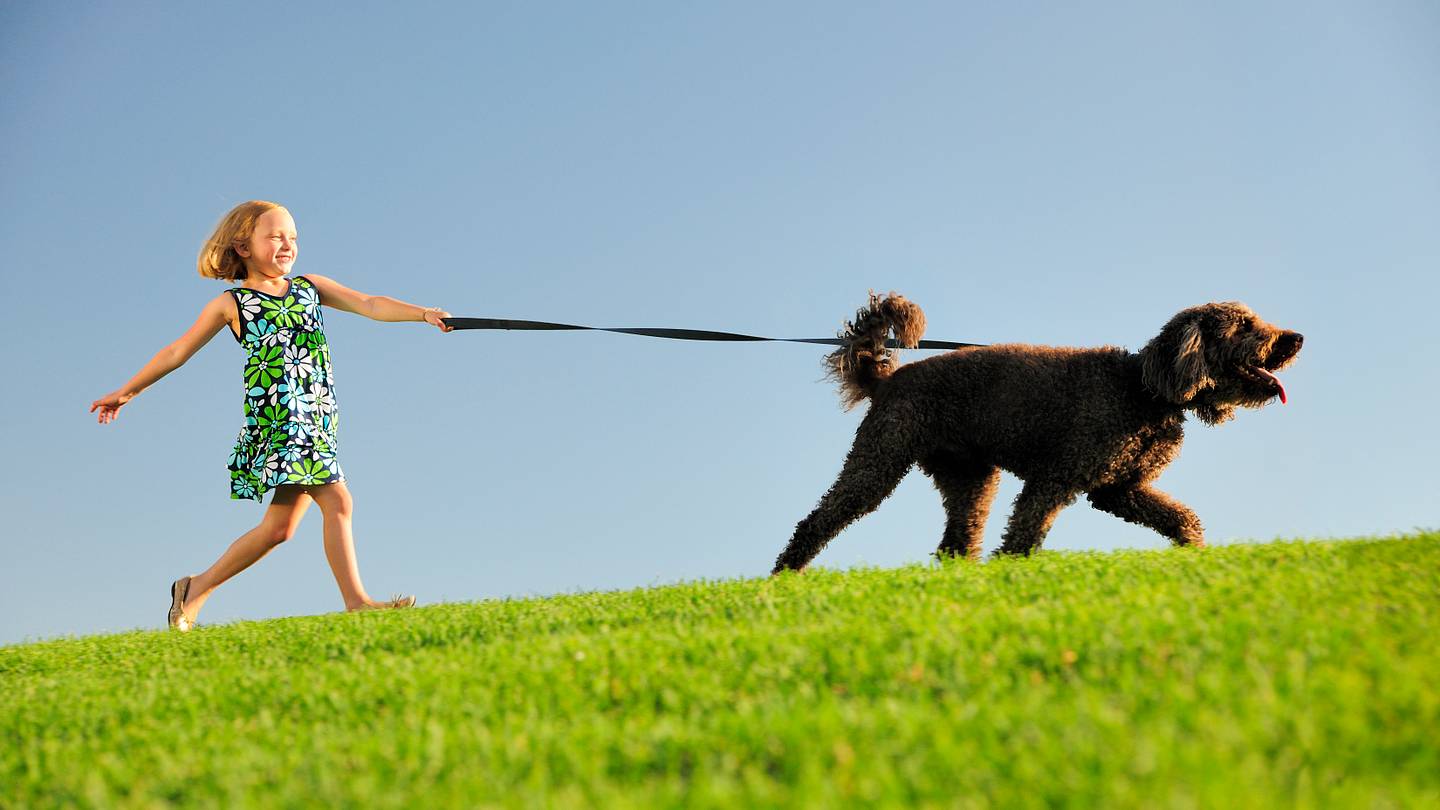
The sight of an owner being dragged by a dog on a leash is one weâve all seen: the person leaning backwards and gripping a taut leash, trying to slow down their overly excited pet. Most dogs love their walks and are naturally curious about their surroundings. But unfortunately, that curiosity can lead to some naughty behavior. Here are a few tricks to try to stop your dog from pulling on their leash.Â
Daily walks give dogs a chance for them to explore and interact with the environment around them. But walking on a leash is an unnatural behavior for dogs. âThe leash is a human tool that dogs donât have any concept of when they come to us,â Sam Mountain, owner and professional dog trainer at Monkey Business Dog Training in Montreal, Canada, tells Mental Floss. âOff-leash, they walk in a very different way, rather than in a straight line down a sidewalk tethered to a human. Itâs not natural to them at all. We need to teach them.â
Different breeds may pull for different reasons. A scent hound like a beagle might pull because they lock in a smell and get the urge to follow it. The dogâs size also makes a difference when it comes to leash pulling: âConsider two extremes: a Chihuahua , for example, has to trot to keep up with the human pace, but with a large breed like a Great Dane , their natural gait will be faster and longer. There is some frustration that kicks in for larger breedsâwe are expecting them to walk at a much slower pace than what is natural for them,â Mountain explains.Â
Fortunately, there are ways to stop your pup from turning their daily stroll into a battle of strength. These simple techniques will let you enjoy leisurely walks with your dog that balance human expectations with your petâs need for sensory enrichment and exploration.Â
One technique is to stop in your tracks as soon as you feel your dog pulling on the leash. Donât move until they create slack on the leash. âThis puts the responsibility on the dog to figure out how to get you to walk forward again,â Mountain says. âThey may sit, take a step back, or look at you. As soon as the leash tension is loose, you walk forward again.â The dog soon learns that when they feel pressure caused by the tugging on the collar or harness, they will not be able to move forward.Â
Another technique Mountain suggests is to change directions and go the other way as soon as your dog reaches the âdanger zoneâ at the end of their leash. By changing direction when they begin to tug at the leash, dogs learn that pulling toward something actually gets them taken the other way. When they do come back beside you again on a slack leash, it creates an opportunity to reward your dog with a treat.Â
Teaching your dog to engage or check in with you regularly is a big part of any leash training. âWe need to be able to get engagement from our dogs, especially in environments where their attention is pulled elsewhere. Your dog has to be able to focus.â Mountain says. âAnytime your dog offers you attention while out on a walk, say âyesâ, and give them a treat.â If theyâre rewarded for unrequested attention, theyâll likely continue to do it more often; this creates the engagement thatâs really important for any type of training.Â
Make sure you donât reward any type of leash tugging. âEvery step taken behind a dog that is pulling is rewarding that behavior. We are teaching them to pull on the leash. If they spot their favorite bush and they drag you over there, itâs going to continue to happen. They got rewarded.â Mountain explains. As with most dog training, consistency is key. If you donât expect the same behavior on every walk, the message gets confusing for your dog.Â
Pre-exercising your dog before trying to apply loose-leash training techniques is also a good idea, especially if you have a very excitable animal. Before your walk, let them run in a fenced-in backyard or engage in another type of vigorous play, followed by a short rest periodâyour dog will then be able to focus better on the training.Â
If you find you are not getting anywhere with the techniques you try on your own, seek help from a professional dog trainer. Theyâll be able to pinpoint the distractions in your petâs environment that are playing a part in the behavior and suggest some tweaks to make going for walks enjoyable for both you and your dog.Â
Loading recommendations... Please wait while we load personalized content recommendations