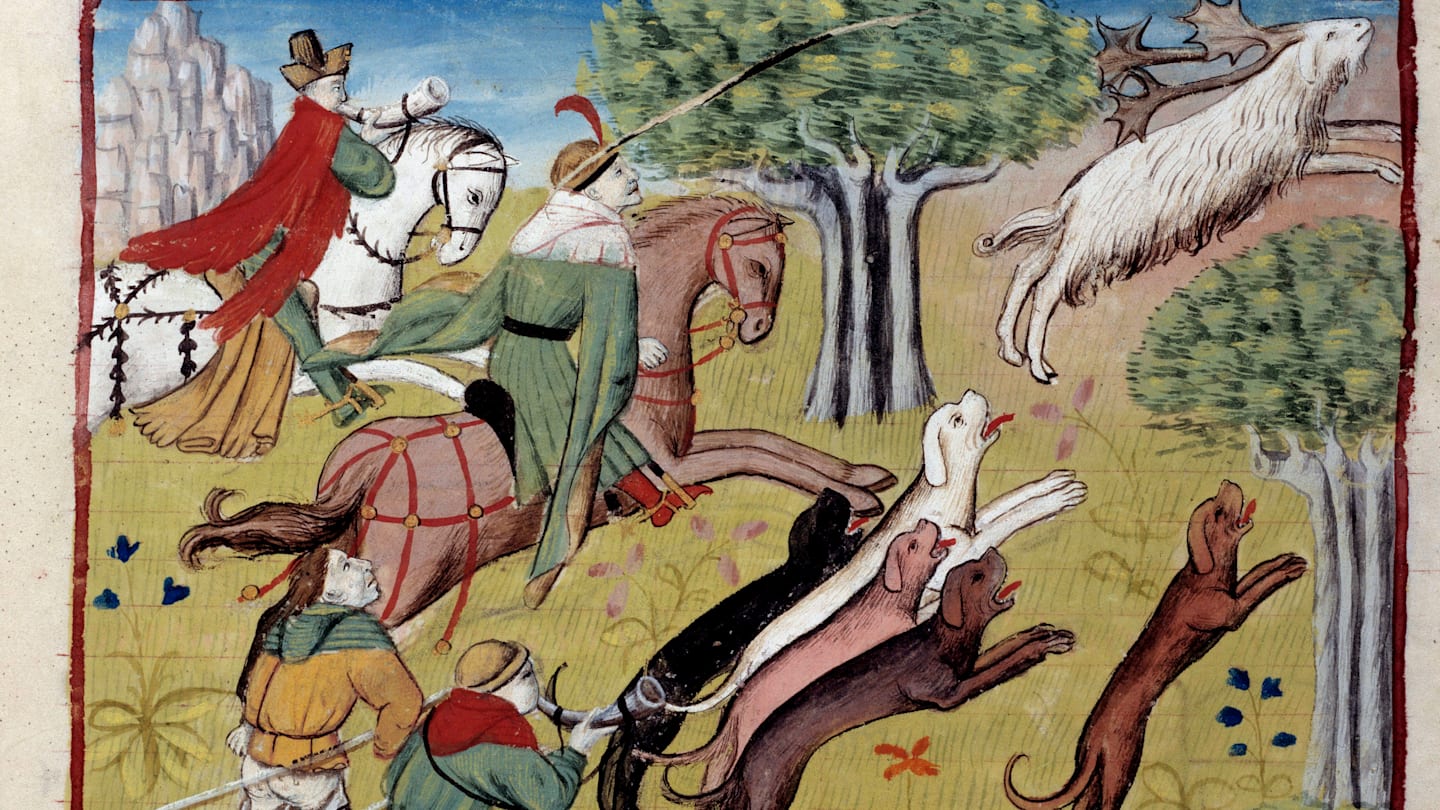
You might think of your dog as the best dog of all. One medieval dog owner actually called theirs that. No, literallyâthe dogâs name was Beste-of-all .
Per Open Culture , the moniker comes from a 15th-century manuscript containing a list of more than 1000 names of hounds (specifically hunting dogs). David Scott-Macnab, an English literature professor at South Africaâs North-West University, published all the names in a 2013 article for the journal Viator .
There are a surprising number of parallels between todayâs most popular dog names and this centuries-old selection. We have Bella ; they had Belle . They had Compaynowne ( companion ) and Felowe , which maps onto our Buddy . We have Bear ; they had Foxe and Mouse (and, OK, Salmon ). Our Daisy isnât so different from their Flowre .
That said, youâd be hard-pressed to find a dog these days named Brainless (or, Brayneles , as it was spelled). Medieval people habitually christened their dogs with words that described them. Some were complimentary, sureâ Amyable , Harmeles , Trusty , Joliboye , Pretyman âbut plenty others were hilariously harsh: Helpeles , Filthe , Litillwitte , Synfull , and plain old Badde .Â
Thereâs further evidence that these bygone pet owners had a sense of humor about their charges: Somewhere out there were canines named Lewde , Lusty , Ribawde , and Nameles . Not to mention Spowse ( spouse ) and Hosewife ( housewife ).
One especially prevalent trend, unsurprisingly, is names related to huntingâincluding Bryngehome , Fyndewell , Goodynowze , Kilbucke , and Makehitgood . But itâs the random ones that are most fun, from Argument and Bryan to Feete and Garlik .
You can explore our 100 favorite names from the manuscript below. (And if youâre hoping to pick one out for your next pet, Tom Killeen built a name generator that features all 1065 of them.)