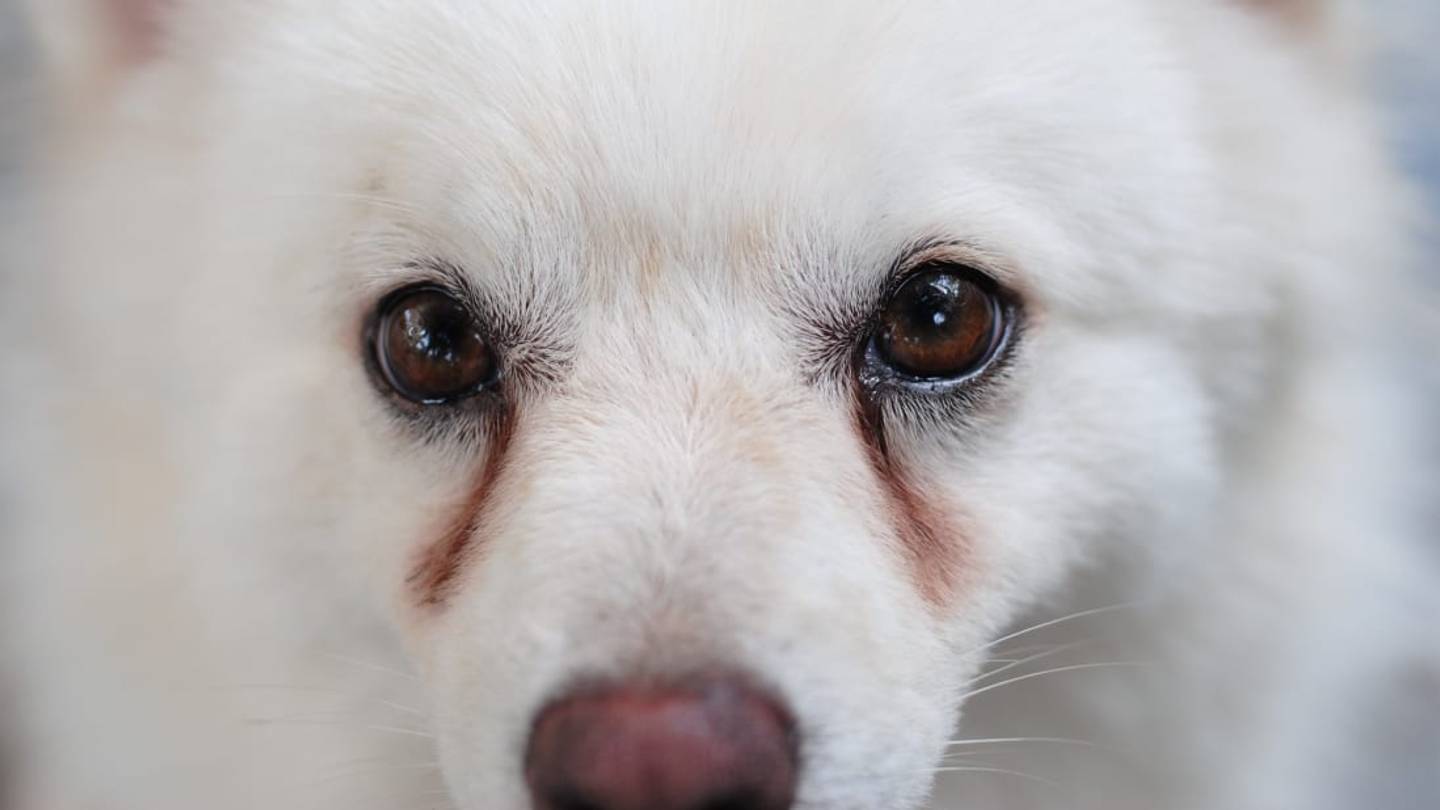
However fastidious your dog might be when it comes to grooming, thereâs always one persistent problemâblack or brown streaks near their eyes. Often referred to as tear stains, this crusty goop can provoke bouts of cotton ball scrubbing on the part of owners or concern it might be something that needs veterinary attention.
Why do these tear stains form and what can you do about them?
In dogs, these stains are typically the result of porphyrin, molecules that a dog produces when breaking down iron. Porphyrins are excreted via a dogâs gastrointestinal tract, urine, saliva, and through their tears. The porphyrins in tears will discolor the fur surrounding their eyes, leaving brown or black streaks that are especially noticeable on dogs who have light-colored fur. Certain breeds can also be predisposed, like the Maltese, Shih Tzu, or Poodle.
The best first step is to make sure the stains arenât caused by an infection, ingrown eyelash, or other medical issue. Have the dog evaluated by a veterinarian. Once the stains are confirmed to be cosmetic in nature, you can tackle them.
The best method for eliminating the stains of these secretions is preventative. Owners can clip the hair under the dogâs eyes to keep it short. (If your pet is combative when it comes to grooming, then having a pet groomer handle this would be ideal.) Owners can also use baby shampoo to clean the fur with a warm washcloth. (Make sure to dry the area thoroughly, as wet fur and skin can promote irritation.)
Itâs possible dogs may also be getting excess iron from well water. If thatâs the case, switching to bottled drinking water may help alleviate the problem. Even plastic drinking or food bowls may prompt an allergic reaction, including tear stains. Switching to a stainless steel bowl could help.
You might sometimes see recommendations to use some kind of eyewash pad or contact lens solution, but this isnât recommended, as these kinds of solutions can be irritating or damaging if they get into the dogâs eyes.
You may also see an endorsement of products containing tylosin, an antibiotic that can prevent tear staining. But tylosin may not work, and it carries the potential to induce antibiotic resistance.
If your dog has substantial crustingâeye boogersâin addition to tear staining, it could just be the normal result of the eye clearing itself of dust and debris. White or gray-colored discharge is common; green or yellow discharge isnât and can indicate infection. If itâs typical gunk, using saline solution to soften it up and wiping it away works best.
Any dog who expresses discomfort in the form of squinting, pawing at the eye, or swelling should be evaluated by a vet.
Loading recommendations... Please wait while we load personalized content recommendations